
Mom and I began sorting through the research we had compiled on the 300 Cashel Street house in Clontarf, Minnesota. It has been fun looking through the folders and making sense of the floor plans Mom drew up nearly twenty years ago!
It is challenging to write about a house that no longer stands. It would be wonderful to walk around the house to see how it fits into the environment. But that’s OK…at least we have some photos of the place before it was dismantled.
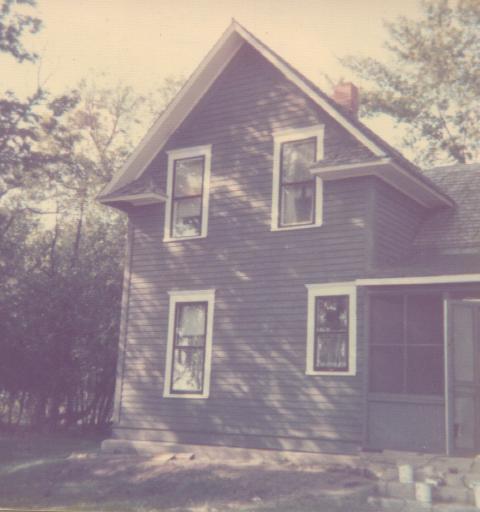
We realized we didn’t know when the house was built, and then we realized we only had property deeds for 1906-1934.
I called Carla Roberts, the department head of the Swift County Land Records Office, and asked if they could tell from their records when a house was built. Carla said to me that information is not usually included in the records held by their office since they are concerned with the transfer of land titles and deeds. She suggested we visit the Assesor’s Office (just across the hall from her at the Swift County Courthouse in Benson, Minnesota). We may see a change in taxes assessed, indicating new construction took place.
Too bad there were no building permit requirements. Mom and I wonder if there might be any building information in the Clontarf Township Records. I believe those are located at Swift County Historical Museum. We, of course, made tons of photocopies.
We are planning a trip to Clontarf in July, so we will visit the Land Records Office and the Assessor’s to see if we can find records before 1906 and ascertain when the house was built. We can’t remember if we looked at any earlier deeds and didn’t make copies of them. This is why it is essential to always keep good notes with your research!
We also need more details on what happened after 1934. In 1934, a foreclosure involved the Home Owners’ Loan Corporation (HOLC), a government program established to offer homeowners in default options for refinancing to avoid foreclosure. Obviously, the program was not successful in the case of the Regan family. We are looking into HOLC for further information. HOLC was a New Deal program during the Great Depression – check out this great site for tons on the New Deal.
Up next…a former resident of 300 Cashel Street has a landmark anniversary of their birth on Wednesday, so check back for a special tribute.

 The Irish in America