The Irish in America


1 Comment

Does History Go to the Highest Bidder?

Letter from late April 2022

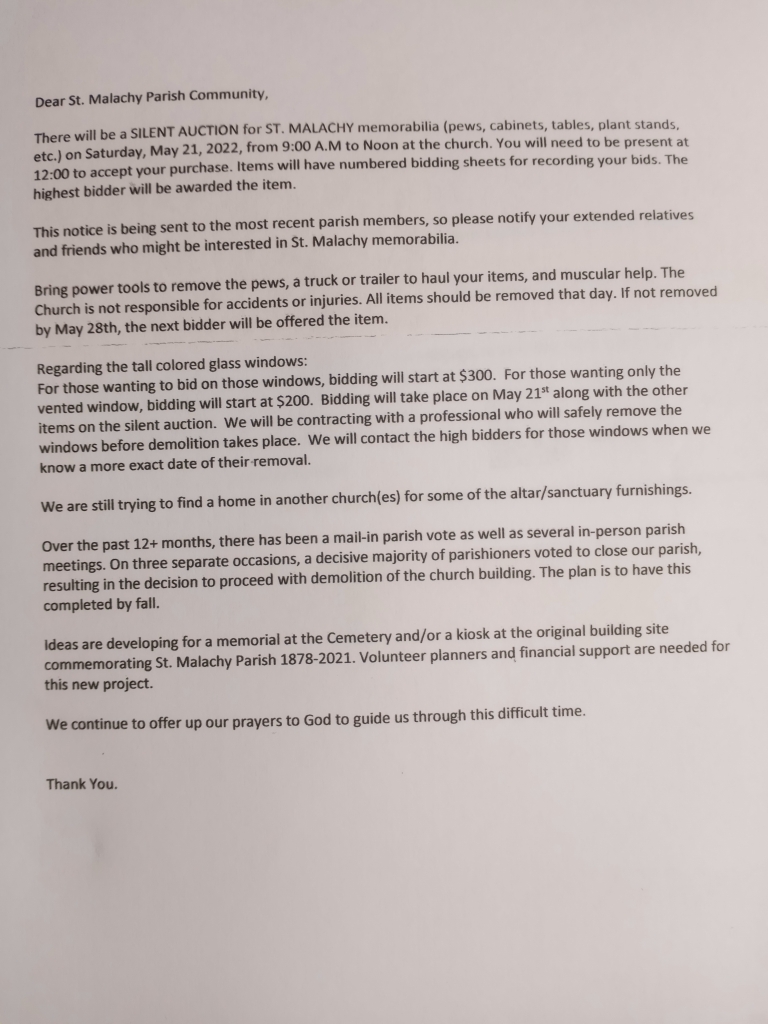
The Catholic Diocese of New Ulm, Minnesota plans to demolish the recently deconsecrated St. Malachy Church building, but not before they auction off “St. Malachy’s Memorabilia.”
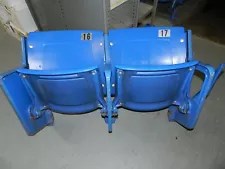
Memorabilia makes me think of my brother’s Don Mattingly baseball cards or a jersey worn by Joe Mauer. Remember how people bought sets of the iconic blue plastic seats from the Hubert H. Humphrey Metrodome when it was taken down? They put them in their “man caves,” ice houses, and basements all over Minnesota. Will the St. Malachy’s church pews have the same appeal? Maybe, but the word memorabilia seems to cheapen what the pews and stained glass windows of St. Malachy’s represent.

Years ago when my mother, Eileen, and I began looking into family history in the Clontarf area, she had copies made of pages from the St. Malachy’s account books. Pages were chosen because they pertained to our families – the Regans, the Foleys, and the McMahons – as well as known neighbors and associates. The copies by no means represent the full fiscal picture of the building of St. Malachy’s, but they clearly shows how the people of Clontarf paid for the building, a building whose elements will be auctioned off as memorabilia and will soon be demolished by the Diocese of New Ulm.

The following narrative is the first installment on the building of St. Malachy Catholic Church in Clontarf, based on the original financial records.

FUNDRAISING AND THE BUILDING OF THE NEW ST. MALACHY CHURCH

By 1896, it was clear to most that the parish of St. Malachy’s had outgrown the original building constructed in 1878. Children of the original settlers were marrying and starting families of their own as new residents joined the community and the town grew. The financial record books indicate that raising money for the new St. Malachy Church was every bit a community effort – “all hands on deck!”

March 17, 1896 – ST. PATRICK’S DAY EVENT

The parishioners of St. Malachy’s assembled an event to raise money for the new church building while celebrating St. Patrick’s Day. With attractions that included a watch drawing, Pidgeon target shooting, a cigar and candy stand, play performance, dinner, and fireworks, the fundraiser would certainly have been popular with the wider community.

Margaret Duggan of Tara Township and Mary Purcell of Clontarf donated the watch and the drawing raised $256.50, over half of the total funds raised at the event ($470.05). Expenses for the festivities were listed as $52.00, but most were covered by donations.

November 1896 – FALL FAIR

Later in the year, once the crops were in, Clontarf area residents held a Fall Fair to celebrate and raise more funds for the building of the new church. Records provide no final numbers for funds raised by organizers, but it appears to have been quite an affair.

Spanning two days, with dinner served on both Saturday and Sunday, Fair events included a horse raffle, another watch drawing, a fishpond, a play, and a cigar and candy stand. There were raffles for a kettle and a cigar box, as well as three “Fancy Tables” organized by Mrs. Moore, Mary Hurley, Miss Riley, and Mary Purcell.

The records note that Patrick Freeman of Clontarf donated the horse for the raffle and Frank McMahon of Tara and Eugene Daniel of Hoff went out ahead of the raffle to sell tickets to area residents.

Examples of funds raised:

  • Fancy Tables – $50.00
  • Play tickets – $14.35 (95 tickets sold @ 15 cents each)
  • Dinners – $68.00 (“at least”)
  • Watch Drawing – $92.00

March 17, 1897 – ST. PATRICK’S DAY EVENT

Limited information exists in the record books for this event, but undoubtedly there were the usual nineteenth-century fundraiser staples: raffles, cigars, candy, dinner, and a play.

Included in the March 17, 1897, financial records entry are a few details on the Dramatic Club of Clontarf. Sixty-four tickets were sold to the performance for total sales of $16.00. The ticket prices rose to 25 cents a seat. After renting wigs ($1.85) and purchasing a “tableau fire” and “sundries” ($2.15) and paying printing costs ($4.36), the records indicate they contributed $10.60 toward the window fund. They must have received a discount on some of their props.

Note:

Information in this article is from copied pages from the St. Malachy Financial Records and copies are located in Eileen McCormack’s files. These copies and the information contained here do not represent the complete financial record. Eileen McCormack copied specific pages when the books were at the parish house in Clontarf, 2004-2005. The record books are located at Saint Francis Church in Benson, Minnesota.

Eileen R. McCormack and Aine C. McCormack, March 9, 2022

For more information on Clontarf history, please visit here and here.


2 Comments

Family Album: Mother and Son

Catherine McAndrew McMahon sent this postcard to Tom, her oldest son, in early April 1908. She was in Rochester being treated at the Mayo Clinic for cancer, and Tom was at home in Tara Township. Catherine died on April 18th following surgery to remove a tumor.

Tom kept his mother’s obituary folded up in his wallet. His rosary, the postcard, and the obituary are the only things left behind by my great-grandfather.

Frank and Catherine McMahon Family ca. 1895 (Private Family Collection)

Tom is standing, second from the left, and Catherine is seated in front, next to her eldest daughter and namesake. The McMahon family would lose its youngest son, Johnny (standing, at far right), to tuberculosis about three years after this photograph was taken.


Leave a comment

Family Album: Manchester Connection

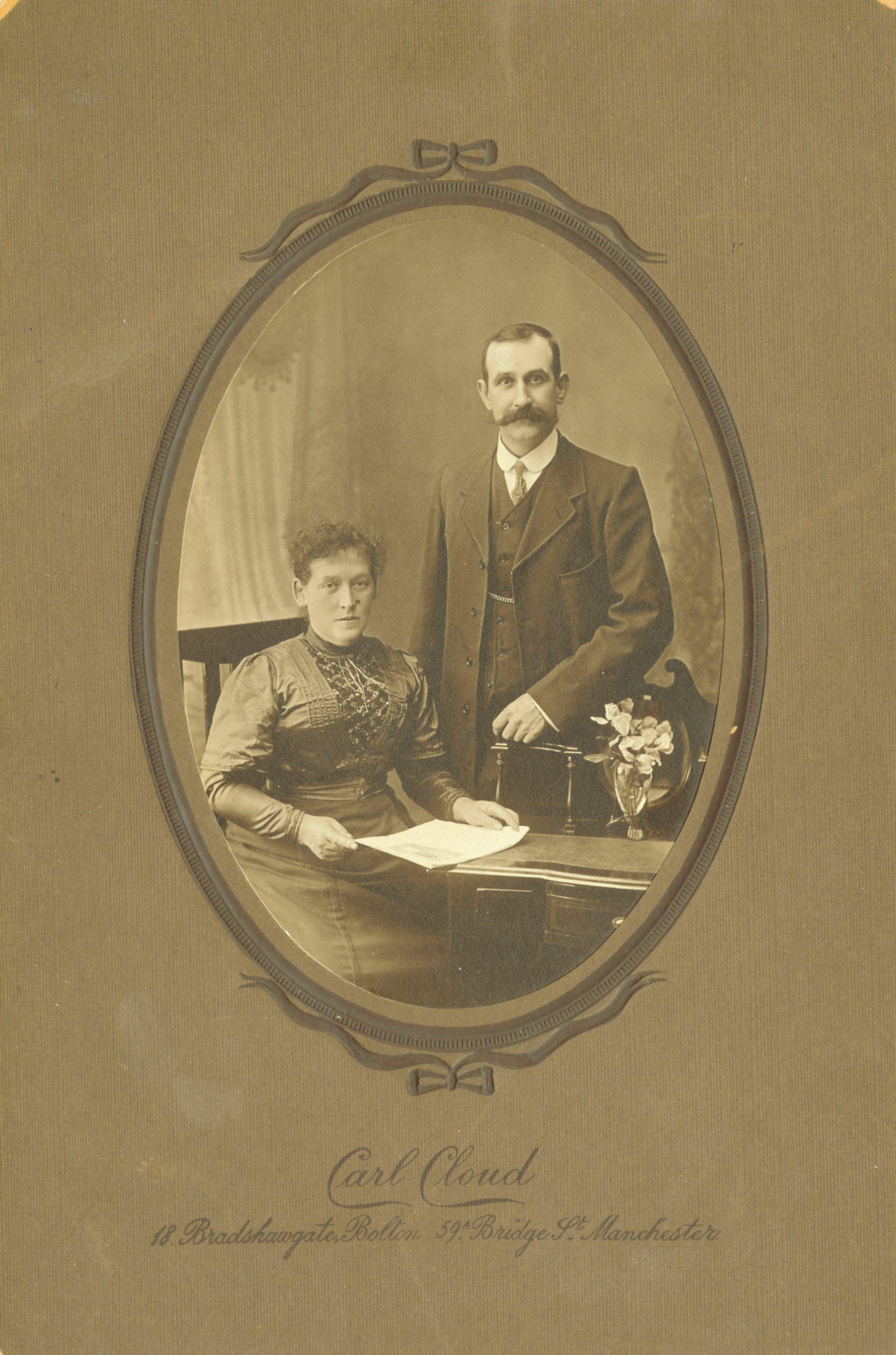
We have several photographs in our collection that were taken in Manchester, England. These fall into the “Your Grandpa’s People” and remain, to this day, mostly unidentified.

Over the weekend I was working on my Ancestry.com family tree and took another look at our Manchester photos. Frustrated by all the “unknowns” in the captions, I decided to put my best guess IDs on the photos. We will see if they stick.

I will start with one I am fairly certain about. This is my great-grandmother Annie Hill Regan’s only brother, John Hill. John was born on April 7, 1870, near Kill, County Kildare, Ireland. He was baptized two days later on April 9th. John was five years older than Annie.

John and his wife, Clara lived in Broughton, Manchester, England.

Clara and John Hill (Private Family Collection)

John’s youngest sister, Bridget “Delia” Hill Reynolds, and her husband John and family also lived in Broughton. I connected with a DNA match cousin whose grandma was Delia. He shared with me that her brother John lived with the Reynolds family.

Youngest Reynolds son, John Hill, John and Delia Reynolds (Private Family Collection)

There is one problem. Mary Hill O’Brien’s daughter Mamie had an album with a photo of the trio (minus John Hill) labeled, “Aunt Maggie and family.” I am pretty sure it is Delia. For a number of reasons, it just makes sense to me. I know nothing about Maggie. Once the Hill girls hit age fifty, they look very similar. I have positive IDs on Mary, Katie, and Annie, so I’ll just keep digging…


Leave a comment

Family Album: Brothers-in-Law

We have many of this style of photo in our family collection: studio portraits of people in their twenties and early thirties, taken circa 1900. This is a favorite because it reminds me of one of our first meetings with my grandpa’s cousins Donald and Gerald Regan.

I remember showing them this photo and Donald saying, “Ah, yes, that is Pat on the left and that would be Uncle Jim on the right. Isn’t that right, Gerald?”

Gerald nodded in agreement.

You could just about see the memory wheels turning in the brothers’ heads as the smiles crept across their faces. Chatting with Donald and Gerald about the old days was always a treat.

“Pat” was their father, Patrick Regan, and “Uncle Jim” was James Duggan, their mom Julia’s oldest brother.

Patrick Regan (left) and James Duggan, about 1900 (Private Family Collection)


Leave a comment

Family Album: Your Grandpa’s People

My grandma kept a cardboard box of family photos on the closet shelf under the Monopoly game. Every once in a while I pulled the box down and we’d go through the photos. I marveled at Grandma’s ability to not only identify the people in the pictures but to recall dates and outline connections.

Once we had gone through the old photographs of her parents, aunts and uncles, and grandparents, we’d move on to the “modern” snapshots of Grandma and her friends in the 1930s, weddings, and outdoor groups. Finally, we’d come to the bottom of the box and a cache of unidentified photos.

“Those would be your grandpa’s people.”

My grandpa was an only child and died the year before I was born. It has taken a bit of research (and a dose of serendipity) for us to identify “Grandpa’s people” and it is definitely a work in progress!

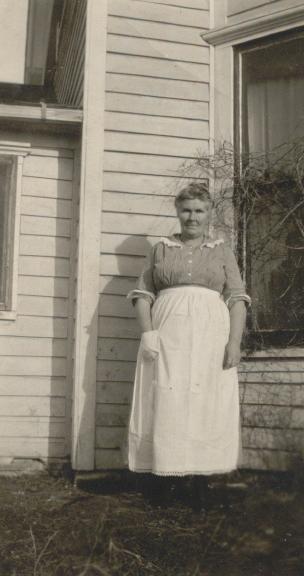
It turned out “Grandpa’s People” referred to my grandpa’s mother’s people. Like this photo of Mary Hill O’Brien, one of my great-grandmother Annie Hill Regan’s four sisters. Mary came to the United States from Kill, County Kildare, Ireland in 1892. She married a widowed farmer (Thomas O’Brien) in Tara Township, Minnesota in 1894. Annie joined her sister in Minnesota in 1899. Mary and the O’Brien family moved to Montana in 1914.

Mary Hill O’Brien – Chinook, Montana 1920 (Private Family Collection)

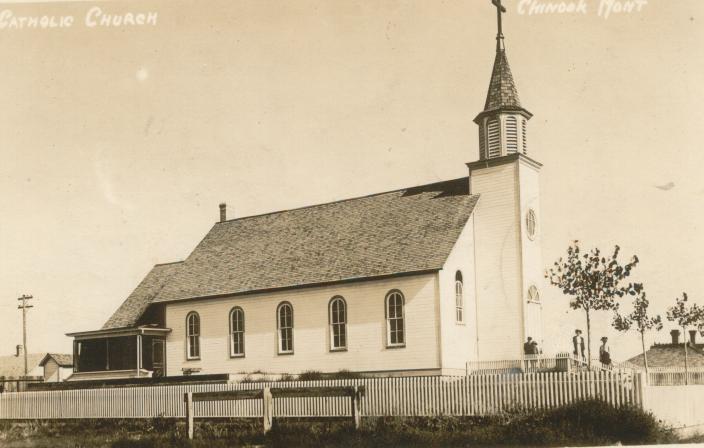
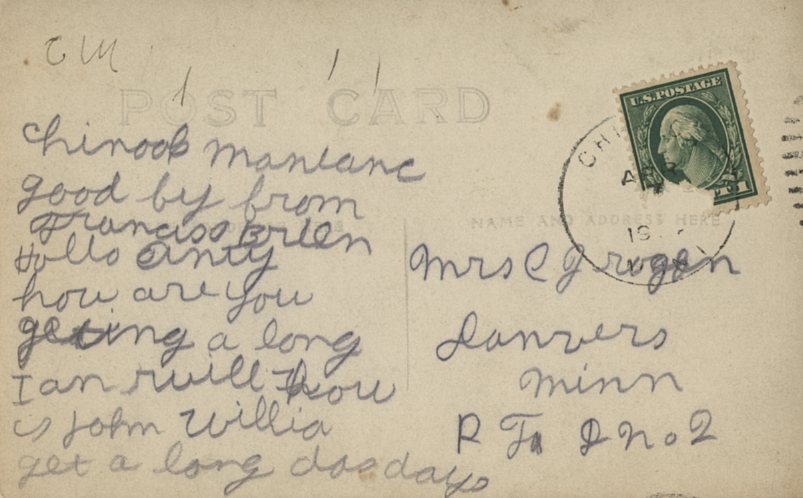
There were a couple of postcards in the bottom of that old box, too. Here’s one from Chinook to “Anty” Annie in Tara Township…


2 Comments

Anyone up for a game of checkers?

It might not look like much to you, but this somewhat crudely fashioned checkerboard has always been a treasured relic of my family history.

Patrick Foley’s checkerboard, circa 1870. Fisherville, NH.

I grew up in a house full of family heirlooms. My mom liked to incorporate them into her overall decorative scheme. She framed her grandparents’ wedding certificate and put it on the wall amongst old family photographs and used her great-grandmother’s china pitcher as a vase for lilacs and lilies of the valley in the springtime. Mom also lulled us to sleep in the same rocking chair her grandmother once rocked my grandpa. Old stuff and family history were all around the place.

But the checkerboard always intrigued me. It was tucked discretely in the space between a tall radiator and the dining room wall. When I was young I assumed that my mom intentionally put it there to hide it from potential thieves and jealous relatives. In my mind, the checkerboard was an extremely valuable antique.

The checkerboard (we always called it “the checkerboard” but I suppose it could be a chessboard) belonged to my great-great-grandfather, Patrick Foley. Patrick died the year my grandma was born (1913), but she shared what she had heard about her grandpa.

Grandma didn’t have stories about her grandpa, as much as she recounted some random details of a man’s life that survived the generations. My grandma was proud to say that Patrick was able to read and write (a rarity among her grandparents). Patrick was educated in a hedge school in County Cork, Ireland. He came to the United States as a young man with his friend John Regan and settled in Fisherville, NH. When Bishop Ireland started his colonies in Minnesota, Patrick moved west, bought a farm, and raised his family in Tara Township. Patrick was known as “Grandpa Petey” (or P.T. for his initials). He was a prosperous farmer in Tara and eventually moved into a nice house in the nearby larger town of Benson, Minnesota.

Patrick Foley, circa 1867, tintype (Private Family Collection)

I grew up in the 1970s, before the genealogy craze, Ancestry.com, and DNA matches, and was grateful for my grandma’s information, but I did want to learn more about Patrick. What did he do in Fisherville and where did he come from in Ireland? The checkerboard stirred my imagination and inspired me to learn more about my family history. I’ve visited Fisherville (Concord), New Hampshire and Kilmichael, County Cork and I have learned many more random details of Patrick Foley’s life. I guess it is my job to piece it all together and tell the story.

In case you are interested, here are the details of the checkerboard. Maybe you’ve seen something similar hidden in the nooks and crannies of your family home? Let me know!

The checkerboard measures about 20.5 inches (wide) by 19.5 inches (deep) and is about 3 inches thick. This is a substantial piece, I’d say it weighs nearly four pounds. Alternating stained and dark green painted squares create the playing surface (squares range in size 1.5 to 2 inches). In spite of these irregularities, I thought it was quite fancy because it was personalized. “Patrick Foley” is stenciled on one end and “Fisherville” on the other.

Happy St. Patrick’s Day!


Leave a comment

Family Album: Minnesota’s Irish During the Depression

My grandma Agnes McMahon Regan graduated from Columbia Heights High School in 1930. She was the only one of the seven McMahon children to graduate. Her dad agreed to let her finish high school because she was smart and liked school and was just sixteen at the start of senior year (she skipped the second grade). Plus, he said she might as well stay in school since there were no jobs. After graduation, Agnes felt lucky to find part-time work in the office of an insurance broker, but she really wanted to get in at Sears. Her older sister Margaret worked at Sears and Agnes would go down to Chicago and Lake in Minneapolis once a week to check in with the Personnel Department about any job openings.

Grandma said her persistence paid off and Sears eventually hired her – temporarily at first, but she had her foot in the door. She stayed at Sears for the next ten years, until her first child was born.

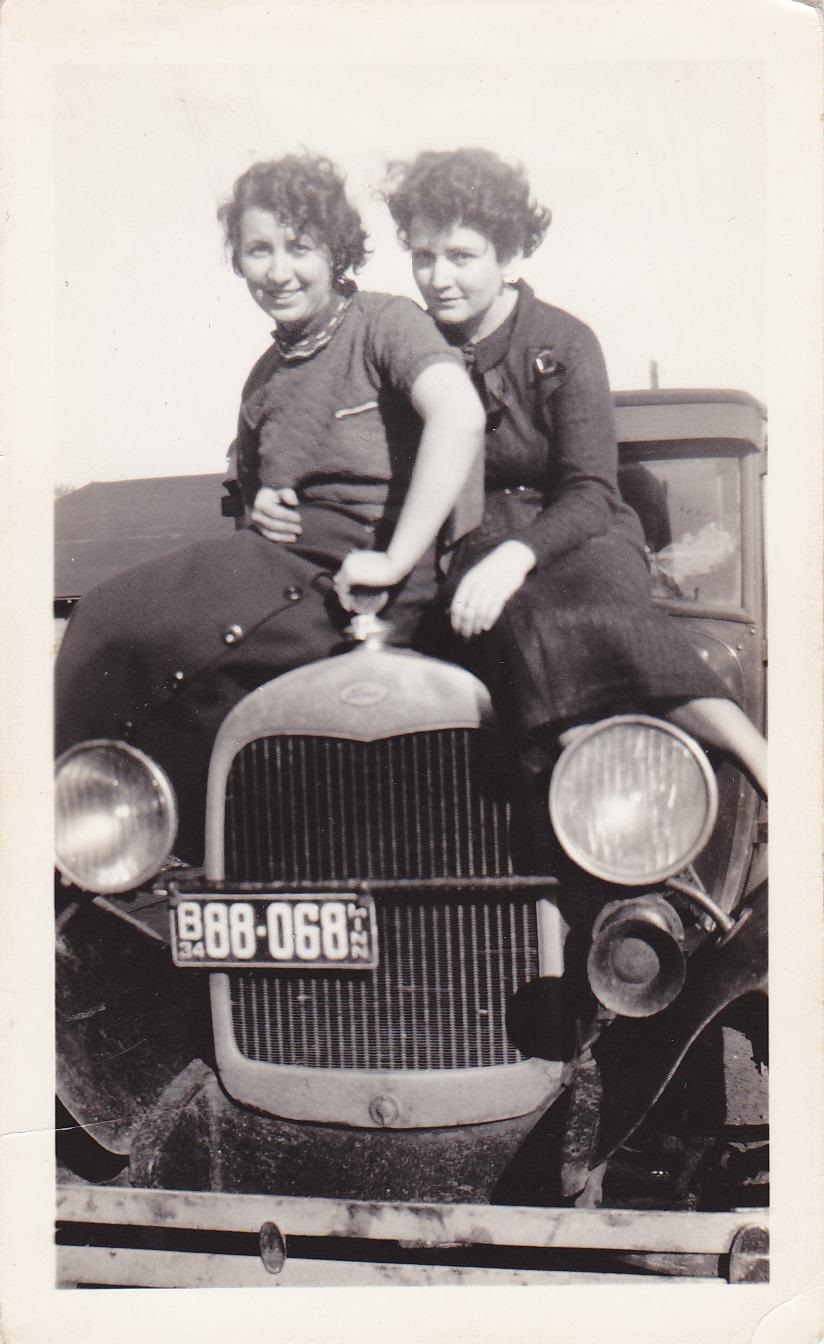
On the weekends, Margaret and Agnes would often travel west to Benson, Minnesota to visit their older sister, Mary and her growing family of nieces. They would catch a ride with someone or hitchhike. Wonder whose car this was?

Margaret and Agnes McMahon, 1933 (Private Family Collection)


2 Comments

Family Album: Irish in Minneapolis

Technically-speaking, this is a terrible picture. But I love it, because EVERYONE is smiling – even my great-grandmother and Uncle Frank. Margaret might be hiding his grin, but I can see the smile in his cheeks. I suppose this is 1942-1943? Mom will need to help out with this…when was Frank in the service?

I wonder what they are all so happy about???

John W. Regan, Agnes McMahon Regan, Ella McMahon (wife of John McMahon), Frank McMahon, Margaret McMahon Nelson, Mary Foley McMahon (Private Family Collection)


2 Comments

Clontarf Goes Green in 1899

clontarfhistory's avatarClontarf History

These days it seems everyone celebrates St. Patrick’s Day. Target’s shelves are stocked with strings of  shamrock lights, pot of gold window decals, sparkly green headbands, and leprechaun costumes complete with a long red beard and top hat. Bars put up tents to accommodate the revelers, while the restaurants add corned beef and cabbage specials to their menus. The fountain at the White House is turning green, and I heard even Niagara Falls will be dyed green (is that even possible?)

Let’s put aside the more commercial side of St. Patrick’s Day for a moment and take a look at the March 17, 1899 celebration in Clontarf – the last St. Patrick’s Day of the nineteenth century. By 1899, the children of the original Irish settlers in Clontarf were beginning to marry and start families of their own. Most of this first generation of Clontarf Irish-Americans married fellow Irish-Americans, thus Clontarf’s…

View original post 305 more words


Leave a comment

Family Album: Aunt Kate

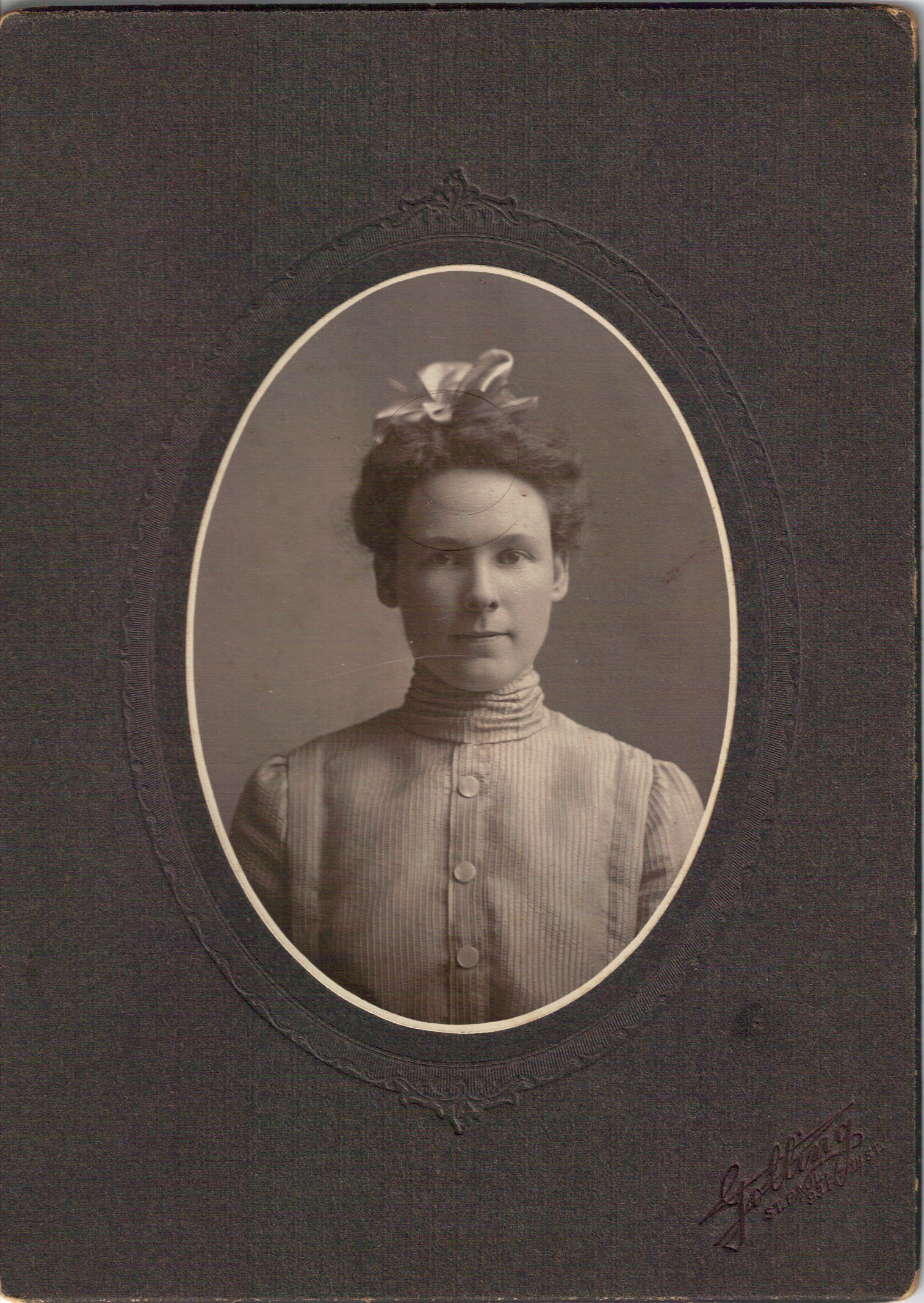
Catherine McMahon was the oldest daughter of Frank and Catherine (McAndrew) McMahon, born in Tara Township, Minnesota on October 17, 1877.

Catherine McMahon, circa 1900 (Private Family Collection)

I know very little about Catherine, except to call her Aunt Kate like my grandma and mom would. My mom remembers her as one of the old aunts. She married Jack Mears and the couple had no children. They lived in South Minneapolis, near downtown, and Jack was employed as a laborer. Before she was married, she lived in Clontarf with her family. The 1900 census says she was employed as a teacher. By the 1910 census she is “keeping house” – her mother passed away in 1908, so she was taking care of the house and her dad.

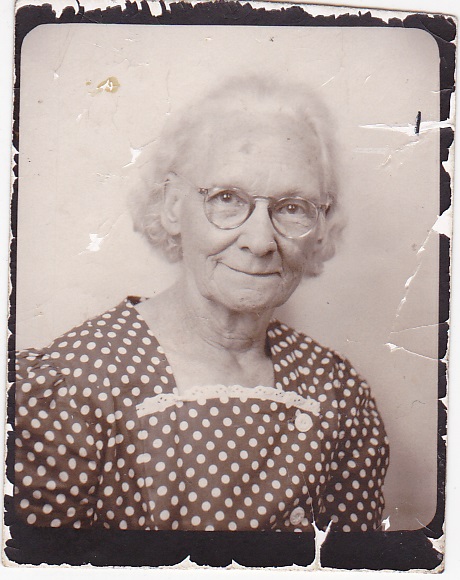
Aunt Kate, circa 1950 (Private Family Collection)

This is probably how my mom remembers Aunt Kate. She’ll let us know! I’m looking forward to learning a bit more about Aunt Kate. I am working on finding a marriage record and I want to take a look at her death certificate.