The Irish in America


2 Comments

One of the Foleys: What do you think?

Unidentified from the Foley family collection

Several years ago, my mother received a trio of photographs from her cousin Lorna.  Lorna knew that two of the photos were her great-grandparents (see below), but she had no idea about the identity of the woman pictured above.  All that Lorna could offer was, “Well, I am sure she’s one of the Foleys…”

Do you think she could be this guy’s mother?

Patrick T. Foley

This is my great-great-grandfather Patrick Foley who arrived in America in 1864.  He came from Kilmichael Parish, County Cork and settled in Fisherville, New Hampshire before heading West to Clontarf, Minnesota in the late 1870s.

Or, could the caped woman be this lady’s mother?

Mary Crowley Foley

Mary Crowley married Patrick Foley on November 13, 1869 at St. Joseph Catholic Church in Providence, Rhode Island.  Mary also came from County Cork.  Patrick and Mary’s photographs are tin-types.

I really can’t tell who she is, nor do I know where the photo was taken.  If anyone has input or information regarding these photos, please leave a comment.  I would love to know more about the costume in the first photograph, and if you see any resemblance.


14 Comments

Kilmichael Roots

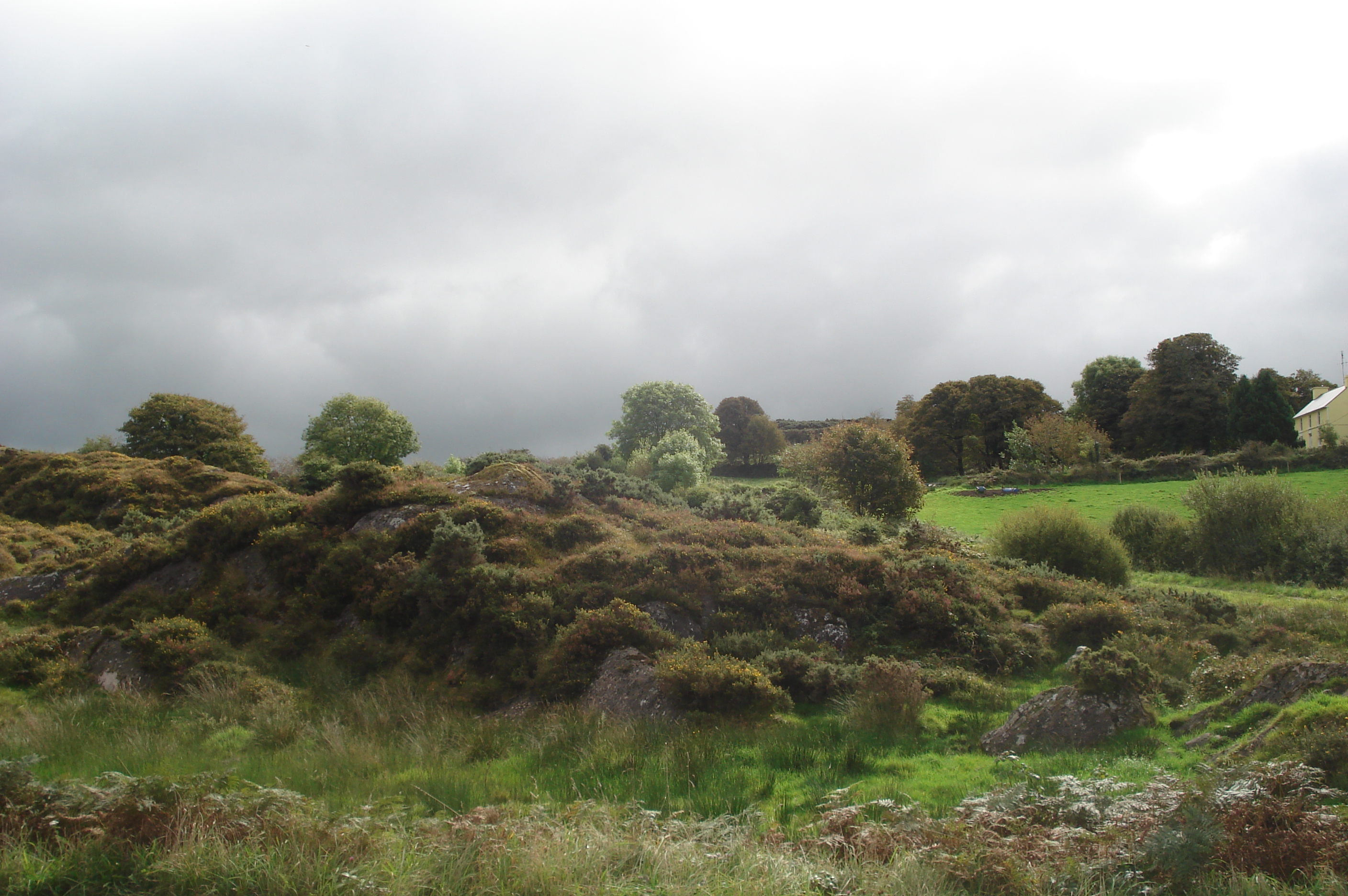
In 2009 I visited with Father Jerry Cremin of Kilmichael Parish in County Cork.  He shared some records he had on my family.  Two of my great-great-grandfathers (John Regan and Patrick Foley) left the parish in 1864 and came to the United States.  Father Cremin’s descriptions of the history and the landscape of Kilmichael were enlightening and entertaining.

View from Kilmichael Ambush memorial, County Cork (2009, Regan McCormack)

When I saw this search topic that brought someone to The Irish in America –  Irish immigrants able to read and write? – I immediately thought of my visit with Father Cremin.  Census data from when John Regan settled in the U.S. shows that he was unable to read or write.  Father Cremin told me that this was not unusual for a man from Kilmichael in the mid-19th century.  He continued to say that John Regan most likely didn’t even speak English, let alone read or write it, when he left Kilmichael.

John Regan

I am a bit embarrassed admit that I had not even considered that any of my ancestors were Irish speakers, but it stands to reason.  Perhaps John Regan never gained command of the English language.  “Old Johnny Regan” is remembered by his grandchildren as a somewhat gruff man, who didn’t seem that interested in young children.

Patrick Foley, who also came from Kilmichael, was literate.  My grandma always told me that her grandfather Foley received his education in a hedge school in County Cork.  In the U.S., Patrick Foley was active in township government and held offices in the Ancient Order of Hibernians and St. Patrick’s Benevolent Society.  My grandma seemed proud of her grandfather, but she would say that the Foleys thought they were better than everyone else.

Patrick Foley

I have a book with Patrick Foley’s  name in gold on the cover, O’Halloran’s History of Ireland.  I am not sure of the exact origin of the book, but I suspect he acquired it while living in New Hampshire, after emigration.  Perhaps it was connected to his participation with the St. Patrick’s Benevolent Society or AOH.  Has anyone else seen this book?  Let me know by leaving a comment!

Last week a couple more search topics appeared on the list:

  • Regan family Kilmichael
  • Foley Macroom

I wish the person who searched for these items would have left a comment…maybe we are talking about the same families!  Click here to read about the first generation of Foleys and Regans born in the United States.

Happy St. Patrick’s Day to you all!


Leave a comment

The Young Americans

First Generations Americans      (click to enlarge)

This photo appeared in the December 2008/January 2009 issue of Irish America Magazine.  The following text accompanied the photo:

In March 1864, boyhood friends John Regan and Patrick Foley from Macroom, County Cork, arrived in New York port on the City of Baltimore sailing from Cobh.  They took to life in America quickly and in 1870 both were married.  John Regan married Mary Quinn and they had four sons and two daughters: Cornelius (Neil) , Ellen, John, Patrick, Jeremiah (Jerry), and Mary.  Patrick Foley married Mary Crowley and the couple had four children: Margaret, Timothy, Mary, and John.  After 15 years at work in the mills and machine shops of Fisherville, New Hampshire both families seized the opportunity to move west, own their own land, and raise their families in an Irish Catholic community.  By 1880, the Regan and Foley families were established in Tara Township near Clontarf, Minnesota – active in township government, members of St. Malachy Catholic Church, and proud farmers on land they owned.

This photograph of the sons of John Regan and Patrick Foley – four first generation Americans – captures one of those moments in American history when anything seemed possible.  It is the turn of the twentieth century and Neil, Jack, and Jerry Regan and John Foley look poised to take on what the world had to offer.  Their confidence is palpable and represents the optimism shared by many Americans at the time.

Over the years, confidence waned as youth faded and the realities of life took hold.  This included falling crop prices, farm failures, personal hardships, and economic depression, but on the day this photograph was taken, with cigars pursed in their lips and hats perched jauntily on their heads, these four young men look as if the world is their oyster.

The Regans and the Foleys came together again in the next generation –  Mary Foley  was my grandmother’s mother and Cornelius (Neil) Regan was my grandfather’s father.

(Submitted by Aine C. McCormack, Saint Paul, Minnesota)

Since the photo was published, I have learned that Patrick Foley and John Regan came from Kilmichael Parish in West Cork.

My great-grandfather Cornelius Regan is seated on the left, next to John Foley.  These two men were members of the Ancient Order of Hibernians, a fraternal organization formed in 1838 largely in response to discrimination faced by Irish Americans throughout the country.  These types of organizations became very important for new immigrants from Ireland, as well as to more established Irish Americans.  More to come about these Irish American fraternal societies in a future post…