The Irish in America


2 Comments

In Loving Memory

On several occasions I have mentioned my great-grandmother Annie Hill Regan and the small collection of photographs and greeting cards she left behind.   Among the mysterious photographs from Manchester England, a photo-pin of a priest, and a charming Christmas card from a sister, are two memorial cards.  Below is the card for her father who passed away the year before Annie came to the United States.

William Hill memorial card, 1898 (click to enlarge)

In 2009 I visited Rathmore Churchyard.  I was unable to locate William’s grave, but I suspect it rests hidden in the overgrown grass, somewhere amidst the gravestones of Hill relatives of whom I am not familiar.
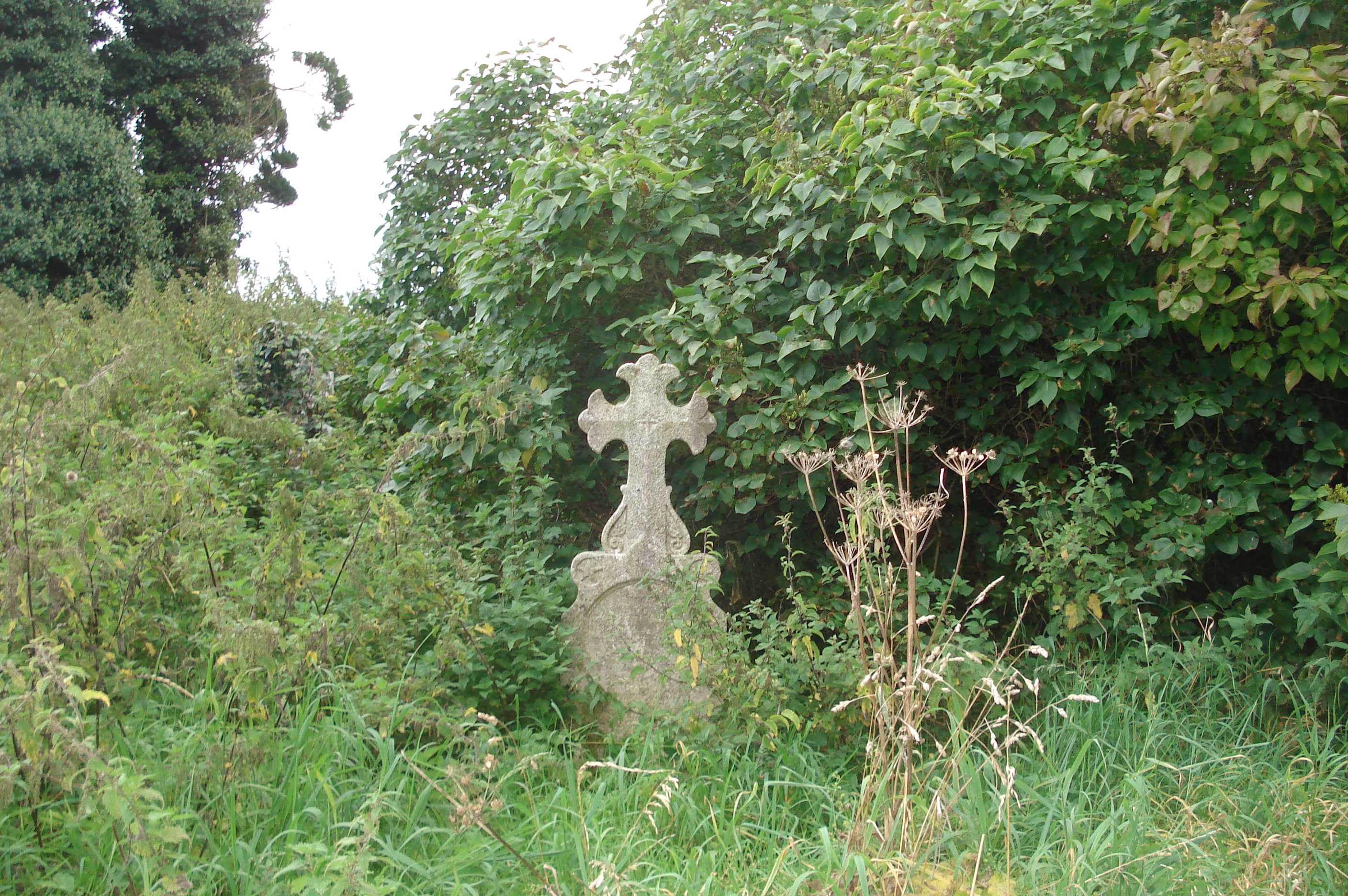
Rathmore Churchyard, County Kildare (2009 Regan McCormack)

The other card is for James Hill.  I assume James was a nephew, and one can imagine this loss was felt deeply by the entire family.

James Hill memorial card, 1895 (click to enlarge)

Memorial cards can provide great information to the genealogist or family historian.  In the case of Annie’s father, I knew his name from her birth certificate, but I learned his birth year, date of death, and place of burial only from this memorial card tucked into a stack of old photographs.  But memorial cards can also raise more questions than they answer, and prove to be as frustrating as an album full of unidentified photographs or a postcard with faded text.

Because they are so portable, I am sure a great many memorial cards crossed the Atlantic, mailed to emigrant daughters and sons in America, accompanying letters detailing all the latest news from home.

Share your stories about how items like memorial cards have assisted you in the search for your family history.  Perhaps a memorial card is all that is left to tell of an emigrant relative’s life in America?  I would love to hear your stories, so please, leave a comment!


1 Comment

Mystery Priest

Photograph pin, ca. 1890-1900

This “photo-pin” belonged to my great-grandmother Annie Hill Regan.  Annie passed away in 1937, and this pin was among a small collection of cards, photographs, and memorial cards that made their way to my mom.  Click here to see a 1930s Christmas card from Annie’s sister Katie in Ireland.

I remember seeing this pin as a child and being puzzled as to why my great-grandmother had such a thing.  Who wore a pin with someone’s picture on it, especially a picture of a priest?  I didn’t get it, but I was relieved that the fad of priest-photo-pins didn’t carry over to the 1980s – the thought of wearing a picture of my parish priest Father O’Sullivan stuck to my cardigan gave me goosebumps!

Several years ago I became curious about the identity of the priest in the photo-pin, and I started to ask questions…

  • Could this be Annie’s brother, or maybe an uncle or a nephew?
  • When Annie came to the US, she worked as a housekeeper for Father Molloy.  Maybe this is him?
  • Were pins like this common or did she have this specially made?

I have never been able to answer these questions.  I know Annie had one brother, John, but I know nothing about his life, and I have seen photos of Father Molloy, but only as an older man and there isn’t a strong resemblance.

Maybe you can help me with the third question.  Has anyone come across an item like this, maybe in an old box of your great-grandmother’s treasures or at an antique shop?  The pin measures about two inches in diameter with a coppery, scalloped edge.  Leave me a comment if you have any ideas…

Check out this website for more on photo jewelry.


14 Comments

Kilmichael Roots

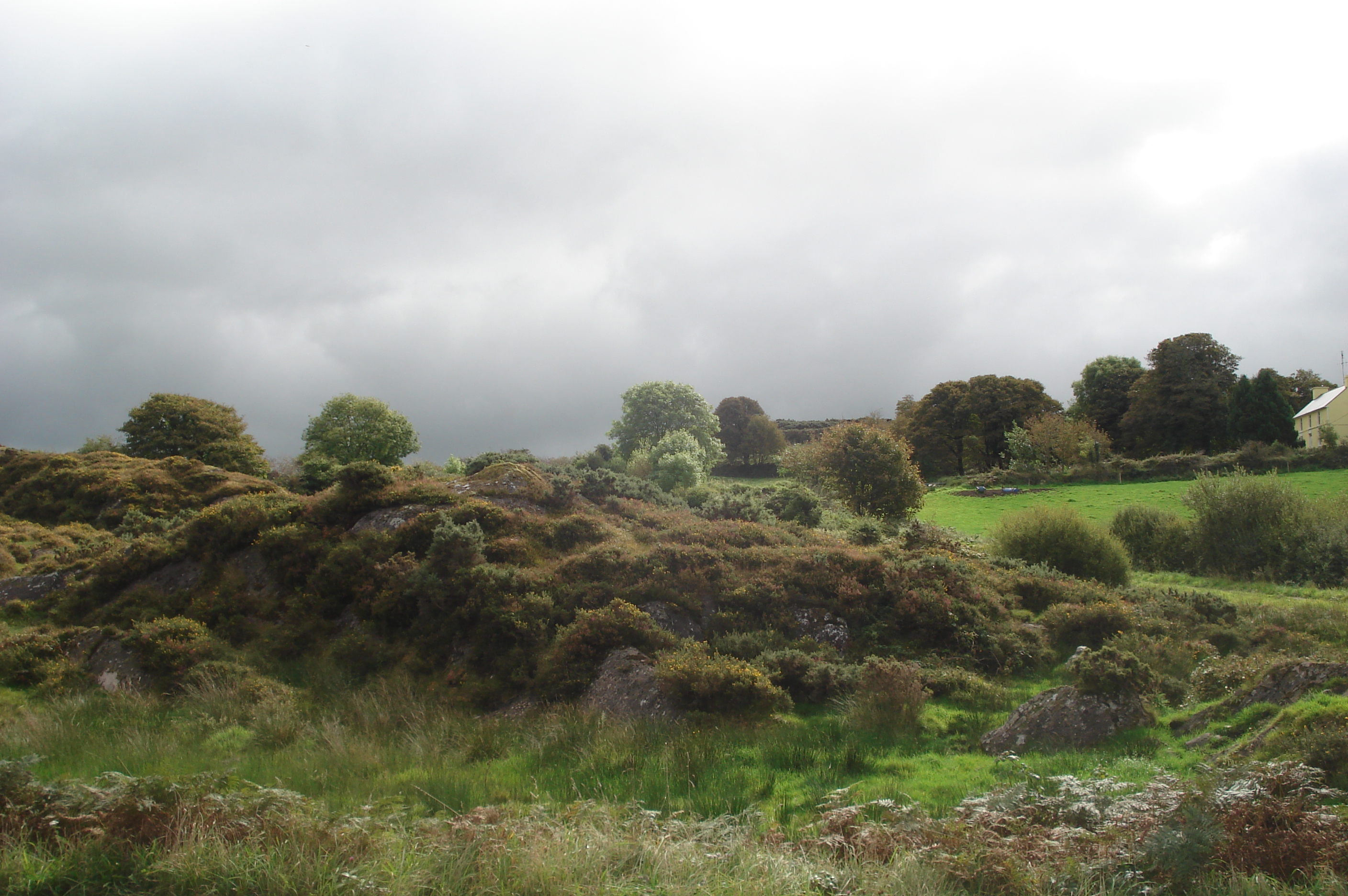
In 2009 I visited with Father Jerry Cremin of Kilmichael Parish in County Cork.  He shared some records he had on my family.  Two of my great-great-grandfathers (John Regan and Patrick Foley) left the parish in 1864 and came to the United States.  Father Cremin’s descriptions of the history and the landscape of Kilmichael were enlightening and entertaining.

View from Kilmichael Ambush memorial, County Cork (2009, Regan McCormack)

When I saw this search topic that brought someone to The Irish in America –  Irish immigrants able to read and write? – I immediately thought of my visit with Father Cremin.  Census data from when John Regan settled in the U.S. shows that he was unable to read or write.  Father Cremin told me that this was not unusual for a man from Kilmichael in the mid-19th century.  He continued to say that John Regan most likely didn’t even speak English, let alone read or write it, when he left Kilmichael.

John Regan

I am a bit embarrassed admit that I had not even considered that any of my ancestors were Irish speakers, but it stands to reason.  Perhaps John Regan never gained command of the English language.  “Old Johnny Regan” is remembered by his grandchildren as a somewhat gruff man, who didn’t seem that interested in young children.

Patrick Foley, who also came from Kilmichael, was literate.  My grandma always told me that her grandfather Foley received his education in a hedge school in County Cork.  In the U.S., Patrick Foley was active in township government and held offices in the Ancient Order of Hibernians and St. Patrick’s Benevolent Society.  My grandma seemed proud of her grandfather, but she would say that the Foleys thought they were better than everyone else.

Patrick Foley

I have a book with Patrick Foley’s  name in gold on the cover, O’Halloran’s History of Ireland.  I am not sure of the exact origin of the book, but I suspect he acquired it while living in New Hampshire, after emigration.  Perhaps it was connected to his participation with the St. Patrick’s Benevolent Society or AOH.  Has anyone else seen this book?  Let me know by leaving a comment!

Last week a couple more search topics appeared on the list:

  • Regan family Kilmichael
  • Foley Macroom

I wish the person who searched for these items would have left a comment…maybe we are talking about the same families!  Click here to read about the first generation of Foleys and Regans born in the United States.

Happy St. Patrick’s Day to you all!


1 Comment

New Life, New Century

The tools and resources available on Ancestry.com have brought family history and genealogy research directly to the fingertips of anyone with a computer and $40 a month to spare.  Fascinating discoveries are literally only clicks away.  That being said, it never hurts to have an experienced researcher like Jim on your payroll to navigate the myriad of possible matches and probable connections you encounter in your search.  Let’s continue the Clancy family’s journey to America by taking a closer look at Catherine, the first (known) Clancy sibling to emigrate.

Margaret told us that Catherine (Kate) was born in Moylough, County Galway in 1878.  Since she did not appear on either the 1901 or the 1911 Irish Census, Jim was confident in his identification of the Catherine Clancy who set sail from Queensland (Cobh) April 4, 1900, on board the S.S. Teutonic.  The journey took fifteen days, and Catherine arrived at New York City harbor on the 19th of April, 1900.  This would have been an exciting time to arrive in the US – amidst the optimistic swirl of the Spring of a new century.

With the 1920 US Census, Catherine was married to John J. Coogan from Kilkerrin, County Galway.  The young couple was living in Brooklyn, New York with two small boys (John and Joseph.)  By the 1930 US Census, the Coogan family had moved about eighty miles from Brooklyn to Wawayanda, New York.  A third son Francis joined the family in 1922.

There were some interesting items included in the collection of Immigration and Travel records.  On March 25, 1921 Catherine and her two sons returned home to New York after a holiday in Ireland.  Late in 1920, John had applied for a passport indicating travel with his wife and two sons to Ireland for three months, leaving in August – perhaps the trip was postponed or the return delayed.

The U.S. Passport Applications on Ancestry.com are intriguing and could be a gold mine of information for the family history researcher.  John Coogan’s passport application gives us not only his birth date and place, but those of his wife and children, as well as the date he was naturalized as an US citizen, where he had lived in the US, his occupation, and his current residence.  The dates and destination of planned travel are also given.  These applications can be a one-stop source for genealogical information.  Plus, some of the passport applications even include a photograph!

One of Margaret’s memories was of saying the Trimmings after the evening Rosary and the “boys in the war” were always included in these prayers.  Margaret believed the Coogan boys fought in the Korean War.  Well, Jim discovered that the three Coogan boys were indeed “boys in the war”, but the war was World War II, which may have been before Margaret’s time.  Perhaps there were more American relatives from Moylough who fought during the Korean War?

We located a few descendants of Catherine (Clancy) and John Coogan, and I forwarded that information on to Margaret.  Maybe she will connect with some American cousins…I will keep you posted as to what I hear from her.

Next time we will wrap up the Clancy family saga with the stories of Nora and Molly.


Leave a comment

The Unmarked Grave

I have exchanged emails with Margaret from County Galway regarding her American relatives.  When I first heard from Margaret, I thought her request was fairly standard: she was looking a relative, Catherine McLoughlin Dempsey, who was born 1887 in Coolcalliga, Moylough, County Galway and emigrated to the US.  Catherine and a daughter returned to Ireland for a visit in the 1960s.

I was easily able to find Catherine by doing an Ancestry.com search.  In addition to the census and passenger list data, there was a family tree that had been submitted by an ancestry.com user.  This family tree included Catherine McLoughlin Dempsey with the exact birth date and place.  I have attempted to make contact with the author of the family tree, but as yet have been unsuccessful.

Margaret was quite pleased to learn about Catherine’s life in America, but she wanted to learn if there were any surviving members of the family.  You see, Catherine’s mother, Margaret Clancy McLoughlin, is buried in Moylough without a grave marker.  Margaret (also Margaret Clancy before she was married) had hoped to locate a direct descendant who might help remedy that.

An Irish Cemetery (not in County Galway, but County Kildare) - photo by Regan McCormack

I am competent in historical research, but tracing living people is another story.  I found a Dempsey in the Long Island town where Catherine died, but when Margaret contacted him she learned he was a recent arrival to the area and unrelated.

There are more of Margaret’s relatives I have yet to fully research, but I was thrilled with the information on them that Margaret shared.  Here is a portion of her email:

Nora  Clancy  married an O.Hara They had 2 children (may have been adopted) mary and ?John I think he was in the Korean war AS were the Coogans .Their mother wasCatherine or maybe Kate .Her husband was from Kilkerin CoGalway  we prayed for them every night after the rosary in what we called Trimmings  They were known as:” The boys in the War.”4 of the Coogans visited Ireland late sixties or early seventies ,no one seemed to have exchanged addresses!!!    we also had Nellie clancy married Nick guerin ;They lived in Fortlauderdale on retirement.and Ive a faint recollection of Posting mail to:Flushing Newyork. ;where they had a sister Mollie  never married,She sent me 100 dollars when I got married in 1967!!! . There was a brother James  died 1952 I think,He wasnt too popular with the sisters… He never came back to Ireland, I think Nellie was the only one to visit,She was  returning to the states when the Lusitania sank,I remember finding an old letter when my aunt died and reading about the debris floating on the sea!

Margaret provides many interesting details, but I especially liked the bit about how they prayed for the “Boys in the War” each night after the Rosary.  She has so much information on these relatives.  I will trace these relatives and share the results here.  In the meantime, maybe someone will read this with ties to these Clancy siblings…


2 Comments

Ireland Reaches Out: A Visit Home

I saw this item in an email from IrishCentral.com this morning and I had to find out more information…

Irish economist, writer, and broadcaster David McWilliams is behind a project called Ireland Reaching Out, which aims to bring emigrants (and their descendants) back to their home parishes in Ireland for a visit.  This is  a pilot program focusing on thirty parishes in southeast County Galway.  An article in the Connacht Tribune says that the plan is to contact 44,000 emigrants from parishes in places like Gort, Portuma, and Loughrea, and invite them back for a “Week of Welcomes” in June of 2011.

This “Week of Welcomes” will include a program of activities in the parish of origin, including lectures, tours, and samples of local culture, food, and drink.  The hope is that these visits will provide a short-term boost to the local economy as well as promote future investment in the region.

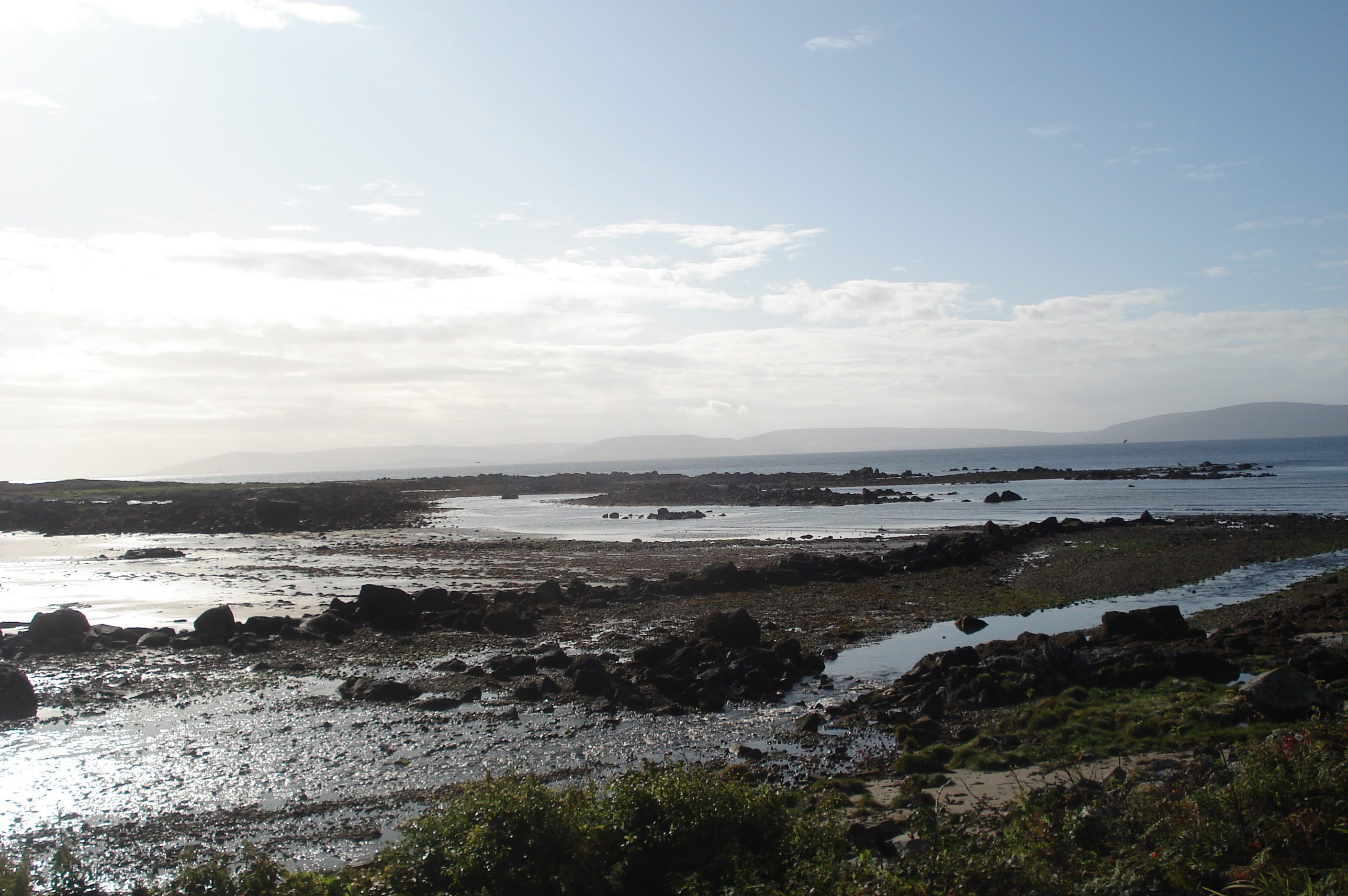
County Galway (2009, Regan McCormack)

I read some comments from recent emigrants who seemed angry and bitter and wanted nothing to do with a program like this.  Maybe for these individuals, their feelings about having to leave home are too raw; the wounds of emigration are too fresh.  I cannot tell you how many times I hear Americans engaged in family history lament that the older generations of immigrants never spoke of Ireland.  In my own family story, all we were ever told was that they came from Cork.  Many, many Irish immigrants in America came from Cork, and practically all of them left from Cork.

Further removed from emigration, you will find Americans eager to make a connection with the place their family came from in Ireland.  Granted, in light of the recent economic downturn Americans may be taking fewer vacations overseas.  But there are Americans who, if given the chance to have a pint at the local pub their grandfather frequented before coming to America, would seize the opportunity to visit Ireland.  I know it sounds a little corny to Irish people, but the attraction of Ireland to Irish Americans is undeniable.  It makes perfect sense for the Irish to capitalize on this pull.  These days it may take more than the Blarney stone to lure American tourist dollars.

Mr. McWiliams describes the program in his own words in his piece on Independent.ie – click here to read the editorial.  In my opinion, the fact that a program like this is underway in Ireland is proof that although the bubble may have burst, the Irish people are using their strengths to imagine their future.  A future deeply rooted in history…that’s nothing new for Ireland, is it?

Near Erke cemetery, County Laois (2009, Regan McCormack)

Next time I will share a bit about our most recent visit home.  By the way, Mr. McWilliams if you are reading this, you must hire my cousins Jimmy and Helen McCormack of Ballyedmond, County Laois as consultants for Ireland Reaching Out. You will have to read my next entry to see why…


2 Comments

Family and Emigration

While reading up on Irish emigration, I found an interesting article by County Fermanagh historian John Cunningham on the Cassidy family website.  In the article Mr. Cunningham considers the effects emigration has had on Ireland and the Irish people.  Click here to read the article, which is actually a lecture given by Mr. Cunningham.

Mr. Cunningham uses his own experiences to show how family members who stayed in Ireland felt about emigration.  He tackles the often complex and emotional issue of emigration in a straightforward manner with a bit of humor thrown in for good measure.  I found the account of his mother’s visit to America particularly insightful, as well as the description of the parcels and letters from America.

As his mother learned firsthand, letters home to Ireland often didn’t tell the whole story of the emigrant’s experience in their new home.  Regardless of their accuracy, letters are one of the best resources for learning about your emigrant relative by providing tangible evidence as to where the relative lived, possibly where they worked, or names of spouse and children.  Consider yourself lucky if you have an emigrant letter!

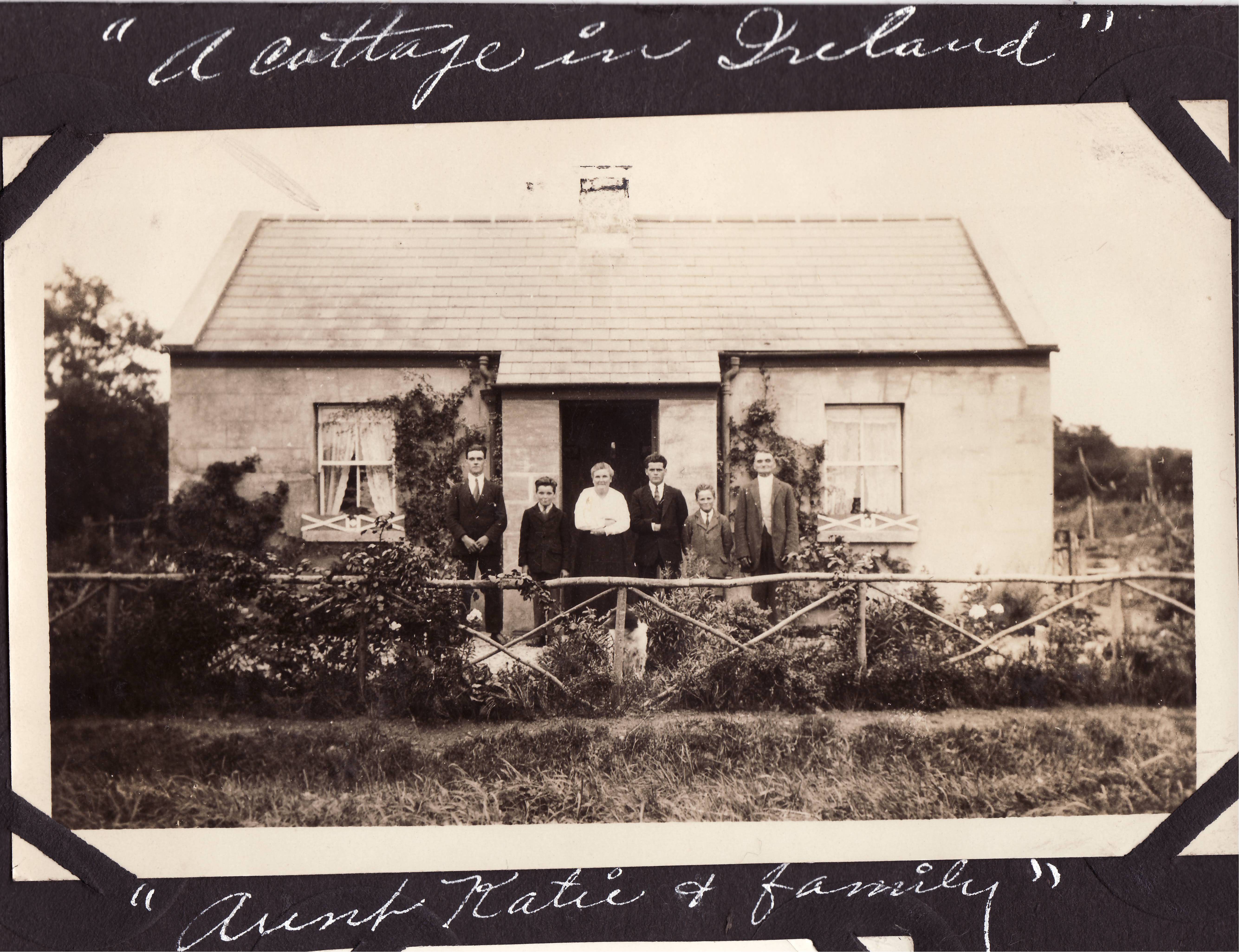
My great-grandmother came to the United States in 1899, joining an older sister who had arrived six years earlier.  A sister and a brother remained in Ireland, and one sister has previously emigrated to Manchester, England.  Unfortunately, no letters survive (on the American side) from relatives at home, but there are a few postcards, greeting cards, and photographs that were sent to my great-grandmother and her sister.  The following photograph was included in an album belonging to a niece of my great-grandmother who lived in Montana, USA.

John and Catherine (Hill) Howe Family, Johnstown Co. Kildare

John and Catherine (Hill) Howe Family - Johnstown, Co. Kildare (courtesy of M. Jeffrey Harshman)

Among the few items belonging to my great-grandmother is a sweet little Christmas card from her sister Katie (Catherine, pictured above), as well as a torn and tattered photo postcard depicting a Whitsunday parade.  It is intriguing to see what pieces of someone’s life survive for later generations.  These bits and pieces have helped us learn a great deal about my great-grandmother’s life before she came to America.

So, if you don’t have a letter, all is not lost in your quest for information about your emigrant relative.  Letters can make the initial search easier, but other information can prove to be as useful.

I invite you to share your family’s emigrant stories by leaving a comment!  Let me know what clues you have, and I will help you begin your search for information on your relative.  If you think you don’t have any information to go on, but really want to learn about what may have happened to a relative, you should leave a comment, too.  We never know what we will find when we start looking!