The Irish in America


2 Comments

One of the Foleys: What do you think?

Unidentified from the Foley family collection

Several years ago, my mother received a trio of photographs from her cousin Lorna.  Lorna knew that two of the photos were her great-grandparents (see below), but she had no idea about the identity of the woman pictured above.  All that Lorna could offer was, “Well, I am sure she’s one of the Foleys…”

Do you think she could be this guy’s mother?

Patrick T. Foley

This is my great-great-grandfather Patrick Foley who arrived in America in 1864.  He came from Kilmichael Parish, County Cork and settled in Fisherville, New Hampshire before heading West to Clontarf, Minnesota in the late 1870s.

Or, could the caped woman be this lady’s mother?

Mary Crowley Foley

Mary Crowley married Patrick Foley on November 13, 1869 at St. Joseph Catholic Church in Providence, Rhode Island.  Mary also came from County Cork.  Patrick and Mary’s photographs are tin-types.

I really can’t tell who she is, nor do I know where the photo was taken.  If anyone has input or information regarding these photos, please leave a comment.  I would love to know more about the costume in the first photograph, and if you see any resemblance.


2 Comments

She Liked Nice Things

Over the past several months, I have used the items left behind by my great-grandmother Annie Hill Regan to help tell the story of an Irish woman who came to the United States at the turn of the last century.

Items have included a sweet Christmas card from a sister in Ireland, a small photo-pin of a priest, some memorial cards, and a Whitsun postcard.

I find these remnants from Annie’s life fascinating, and they have provided tiny, yet invaluable peeks into her life.  They have also complicated my vision of Annie, creating new questions and contributing to ongoing mysteries.  This is especially the case with the photographs.

Nearly all of Annie’s photographs are unidentified.  There is ONE photo with the label, John’s Aunt Mary.

John's Aunt Mary

Initially I was so excited to find an identification that I forgot I had no idea who this Aunt Mary was!  I assumed the “John” was my grandpa, and he had an Aunt Mary Regan, but she died when she was thirty-years-old.  This Aunt Mary appeared older than thirty.  And the photo was one of Annie’s, so this Aunt Mary must have come from her side.  I knew so little about Annie’s family, so I set the photo aside and I would think about it later.

Later turned out to be seven years ago my mother and I began looking into our family history.  When we learned that Annie had a sister named Mary Hill O’Brien who lived in Montana, I remembered the photo.  Some lucky timing brought me in contact with Mary’s grandson who still lived in Montana.  Jack O’Brien has this same photograph of his grandmother, Mary.

Here is one last postcard that was among Annie’s things.  This is from Mary to Annie:

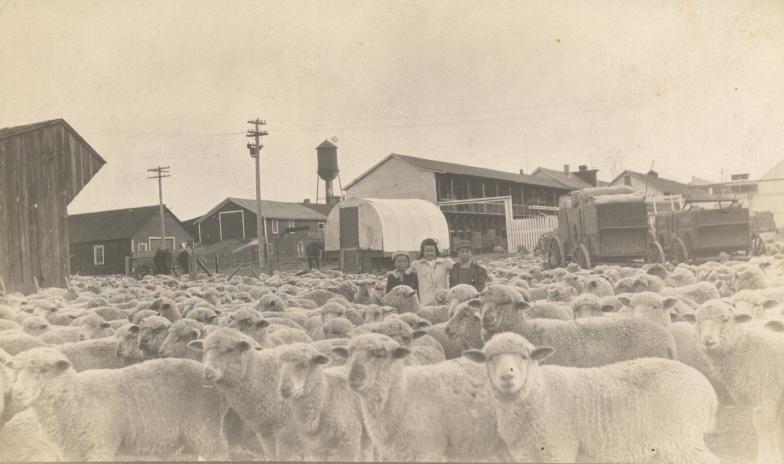
Lucille O'Brien amongst the sheep

from Mary to Annie

Annie, ca. 1900

Click here to read my story in the current issue of Irish America magazine about how meeting two of my great-grandmother’s nephews has brought me closer to developing an understanding of the woman Annie was.


1 Comment

Missing Friends, Missing Links

I bet that almost every person engaged in family history and genealogy research  has lost track of someone – at some point compared census records and wondered, “Now, where did he (or she) go?”  And of course there are always those pesky unidentified mystery photographs that make their way into family collections.

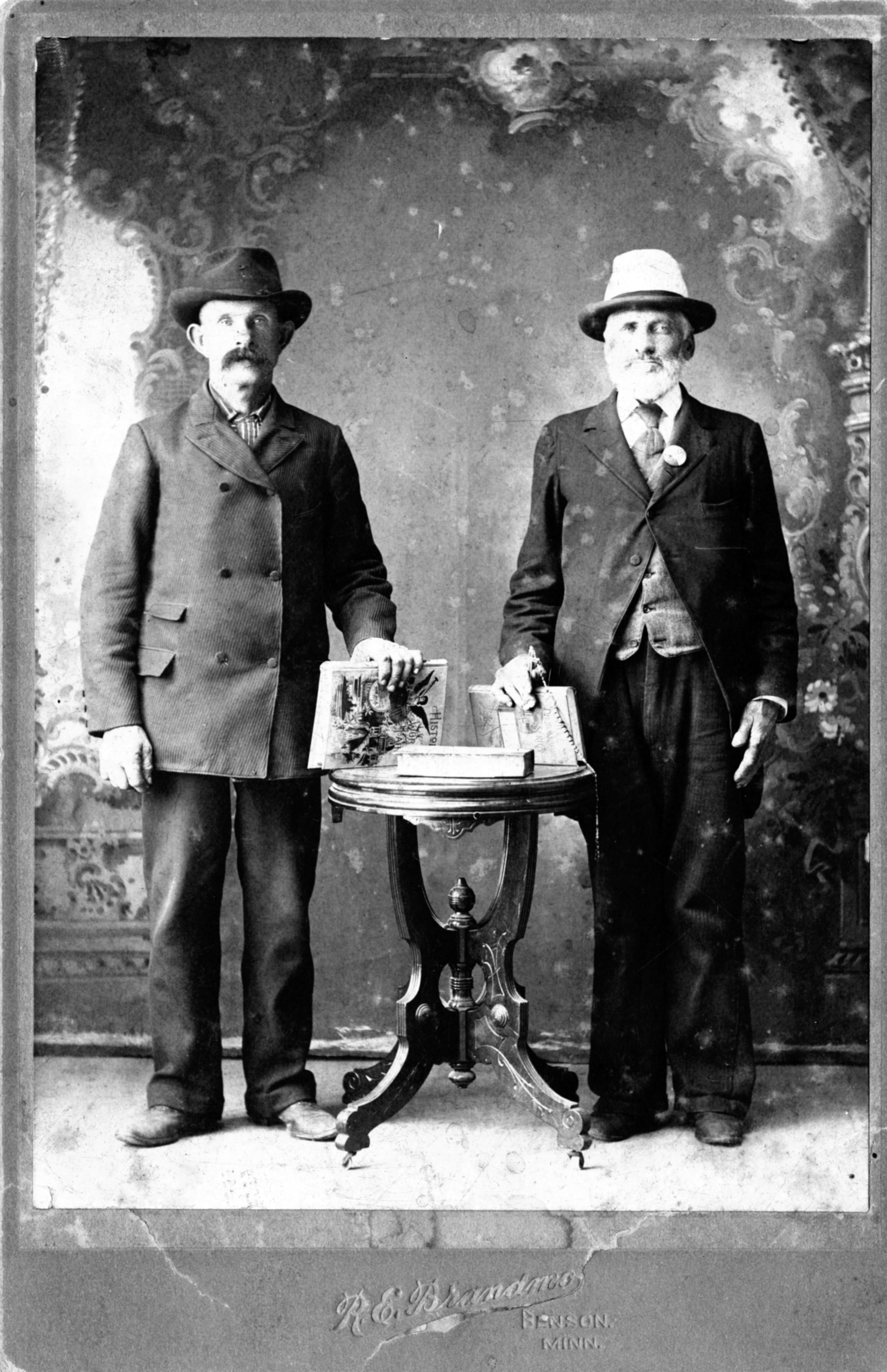
No clue who these two guys are...

Often when compiling a family history relatives will drift in and out of the picture, sometimes disappearing forever.  This can be especially true if you are Irish, attempting to make sense of a family history full of the gaps left by emigration, or American with Irish roots, sorting through migration throughout the entire United States (it is a big country!)

It may be frustrating for genealogists tracing relatives who appear to be missing with no paper trail to follow, but imagine what it was like for the mother who had gone ten years without hearing from her emigrant son, or the brother who was separated from his siblings in the confusion of arriving in America?

I was thinking about some of the mysteries in my own research when I remembered a database put together by the Irish Studies program at Boston College several years ago – Missing Friends: Ads for missing Irish immigrants from the Boston Pilot

The database consists of text entries for 38.701 ads placed by individuals looking for lost friends and relatives from the “Missing Friends” column which appeared in the Boston Pilot from October 1831 through October 1921.  The amount of information contained in the entries varies, but can include specifics about birthplace, dates of immigration, locations, relatives, and occupations.

To test the database, I searched for my great-great-grandfather Francis McMahon’s sister who, according to family folklore, was lost once the family arrived in America.  No records matched for that search, but I quickly transitioned into general browse mode of the database.  It is possible through an Advanced Search to search by words you enter in any of the fields contained in the entry.  This way, if you are unable to locate a specific name, you might luck out and find someone from the same townland or parish as your relative, with whom there may be a connection.  Search by relationship to find all the grandmothers who placed ads for missing grandchildren, or ads for missing farmers, railroad workers, or miners.

This database is definitely worth a look.  Let me know if you find anything interesting!  Leave a comment or send me an email – aine@archival-solutions.com.  I came across something interesting when I was browsing the database…well, interesting to me at least!

I did an Advanced with Fisherville, NH in the “Location after arrival” field.  Fisherville, NH was where some of my relatives first settled after arriving in the US.  Two ads resulted from the search, both for Thomas Keenan.  One ad was placed February 11, 1865 by his brother Peter, and the other March 11, 1865 by his mother Ann.  Thomas was my great-great-grandfather Patrick Foley’s brother-in-law (sort of convoluted relationship, I know!)  At any rate Thomas had left Fisherville for Australia in 1857 and the family lost touch with him at some point.  The ad placed by his mother says, “Afflicted mother Ann Keenan wants information.”  This makes me wonder…was it simply that they had not heard from Thomas that prompted two ads in two months, or was there something else going on in the family in Fisherville that made them want to find him?

This great database is just another way we can get closer to the stories of the Irish in America…


Leave a comment

Diaries and letters and newspapers…oh my!

Where can you find these treasures, in addition to many other historic research sources? Online at DIPPAM – Documenting Ireland: Parliament, People, and Migration.  This is one of the coolest websites out there for anyone interested in Irish studies, emigration, and history.  DIPPAM is a project of Queen’s University, Belfast and several other entities.  They describe themselves like this:

DIPPAM is an online virtual archive of documents and sources relating to the history of Ireland, and its migration experience from the 18th to the late 20th centuries.

DIPPAM consists of three databases – Enhanced Parliamentary Papers on Ireland-EPPI, Voices of Migration and Return-VMR, and Irish Emigration Database-IED.  Let’s take a closer look at the IED.

The IED is a collection of over 33,000 documents (with new material added regularly) covering the 32 counties of Ireland, with the majority dated from 1820 to 1920.  If you relish the thrill of perusing old archived collections in person, browsing this virtual archive could become a new favorite destination.  Why not take advantage of the neatly transcribed diaries and letters, and set aside the microfilm reader for a bit – all the documents in this collection are available to view online.

Click here to read the general guidelines for searching the IED.  You are able to search for a specific term, or use the categories on the left side to define parameters and browse the fascinating collection of documents.

Here is an example of a search I did on the emigrant letters in the collection.  I began by restricting the “Document Types” to Letters (Emigrants).  Next I entered Minnesota in the “Search” field.  This search resulted in 14 emigrant letters with some mention of Minnesota.

I selected the following return:

18-10-1884    Thomas McCann, Minneapolis, Minnesota to Mary McKeown, Belfast.

Mr. McCann is writing to his sister in Ireland from Minneapolis, Minnesota, which is located in the north central portion of the United States.  Most of the letter talks about the McCann siblings who are scattered throughout the US and Ireland.  The pattern of Irish emigration is evident in this letter; one at a time the siblings made their way to the US, some via Scotland, joining relatives already established in American cities.  Once in the US, some stayed in New York while others moved west to Madison, WI, Minneapolis, MN, and beyond.

…dear sister
Maggie is well and likes this
country she would not go back to old
ireland for any money she came to
Uncle James from New York and stoped [stopped?]
there last winter so she do not think
of the old Country any more she sayes [says?]
she had to work to [too?] hard when she
was there and had nothing for it
she is now working in a hotel in
Madison near my uncles house but
I am 2 hundred and fifty miles furder [further?]
west I left my uncles last spring and
came west I am now 7 hundred miles
from New York so you may think I am quite
away from the place I was Born in
old Ireland but I am quite happey [happy?]
sometimes I never think I was in old
Ireland still I never think of it
sometimes for I do not entend [intend?] ever
to see it I am still working at my
trade and always has plenty to do
I spent quite a little some [sum?] on maggie
to take her here she cost me forty
seven dollers [dollars?] to take her from
Ireland to here but I do not care
for that it makes me happey [happy?] to
hear from her and that is all I want
from her sometimes she do not think
worth her while to write me a few
lines to let me know how she is getting
along well…

Click here for the full text from ied.dippam.ac.uk

Maybe I am cynical, but I note a hint of a passive-aggressive tone when Mr. McCann refers to his sister Maggie.  Glad to see that was alive and well in the 19th century.  Also interesting are the attitudes he expresses toward his homeland – more practical than sentimental, but rather sad.  Reading this letter we can understand a bit more about how it must have felt to have to leave home and have your family dismantled.

Start browsing: click here to go directly to the Irish Emigration Database.  What else do you have to do this weekend?


Leave a comment

Emigrant Letters Help Tell the Story

The most frequently searched topic that brings visitors to The Irish in America is emigrant letters, those rich and rare sources of historical and genealogical information.  Over the next week I will explore some internet resources available to those interested in the often elusive emigrant letter.

The Historical Society of Pennsylvania is home to the Curtis Family Collection.  The Curtis family emigrated to Philadelphia, Pennsylvania from Mountmellick, Queen’s County in waves, from the mid-1830s to the mid-1840s.  The collection includes letters from Ireland to Philadelphia, as well as from Philadelphia to Ireland.  Click here to read theses fascinating letters.  This link will take you to the Historical Society of Pennsylvania’s website and a listing of the letters – once there simply click on the links to open each letter.

Also included in the Curtis Family Collection are several historical documents, including a membership certification to the Saint Patrick’s Beneficial Society of Philadelphia and citizenship papers.  Click here to view all items.

The Historical Society of Pennsylvania has a few other items related to Irish emigration on their website.  The words to eight immigrant ballads are posted, as well as examples of missing emigrant listings found in the Catholic Herald newspaper.

These resources were put together for an education course on ethnic history and settlement of Pennsylvania.  It is an excellent way of teaching this topic using primary sources preserved in their archive.  The collection provides tremendous insight into the lives of Famine-era emigrants to the United States.  Many thanks to the Historical Society of Pennsylvania!

Reading List…

Journey of Hope

Check out this great book by Kerby Miller and Patricia Mulholland Miller titled Journey of Hope: The Story of Irish Immigration to America.  The book utilizes emigrant letters to tell the story of Irish immigrants and includes many photographs.  It is an “interactive book” containing copies of handwritten letters and other reproduced ephemera central to the immigration journey.


4 Comments

What’s Whit Week?

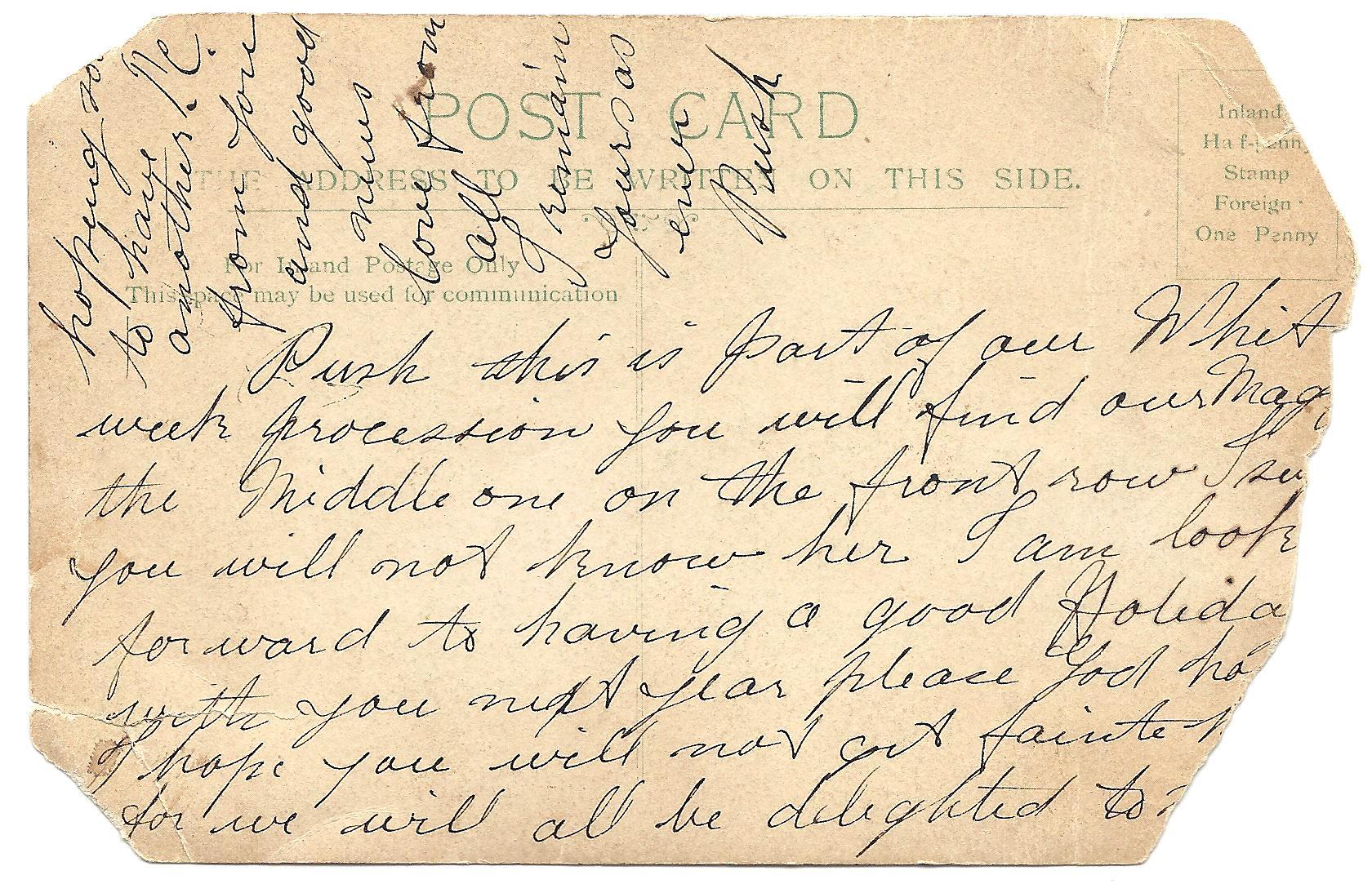
Whit Week Procession (postcard sent to Annie Hill Regan)

Whit Week is here and that can mean only one thing…hmmmm…I wonder what that could be?  If this was the early twentieth-century in Manchester, England, odds are it would mean donning a new white dress and marching in a Whit week procession like the ladies pictured above.

Since the demise of the Whit Monday bank holiday in the UK in 1967 and Ireland in 1973, I am not sure how much attention is  paid to the week following Pentecost (read more about Whitsun by clicking here.)

This photo of a Whit Week parade appears on a postcard from the early twentieth century, and survives in a small collection of photos and cards that belonged to my great-grandmother Annie Hill Regan (born in Kildare, emigrated to Minnesota 1899.)  With no postmark, no address, and rather ambiguous greeting and signature (both are Push), this little card is a bit puzzling.  My best guess is that the card came to Annie from her younger sister Bridget Hill Reynolds of Manchester, England.  From what I have read, processions like this were more popular in England, and the postcard mentions “our Maggie” – Bridget had a daughter named Maggie, who eventually emigrated to America joining her Aunt Annie in Minnesota.

The card mentions looking forward to a visit “next year.”  I wonder if Annie ever did travel from Minnesota to Manchester, England to visit her sister’s family?  Did she return home to Ireland on this visit?  I have searched for possible documentation of such a journey, but so far have come up empty.  I will have to keep at it and see what I can find.

Reverse of postcard

Maybe you can help me figure this photo out…

  • Have you seen Push as a nickname or slang in correspondence from the early 20th century?
  • Do the dresses provide a more concrete date to this photo?
  • Is Whitsun or Whit Week still observed in Ireland and England?

Any ideas?  Please leave a comment!

Have a good week!


1 Comment

Family Ties

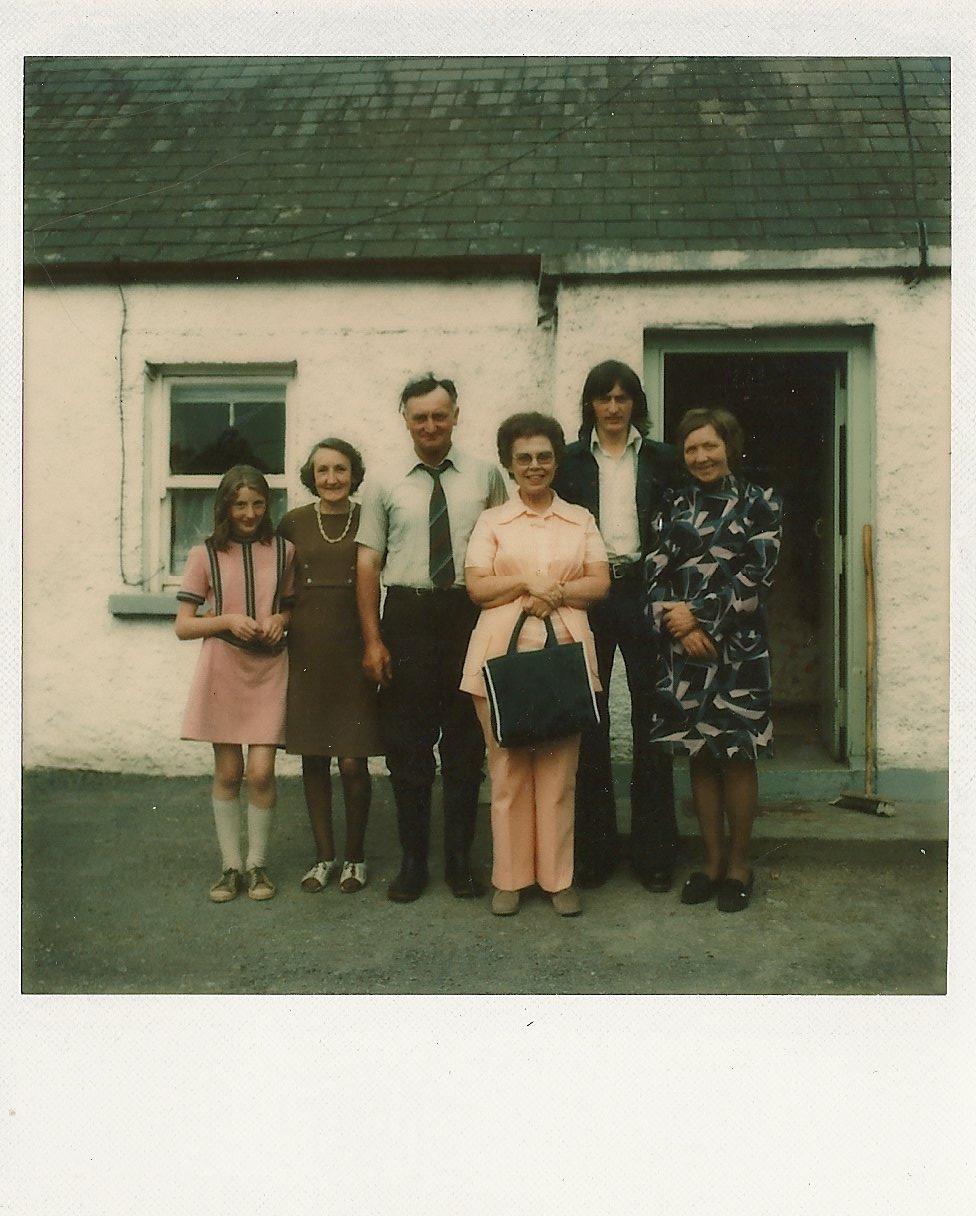
Can you identify the American in this photo?

Long before our 2009 visit with our McCormack cousins in Ballyedmond, County Laois, the family was welcoming American relatives back to the farm and home place.  We were not the first McCormack Yanks to make contact with our Irish cousins, but it seemed our family suffered from a bit of historical amnesia.  Much the same way that people don’t keep in mind the lessons learned by their parents and grandparents and proceed to make the same mistakes (war, high heels, trusting that a boom economy will last) my family lost touch with its history for a generation or so.

In 1934 my grandfather Bill McCormack, first generation Irish-American, visited Ireland with his Uncle Pat who had emigrated to the United States in the 1890s, and had designs on moving back to Ireland.  Poor health ultimately prevented Pat from returning to stay, but at least he was able to have one last visit home.  My grandfather’s cousin Paddy McCormack of Rathdowney, County Laois was a young man at the time and remembers this visit.

Paddy and Maura McCormack, far left.

My grandfather passed away in 1958, and while his sister Nellie stayed in touch with the family in Ireland, this connection was lost for my father and his sisters.  Also lost were the stories my grandfather could have shared about his trip to Ballyedmond and our Irish relatives.  I can think of one inquisitive granddaughter who would have relished these stories!  My father became interested in genealogy in the 1990s and after much research, new generations of the American branch of the family connected with the Ballyedmond McCormacks.  Initially I had the sense that my father had “discovered” our family roots, but of course they were always there, it just took a little digging.

I would love to see a snapshot from the 1934 visit, but to my knowledge there is no photographic evidence.  Instead, I share a photo from 1975 when another McCormack relative visited Ballyedmond (see top of post.)  The American I challenged you to identify is Eileen Garding, a first cousin to my grandfather Bill.  Andy McCormack is the gentleman in the shirt and tie – my grandfather’s first cousin who lived in the house in the background, the house in which my great-grandfather was born.

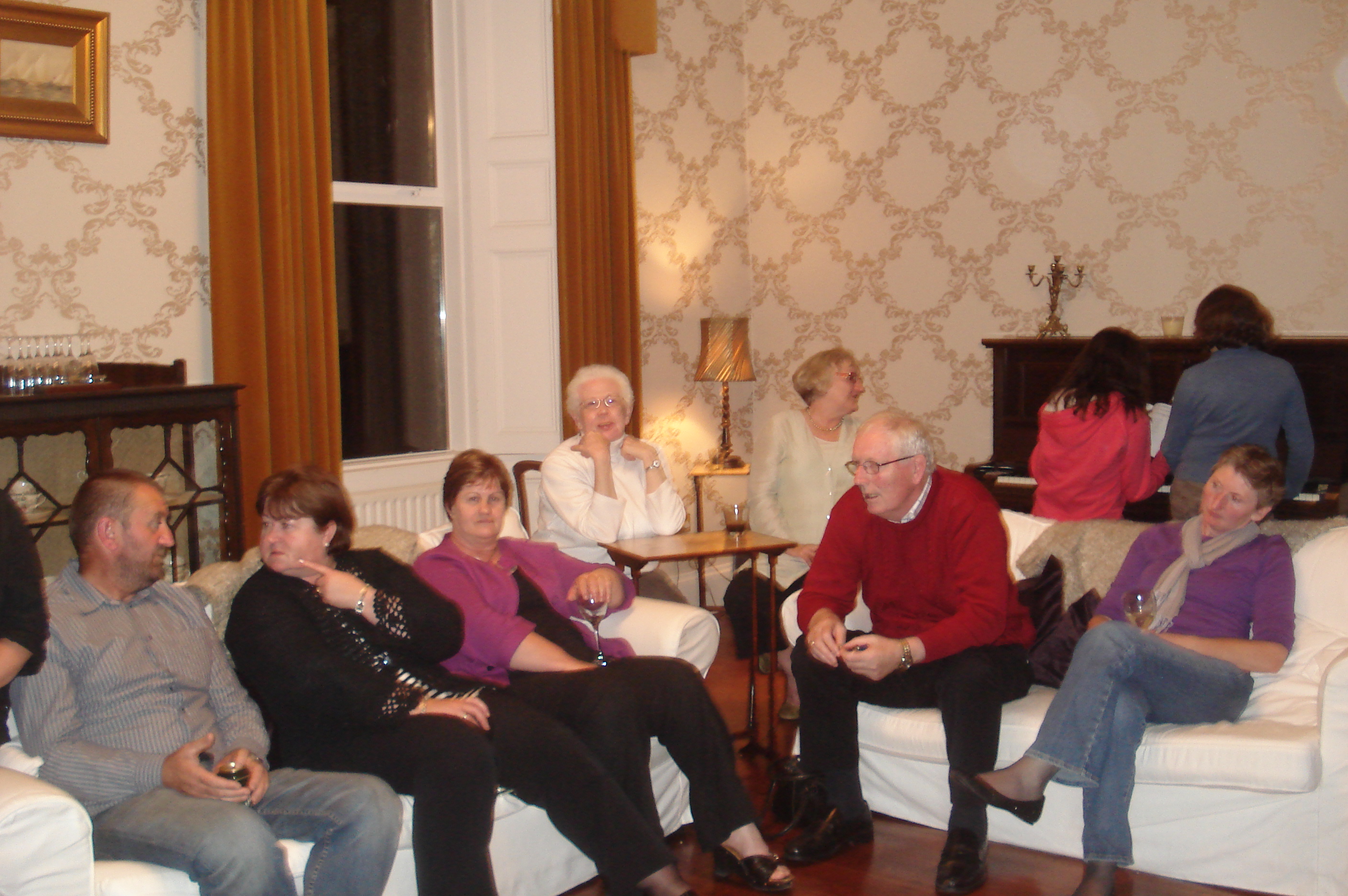
McCormacks -- 2009 (Ellen McCormack from first photo is seated at far right)

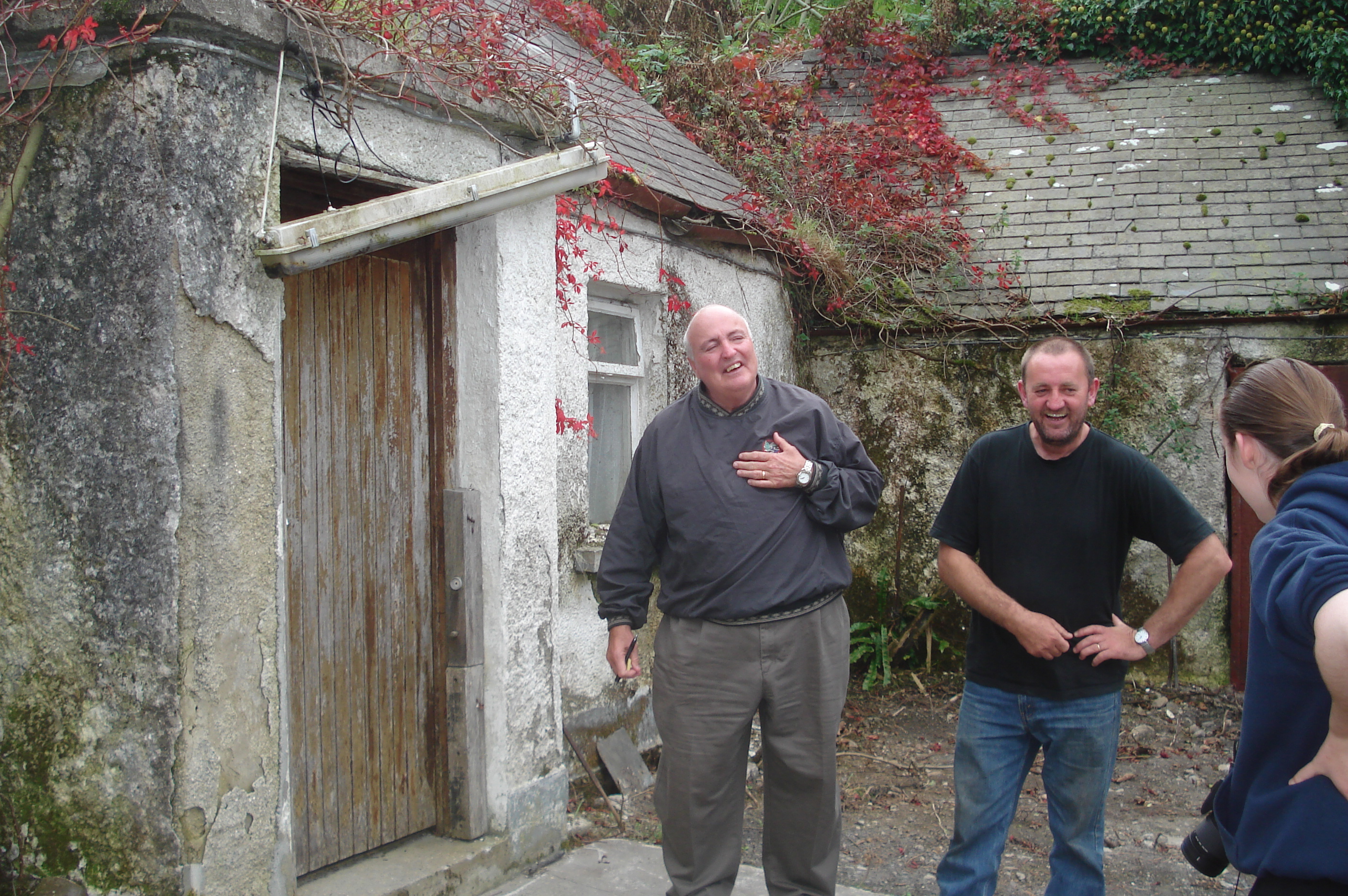
The 1975 photo provides a bridge from my grandfather’s visit in 1933 to my own family’s visits to Ireland. In 2000 when I first met my Irish relatives, I met Tess McCormack (pictured next to her husband Andy) and her daughter Ellen (next to Tess, at left end.)  I have not yet had the pleasure of meeting Ellen’s brother Martin pictured next to Andy in the blazer, but her other brother Jimmy and his wife Helen have graciously welcomed us back to Ballyedmond.

Two Jimmys by old house (same house in 1975 photo)

My sister remarked to me after the 2009 party in Ballyedmond that she felt like she had known our Irish relatives her entire life, not simply met them once or twice.  I felt the same way.  I guess that is what can be great about family, when you can pick up where you (or your grandparents) left off and move forward.  Hopefully my nieces will not need to recreate the family tree forty years from now.  I think the internet and computer files may have solved that problem!

Jimmy and Martin McCormack -- couldn't resist including this slice from the seventies...

Check out related posts…

Week of Welcomes: McCormack Style (Part I)

Week of Welcomes: McCormack Style (Part II)

Read my story that appeared on IrishFireside.com about our 2009 parties with the McCormacks — click here.


1 Comment

Memorial Day: Remembering our Irish-American soldiers

Another offering from Jim McCormack…this time he writes about the Irish-Americans who served in the US military over the years.  Jim also takes a moment this Memorial Day to reflect on on a personal heroes, his uncle Jimmy Flannery – one of the many Irish Americans who bravely served in World War II. 

Memorial Day always reminds me of the role played by soldiers of Irish and  Irish American descent in American military history. Irish soldiers fought on both sides of wars America was involved in from the French and Indian War to the American Revolution  in the 18th century through the War Between the States which featured “Irish Brigades” on both sides.

In the U.S. War with Mexico in the middle of the 19th century countless Irish immigrants were recruited directly off the immigrant ships to serve in the U.S. Army.  With little training these recruits from the famine were sent to fight against the Mexicans. Many served with distinction.  On the other hand some of the new recruits changed sides and fought on the side of the Mexicans. According to members of the “San Patricio” Battalion, they felt more comfortable fighting on the same side as the Catholic Mexicans and against the Americans who reminded them of the English oppressors they were fleeing. The vile treatment they received from the Nativist leaning officers they experienced in the American army made their decision easier. Every year they are still remembered and honored in Mexico.

Another interesting fact from the History of Military Service in the United States is the majority of those honored with the Medal of Honor in our country are either Irish-born or of Irish descent.

Closer to home on Memorial Day I always think of the many family members that fought in Americas wars. One of those was my uncle Jimmy Flannery, my mothers younger brother. He was one of my personal heroes as I grew up.

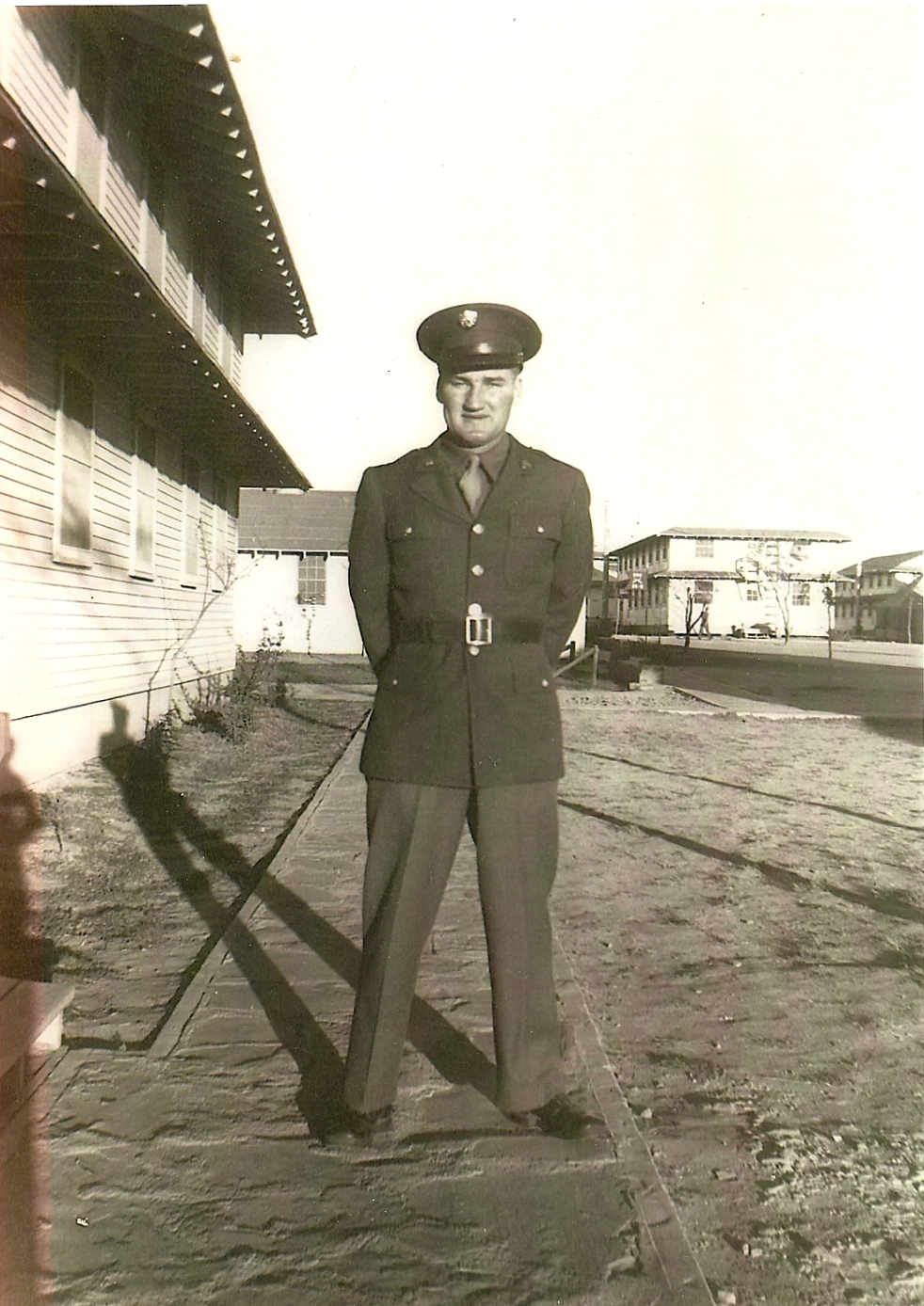
Jimmy Flannery WWII

Growing up in Minneapolis after the war we as kids knew that most of the old guys had “been in the service.” What we did not know was the real meaning of that phrase.  We knew that some of the men had an easier time than others.  Of all the men that I knew or knew of as a boy my uncle Jimmy Flannery was the one that experienced the worst of the war.  As I child I was aware that he had been involved in the worst of the fighting.  No one ever told me directly or sat me down and explained what he had gone through from June 1944 to July 1945. I knew he had gone in a few days after D-Day and had fought the Battle of the Bulge.  I remember I was not surprised by the fact that he “had it tough” because I knew he was a tough guy. I knew also from listening to the adults, when they didn’t think anyone was listening, that he did not get his broken nose from singing in the parish choir. My favorite story was about an evening in Linke’s bar and café that some of the locals were making fun of one of the Holy Rosary guys who was gay. The story went that my dad Bill McCormack and Jimmy Flannery took exception and in short order beat the hell out of the miscreants.  The quote was something like “he might be gay but he is our friend.”  Although I don’t think the term used was “gay.”

Jimmy Flannery

As I grew older I began to read history and like all boys of that generation came to worship the old guys.  Although I was just fifteen when Uncle Jim died I knew that his early death was somehow connected to the war. Going through high school and college I was taught by and knew a lot of the veterans.  Unfortunately most of them never talked directly about their personnel experiences during the war. What I knew I had learned from reading and the movies.  I knew that my uncle Jim had been in the middle of it all. I knew that he symbolized to me the sacrifice of self that generation had made.  He was one of my heroes.

When I began writing my family history I wanted to include a section about his service so the younger generations could put a face on that terrible war. Who in the family could be a better face than my uncle Jimmy Flannery?
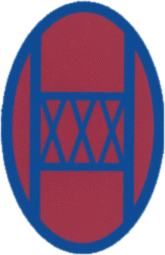
Insignia of 30th Infantry Division "Old Hickory"

If they were not too old or too young they went.  The smart ones, the not so gifted, the tough ones, the soft ones, the entire generation went.  If you had been born between 1905 and 1927 chances are you either were drafted or enlisted. The war was fought all over the world; in North Africa, Europe, the Pacific, and at home.  My uncle Jimmy Flannery was a member of the 117th Infantry Regiment of the 30th Infantry Division. With the exception of not landing on D-Day this division bore the worst of the fighting in Europe. The story of Jimmy Flannery and his comrades is the one I will tell. The story is about how the division landed at Omaha Beach; broke through at St. Lo and liberated countless towns in northern France, Belgium and Holland. After successfully invading Germany they had to turn back to Belgium and help stop the Nazi counter offensive that became known as the “Battle of the Bulge.” Historians whether American or German agree on the important role the 30th Division played in the invasion of Europe and the defeat of Germany.

The 30th Infantry Division known as “Old Hickory” had been active during WWI and was manned by Southerners from the Carolinas, Tennessee, and Georgia.  It had achieved distinction in that war and retained its identity as a National Guard unit in the period between the two wars. The 30th was recalled into Federal service 16 September 1940. In 1942 the division was rebuilt with personnel from all parts of the country.  Because of its exceptional record in training and in maneuvers the 30thwas selected for early deployment in combat and was transferred from Florida to Camp Atterbury in Indiana for final preparation before going overseas.
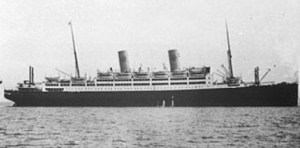
MS John Ericsson

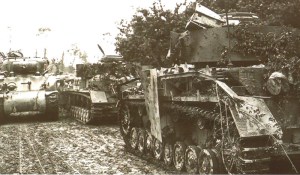
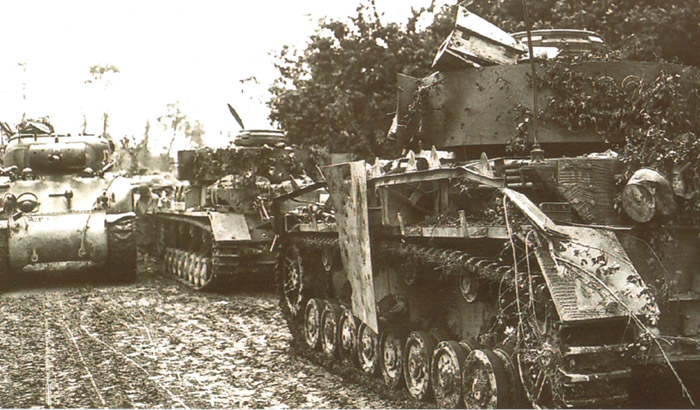
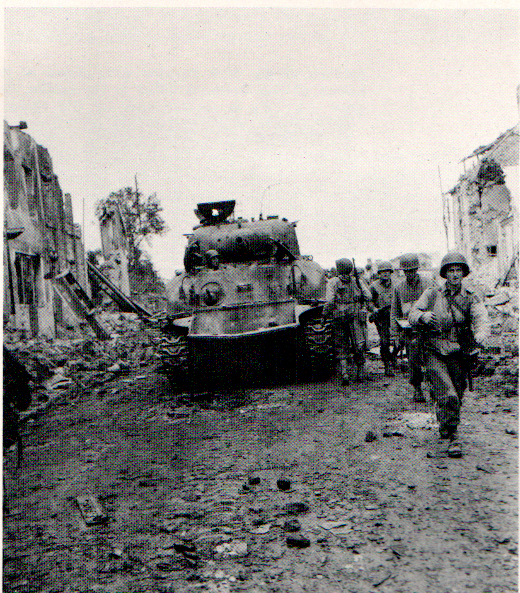
Destroyed German tanks at St. Fromond 7 July 1944

The regiment sailed from Boston aboard the “John Ericsson” a former Swedish luxury liner turned troop ship on 12 Feb 1944. At 1300 hours in a blinding snowstorm they began their crossing of the North Atlantic.  The Ericsson met the rest of the convoy from New York City and Hampton Roads, VA 100 miles east of Boston on the 13th in the early afternoon and became part of the largest convoy to cross the Atlantic up to that time.  Twelve days later after a typically rough winter crossing they landed at Liverpool. They spent the next three months training for the invasion of France at various bases in England.  On 8 June they left Hemel Hempstead just north of London for South Hampton where they boarded the “Judiah Smith” for the channel crossing. They landed on Omaha Beach in Normandy on the 14th of June. The 117th was committed to its baptism of fire on 15 June 1944, in a sector previously occupied by the 501st Parachute Infantry Regiment of the 101st Airborne Division, with its first headquarters being established at Les Obeaux after leaving Omaha Beach. Its first mission on landing in France was to secure the high ground north of the Vire et Taute Canal. The small community of La Ray soon fell before the rolling 30thand the mission of clearing the north bank of the canal was completed by 17 June.

Insignia 117th Infantry Regiment

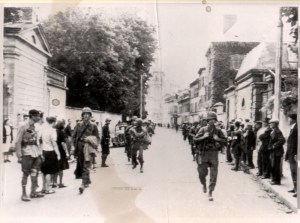
The 117th liberates Evreux Aug 1944

On 7 July the Division moved forward again, crossing the Vire River and penetrating as far as St Jean-de-Day. This began one of the war’s most memorable actions, the St Lo breakthrough. It was here that the 30thslugged through the hedgerows against fortified German infantry and dug in tanks. Advances were slow in July, but by 6 August the 30th relieved the 1st Infantry Division near Mortain. Suddenly the Division was attacked by five armored divisions of the enemy, the German’s purpose being to drive to the sea at Avranches and split the American First and Third Armies. The 2nd Battalion of the 120th Infantry Regiment and Jimmy Flannery’s unit the 1st Battalion of the 117th Infantry Regiment bore the brunt of the assault and were so hard-pressed, that all available personnel of the 30th Division were thrown into action. The Battalions held fast. In a week the Nazi spearhead was broken and the enemy thrown back.
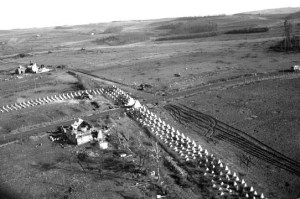
The "Impenetrable" Siegfried Line

After leaving St. Barthelmy the 117th received a four-day rest period. From 19 Aug onward they were engaged in the rat race across northern France.  The 30th was the first infantry division to enter Belgium and Holland, where they liberated Maastricht. The 30th was also instrumental in breaching the Siegfried Line in October 1944, and the capture of Aachen, Germany, the 1st large German city to be captured by the Allies in WWII. This attack into Germany through the “impenetrable Western Wall” exposed the 117thto the greatest concentration of artillery and mortar fire they had yet experienced. After the fall of Aachen they continued the drive into the German industrial heartland. In late November they were part of what the American generals called the “Perfect Infantry Attack near Alsdorf Germany.

Rocket Gun captured by the 117th at La Gleize

On 16 Dec 1944 the 117th was given a new job. They were ordered to reverse course and go back to Belgium to deal with the unexpected German offensive.  This last big push by the Nazis was an attempt to drive through to Liege Belgium, split the allied forces and seize the port.  If they had succeeded the German’s could have won the war. This critical decisive battle was referred to as the “Battle of the Bulge.” After a 48 mile march elements of the 30thengaged the Germans at Stavelot Belgium.
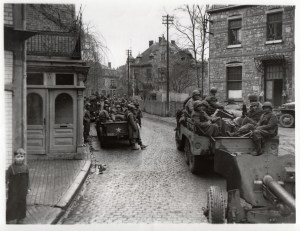
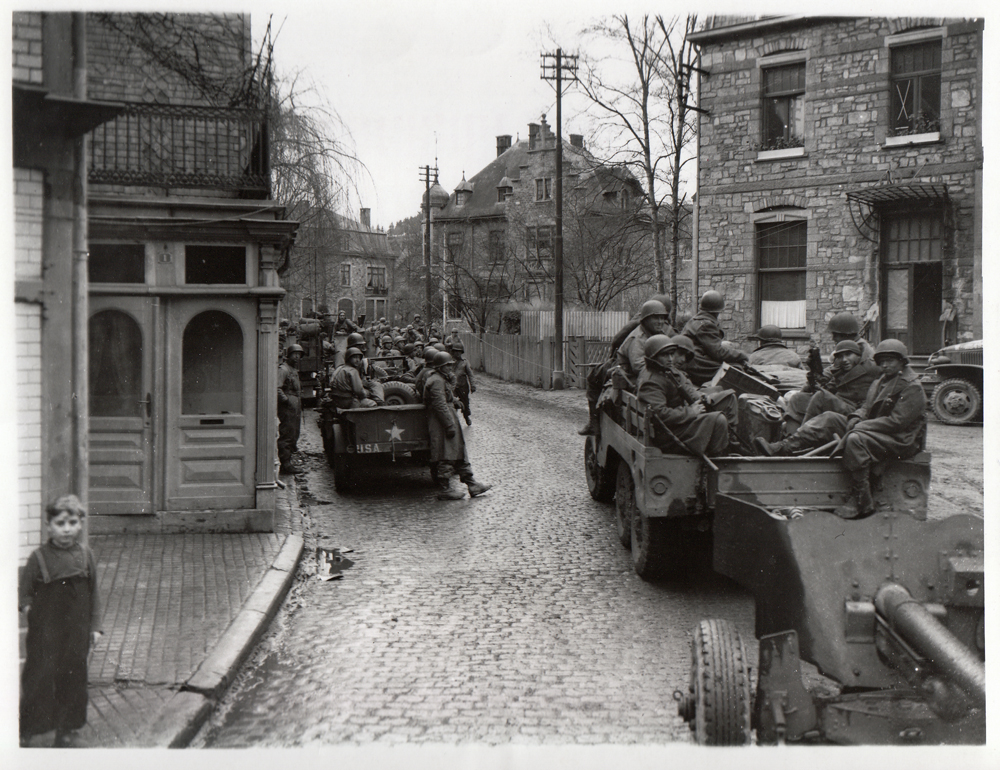
Malmedy 2 Jan 1944

At Stavelot, Stoumont, La Gleize and Malmedy they stopped the German advance and gained control of their sector of the bulge with extraordinary speed. In a savage battle that lasted from 18 Dec to Christmas Eve they destroyed the fighting effectiveness of the elite Adolph Hitler division, the 1st SS Panzer Division.
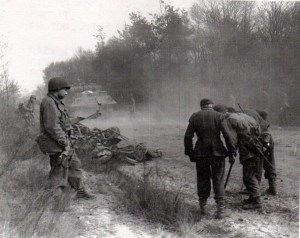
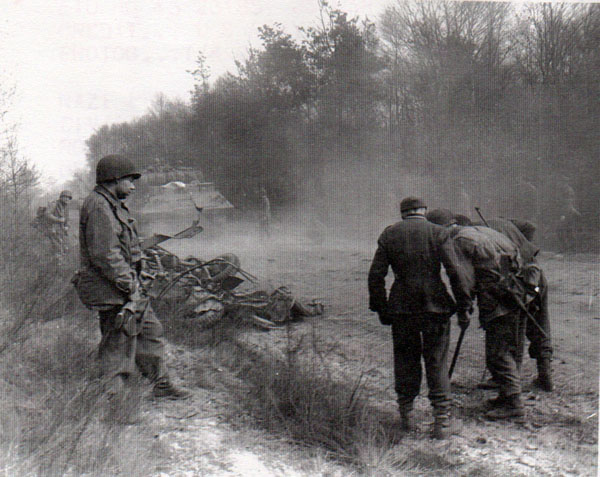
German prisoners clear land mines

At LaGleize on the 24th they captured over 170 German vehicles including Tiger tanks, halftracks and artillery pieces. As a result of this fight the Germans gave the 30th nickname “Roosevelt’s SS Troops.” According to the Germans this was because the 30th was always “thrown in where the going is the roughest.” The rest of January was spent slogging through chest deep snow over rugged forested terrain retaking the ground the German offensive had secured. In February they were back in Germany crossing the flooded Roer River on 24 Feb. This surprise attack under cover of an artificial fog opened the drive to the Rhine. How much resistance the Germans offered was dependent on the spirit of the individual commanders.  Some fought fanatically and others surrendered with little fight.

In early March the 30th was pulled back to Holland to train with the Navy and engineers for the crossing of the Rhine. The Rhine crossing was second only to Normandy in size as an amphibious operation. The 30th crossed in three places and experienced minimal losses. From there to crossing the Weser River at Hameln on 6 April they met with varying degrees of resistance ranging from sporadic sniper fire to stubborn fighting from fortified strong points. The 30thcaptured 24,000 prisoners and several large cities before reaching the Elbe.
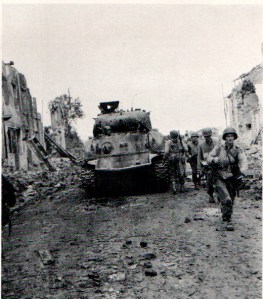
Magdeburg 1 May 1945

Their last big battle was for Magdeburg where on 5 May they met up with the Russians. After a brief occupation of an area on the Czech border near Oelsnitz the 117th returned to Sissone France. After three weeks in France on 31 July they boarded ship to cross the English Chanel to Southampton.  The fourteen months that had elapsed had changed the course of human history. My uncle and hero Jimmy Flannery and the rest of the 117th Infantry Regiment had played a major role in winning the war. While in England the 30threceived the news of the atomic bombs being dropped on Japan. On 15 August the Japanese surrendered. I cannot imagine the joy felt by these brave men knowing they had survived the war and would not be deployed to the Pacific after all.  Two weeks after arriving at Tideworth Barracks England, Jimmy and his fellow soldiers boarded the Queen Mary and sailed to New York on 17 Aug at 0425 hours. The trip home took only four days compared to the 14 on the voyage over. At 2215 the Queen tied up at Pier 99 in New York City.  After a day of record checking and orientation leave arrangements were made and 30 day furloughs were granted.  Most were extended to 45 days and the soldiers were then discharged at the separation center nearest their home. Uncle Jim was discharged at Camp McCoy Wisconsin 13 Nov 1945. Coincidentally his discharge was signed by his brother-in-law, my father Capt. William J. McCormack.

Queen Mary

Fifteen years later in December 1960 my uncle died at age 42.  The stresses of the Ardennes, Normandy and breaking the Siegfried line had finally taken their toll prematurely ending his life.


Leave a comment

A Photo of the Irish Diaspora in Minnesota

Jim, senior researcher for Archival Solution, writes about how his quest to identify all of the individuals in this photograph has resulted in new discoveries about his family research and new family connections.  He shows how photographs can often serve as catalysts in our research, leading us to dig deeper and develop a richer, more comprehensive understanding of our family’s history.

McCormi(a)ck Family Unites

Aine’s stories on her blog The Irish in America always motivate me to keep working on my own family project. For the past twelve years I have been researching the family of John Cormack who was born at Lochmoe in County Tipperary, Ireland in the last decade of the eighteenth century. According to family tradition he drifted up to Ballyedmond in Queen’s County (now Laois) where he married Catherine Purcell and started a family that would give several sons and daughters to the United States. My study has raised and answered many questions.  Among those was: “What is the reason for the multiple spellings of the family name? Why are there some “McCormicks” and some “McCormacks”? That answer is for another day however.

One of the other long-standing questions involves a picture given to me by a cousin about seven years ago. I knew it was a photo of a family function and there were 107 people in it. Of those I knew the identities of five individuals, including my Grandfather Andrew McCormack and his brother Mike McCormack, always known as our Uncle Mike. Uncle Mike’s wife, Katie Hannon and two of their first cousins were the others that I recognized. Being rather new to family history at that point I set a rather lofty goal for myself.  I decided I would identify all 107 people in the photo.

The picture was taken in July 1946 at the celebration of the 50th wedding anniversary of Phillip J.K. McCormick and his wife Ellen, nee Craven. Phillip was my 1st cousin two times removed.  My Cousin Zack Krueger, Phillip and Ellen’s grandson was very helpful in providing names for many of the faces. Every time I meet or correspond with a relative I pull out my photo and try to jar their memories. As of May 25, 2011 my goal is in sight.  I have identified all but eleven of those pictured. Complicating the process is that there are both McCormick and Craven relatives as well as many friends and neighbors of the family. Another problem is that there are people in the photo that are related to some of my relatives but not related to me. For example out of the fifteen Dalys shown in the photo I am related by blood to about half of them.

A recent meeting with some of my Nugent cousins provided the identity of several more of the celebrants. Researching the faces in the photo has been very rewarding for me. By putting faces on the names many of the McCormicks, Dalys, McDonalds, Burns, Nugents, Peteks, and Kruegers, have become real people and not just names found on old census and church records, as well as birth and death certificates


1 Comment

Glenamaddy Update

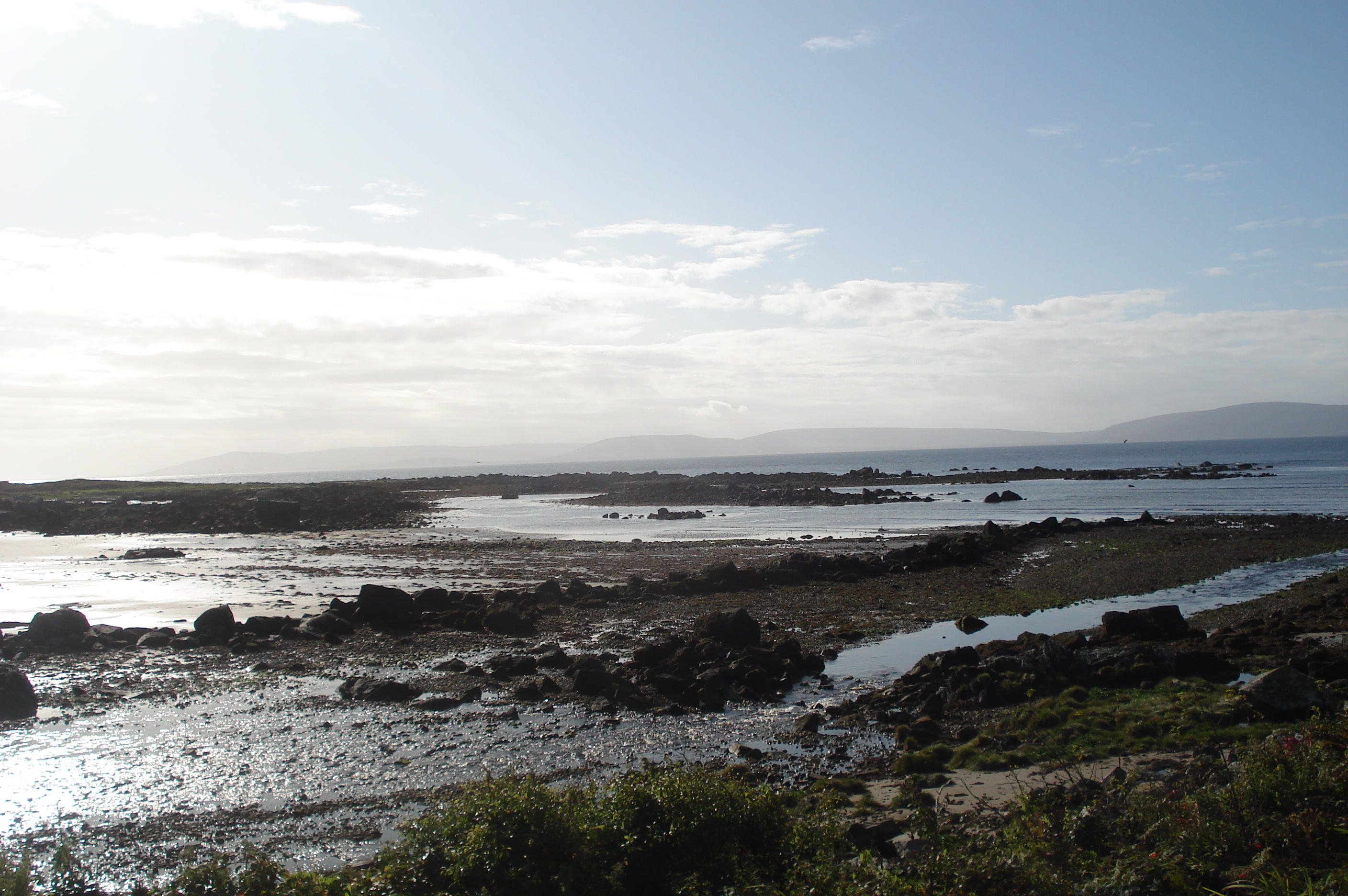
Galway -- not Glenamaddy, but a pretty shot from near Spiddal (2009, RBM)

Remember James who was looking for descendants of relatives who emigrated to the US from Glenamaddy, County Galway?

Jim, the head researcher with Archival Solutions, tracked down several leads for James based on the information he provided.  James was trying to locate his mother’s brothers and sisters in the historic records, with the ultimate goal of finding living relations.  Only one of his uncles remained in Ireland, and when he died his widow sold the farm in Glenamaddy and moved to Scotland.  James’ mother was the youngest sibling, and she moved from Glenamaddy as a young woman.  The five remaining McGuire siblings emigrated to America.

Before he contacted us, James had never spoken to a cousin on his mother’s side, least of all met one face-to-face.  This has all changed for James.  I would like to share his email:

Dear Aine,
Just to keep you up to speed – I have now had several emails (along with photos) from two of George and Arlene’s daughters.   One lot of photos showed the old farm buildings in Glenamaddy, along with one the people who remember the family.  He lived on the farm just below the McGuire family.
The sons of their daughter Linda, like my sons have red hair and her two boys would pass as brothers to my two sons!   They have also been in touch with other member of the family throughout the States.
My wife and I will finally meet Henry & Susan in September when our cruise ship docks in NY and we are staying over for a few days before flying back to the UK.
So you see you and your Dad’s work paid outstanding results for me – I will be forever grateful.  God bless you and yours.
Warm regards

How fantastic that the children and grandchildren of the McGuire sisters are able to compare notes on family history, photographs, and memories!  James had photographs belonging to his mother of American relatives that he is now able to identify.  I can’t wait for an update later this year, and am delighted we were able to help James find the American branch of his family tree.  Emigration tore so many Irish families apart over the years; it is nice to know that it is never really too late for family to come together again.

If you are interested in learning about what happened to Irish relatives who emigrated to the US, or would like to connect with your long-lost cousins, please visit our Find Your Cousins page for information on how we can help you like we helped James.  And do not hesitate to contact us — we would love to hear your stories!