The Irish in America


4 Comments

Meant to Be


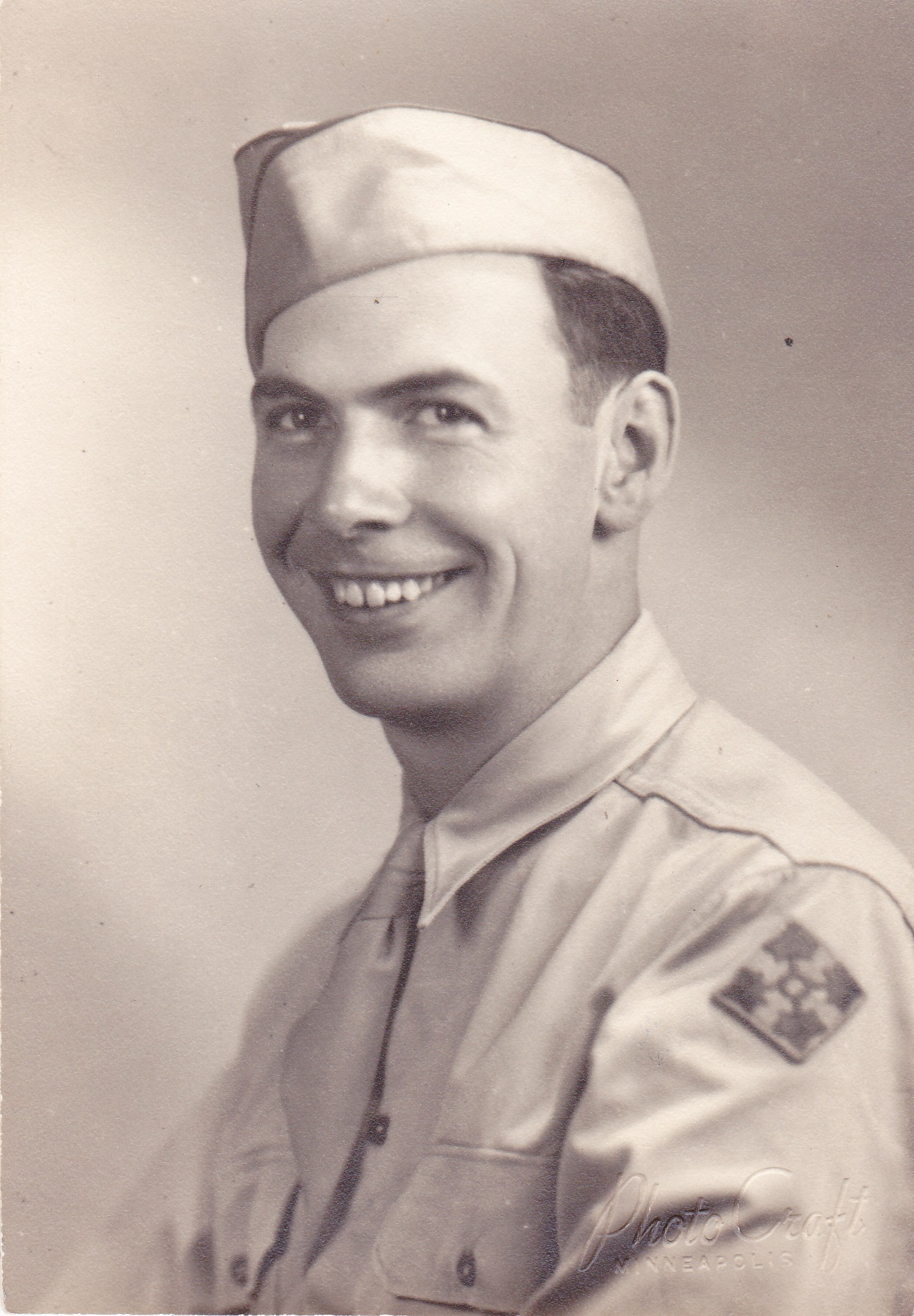
John Foley (ATMR Family Collection)

John Foley (ATMR Family Collection)


John Foley and my grandpa John Regan were good friends. They spent their early childhood together in Clontarf, Minnesota.  John Foley moved to Minneapolis with his family in the mid 1920s.

It was only natural that the two boys were friends. Their paternal grandfathers (Patrick Foley and John Regan) were friends in their native Kilmichael, County Cork, and they came to America together, settling in Fisherville, New Hampshire before venturing to Clontarf, Minnesota in the late 1870s.

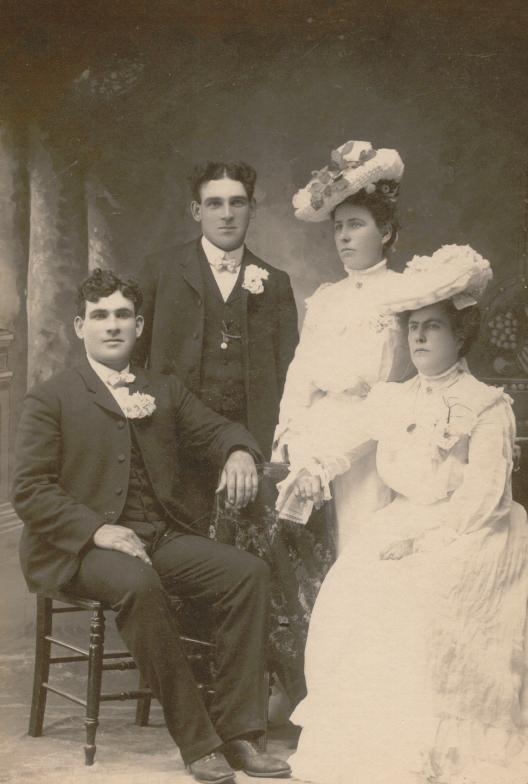
I don’t know if “the Johns'” fathers (Tim Foley and Neil Regan) were friends when they were young. Clontarf was (and is) a small place, but from what I have heard, the two had little in common. If I consider as evidence my grandma’s collection of studio portraits of many of the young men of Clontarf, Tim and Neil were not close. – there are no photos of the two of them together. However, the evidence does show that John’s uncle John Foley and Neil were friends (see below and click here to read about it).

Cornelius Regan and John Foley seated (ATMR Family Collection)

Cornelius Regan and John Foley seated, around 1900 (ATMR Family Collection)

As I mentioned earlier, Clontarf’s a very small place so even when folks moved to Minneapolis, as so many did in the 1920s and 1930s, families remained close, supporting one another as they made their ways in the big city. The community was strong whether it was in the rural west or the largest city in the state. It was sometimes difficult to see where family ended and neighbors and friends picked up. It could all get very complicated…

For example:

One day in late 1930s Minneapolis, my grandma’s Aunt Bid Foley (John Foley’s mom) invited her over for cards. Have I mentioned yet that John Foley and my grandma, Agnes McMahon were first cousins? How about that they were double first cousins?

John Regan was staying with his old friend John Foley at the time of the invitation. Agnes and John Regan had crossed paths over the years, but it wasn’t until Uncle Tim asked Agnes to take his place in a cribbage game with John Regan, that sparks flew.

I don’t know who won that game, but I bet it was fiercely contested. They fell in love over a cribbage board and were married in 1941. They were a perfect couple.

Agnes and John Regan, with guess who as the best man...

Agnes and John Regan, with guess who as the best man…

Agnes’ maternal grandfather was Patrick Foley and John Regan’s paternal grandfather was….John Regan. The two friends from Kilmichael, County Cork.

When we visited Kilmichael Parish in Cork, Ireland several years ago, we learned that the connection between Patrick Foley and John Regan may have been stronger than we thought. John Regan’s mother was Ellen Foley. Patrick and John were cousins.

I thought this was very cool. Then my sister mentioned how that would have made grandma and grandpa some sort of cousins, too. Distant, of course, going back to their great-grandparents generation. In 19th century rural Ireland that must have happened a lot…right?

Distant cousins, yes, but friendship connected the Foley and Regan families through the generations, across an ocean and into a new world.

And I didn’t even tell you how my grandma’s mom and grandpa’s aunt were life-long besties….

Nellie and Minnie (ATMR Family Collection)

Nellie and Minnie (ATMR Family Collection)

Leave a comment

Three Sisters

Margaret, Rose & Agnes McMahon (early 1930s)

Margaret, Rose & Agnes McMahon (mid 1930s) ATMR Family Collection

When I think of the Irish in America, snapshots like this one come to mind. My grandma Agnes with two of her three older sisters, young and happy in the midst of the Great Depression.

The McMahon sisters were second generation Irish Americans. However, my grandma told me they didn’t spend any time thinking about their heritage when they were young. She made up for it when she grew older and had a highly inquisitive granddaughter. She shared with me stories and songs, old sayings and recipes, passed down to her from her parents and Irish-born grandparents. Grandma was my link to our family history.

I am not sure if this is at the house in Columbia Heights where the McMahons lived, or if it is in south Minneapolis at the Foley house. Maybe my mom will help us out and leave a comment!

I am currently scanning and organizing my grandma’s collection of photographs and ephemera. Moving forward I will share some of my favorite items.


5 Comments

Day 13 of Irish American Favorites: Tom McMahon

circa 1895

circa 1895

My great-grandfather, Thomas Edward McMahon, was born on June 13, 1879 in Tara Township, Minnesota. Tom was the second child and eldest son of Francis and Catherine (McAndrew) McMahon. His father was a native of County Fermanagh and his mother was born in New York – her parents came from County Mayo.

His youngest daughter was my grandma, Agnes McMahon Regan. She loved her dad and shared her memories with me over the years. Grandma said her dad was like a big kid. He loved to play with his children and joke around, and enjoyed nothing more than sitting in his chair on a winter’s evening with the family as his wife, Mary Foley McMahon, read stories aloud to them all.

Tom wed Mary Foley on June 9, 1904 at St. Malachy Catholic Church in Clontarf, Minnesota. The couple grew up about a mile apart on farms in Tara Township. They had seven children – four girls and three boys.

4 1904 Thomas and Mary McMahon wedding with Francis McMahon and Margaret Foley

Tom and Mary, seated.

Grandma said her dad was extremely good-natured and soft-spoken. She only remembered one occassion when he raised his voice at her. The family was at the table for dinner when my grandma (who was about four-years-old at the time) said to her dad, seated next to her, “Gimme the butter!”

Tom was startled by his daughter’s demand and replied, “Pardon me?”

Grandma said it again, this time louder, since he didn’t hear her, “GIMME THE BUTTER!”

Tom was taken aback. None of his children behaved so rudely, not even his spirited middle child, Rose. But he was especially surprised by the outburst from Agnes. Tom told her she could have the butter if she asked for it nicely.

Grandma thought about it for a moment and said, “Gimme the butter!”

Tom had heard enough. He stood up and ordered Agnes to leave the table immediately. Grandma stormed out of the kitchen and threw herself on the buggy outside. She cried like she had never cried before. A short time later, Tom came out to Grandma. He set her dinner on her lap and placed his arm around her shoulders. Grandma said she apologized profusely, and her dad just brushed the black curls from her forehead and comforted her, “There, now, that’s the girl. It’s alright…”

Grandma said she could tell her dad felt as bad about the situation as she did. The two of them sat on the buggy while Grandma finished her dinner. Grandma learned her lesson, and this was the first and last time Tom raised his voice.

According to my grandma, her dad was a true farmer. He loved everything about the process  – preparing the soil, planting, growing crops, harvesting them, and sharing the fruits of his labor. Unfortunately, the 1910s and 1920s were tough on many farmers on the prairie of Western Minnesota. Tom tried to make a go of it several times. He sold the homestead and moved to rented land, farming until 1926 when he gave it up for the last time. The McMahon family moved to Minneapolis to begin life anew.

Tom worked in the pole yard (telephone poles) for several years before he retired. A neighbor let Tom use a plot of vacant land nearby. Tom grew “every vegetable known to man” on that piece of land. My grandma said he never seemed happier. Tom had a nifty little trade set up whereby he exchanged fresh produce for groceries at the local shop. Grandma admitted that her dad gave away a lot of produce to neighbors throughout the 1930s. She said everyone did what they could to help each other out during the Depression.

Tom McMahon died on May 6, 1937. His wife, Mary, went out that day with a friend. When she returned home, she found her husband of nearly thirty-three years slumped in his favorite chair. One thing that Mary always said was that no one should be alone when they die, and she felt terrible she was not home for Tom – she was always home.

Because my grandma shared her memories of her loved ones with me, these relatives I never had the privilege to meet came to life for me. This is how a great-grandfather who passed away thirty-five years before I was born can be one of my Irish American favorites. I feel like I knew him and  now it is my job to keep his memory alive, for my grandma.

HAPPY BIRTHDAY, TOM!

Tom is seated on the left, pictured with his sisters and brother.

Tom is seated on the left, pictured with his sisters and brother.


7 Comments

This Old Farmhouse

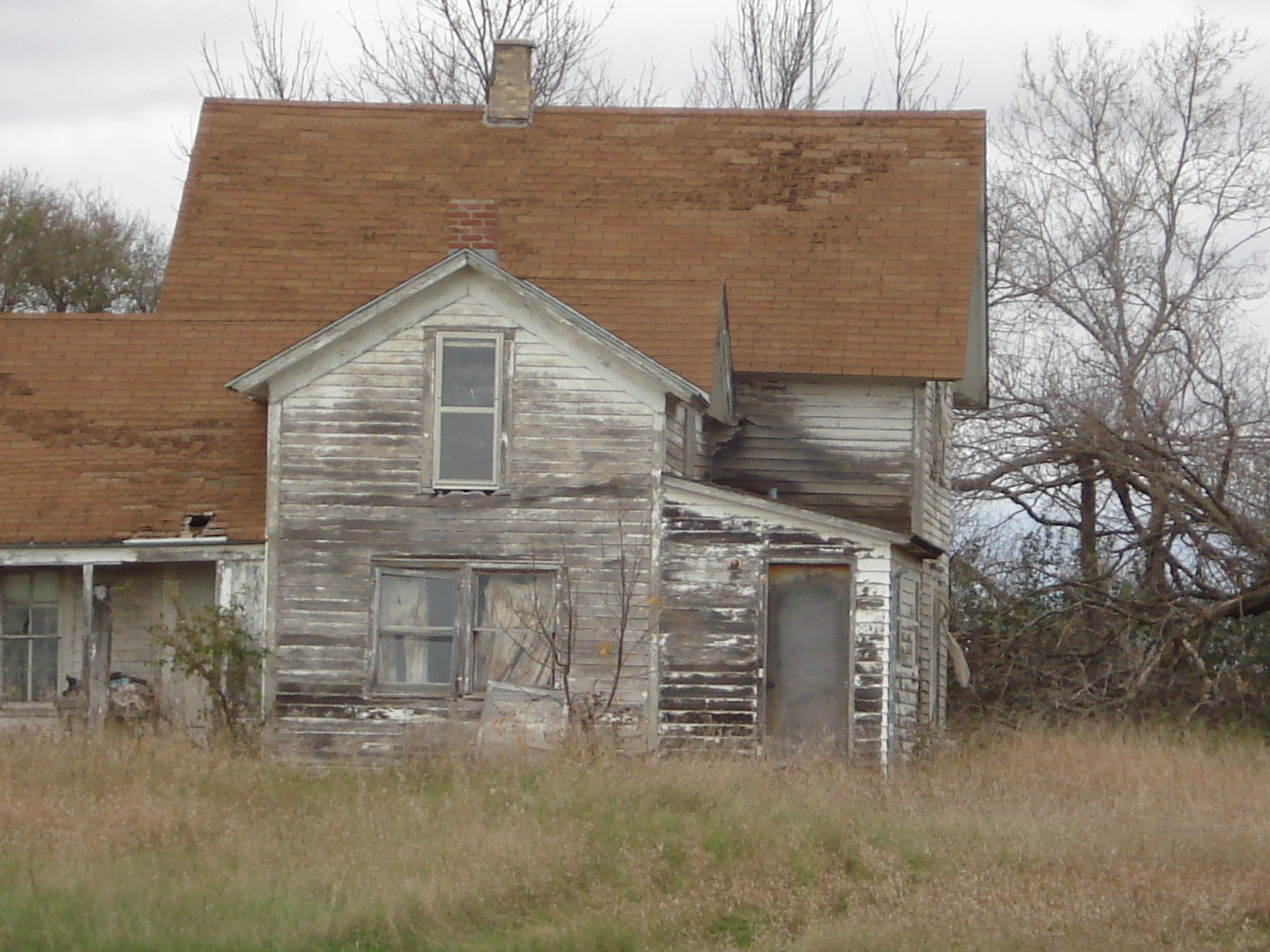
The first time I visited Ireland in 1988, I was struck by the number of derelict farmhouses dotting the countryside. “Why doesn’t someone just tear those old houses down?” I wondered. “That’s what we do in the good ol’ USA…we don’t leave houses to fall down on themselves. If we don’t want or need them, we get rid of them and build something new and better…”

Abandoned house near Ballyedmond, County Laois (all photos by Regan McCormack)

This sentiment came from a teenage girl from the city who spent more time in the countryside during six weeks in Ireland than she had in sixteen years back home – in the “good ol’ USA”. I thought I was so smart…

Fast-forward twenty years and I am closer to home, driving the country roads of Tara Township, crisscrossing its thirty-six square miles in Swift County, Minnesota. My maternal great-great-grandparents were among the pioneer 1870s settlers of this township on the vast prairie of Western Minnesota. This was my first visit to Tara. I had traveled three thousand miles from home on a number of occasions to visit Ireland, my “ancestral homeland”, yet I had never bothered to drive a few hours west to see where my people settled when they came to Minnesota.

Granted, as far as vacation destinations are concerned, Ireland is a bit more attractive than Western Minnesota, but it turns out, the two places have some things in common.

There are the obvious similarities in place names in this part of Minnesota. Bishop John Ireland established several colonies of Irish Catholic settlers with names like Avoca, Kildare, Tara, and Clontarf. Hundreds of Irish families from cities and communities in the Eastern United States seized the opportunity to own land and live in a community with its own church and priest, surrounded by fellow Irish Catholics.

The Depression came early to rural communities and persistent crop failures and changing farming practices combined to make farming unviable for most small farmers. My relatives moved to Minneapolis, as did several other Tara families. Some of the original Irish settlers had left Tara even earlier, moving further West, always in search of better land.

So, I wonder why I was surprised to find this in Tara Township?

Section 22 of Tara Township – the McMahon place

On nearly every section of land in the township stands an abandoned farmhouse, or at least a grove of trees planted by the original settlers to protect a house. And this in the “good ol’ USA” where we tear things down!

Folks in Ireland and Tara Township have the same reaction when I ask them why they don’t simply tear down the abandoned houses. They shrug and say that they are no bother and they can be used for storage. That is the practical response, but I wonder if there is something a bit more sentimental lurking beneath?

The abandoned houses got me thinking…A similar hopelessness that drove millions of Irish to America during the 19th and 20th centuries could be seen in rural Americans who fled the farm for the city in the 1920s. Major difference, of course, is there was not a famine like Ireland experienced, however there was tremendous poverty, crops failed miserably, families were split up, and life changed permanently and dramatically.

I am rather ashamed of my sixteen-year-old self for not being as smart as she thought she was. She should have realized that the same reason this stands today in Ireland…

Near Ballyedmond, County Laois – 2011

might be why this…

Cahir Castle, Tipperary – 2011

and this…

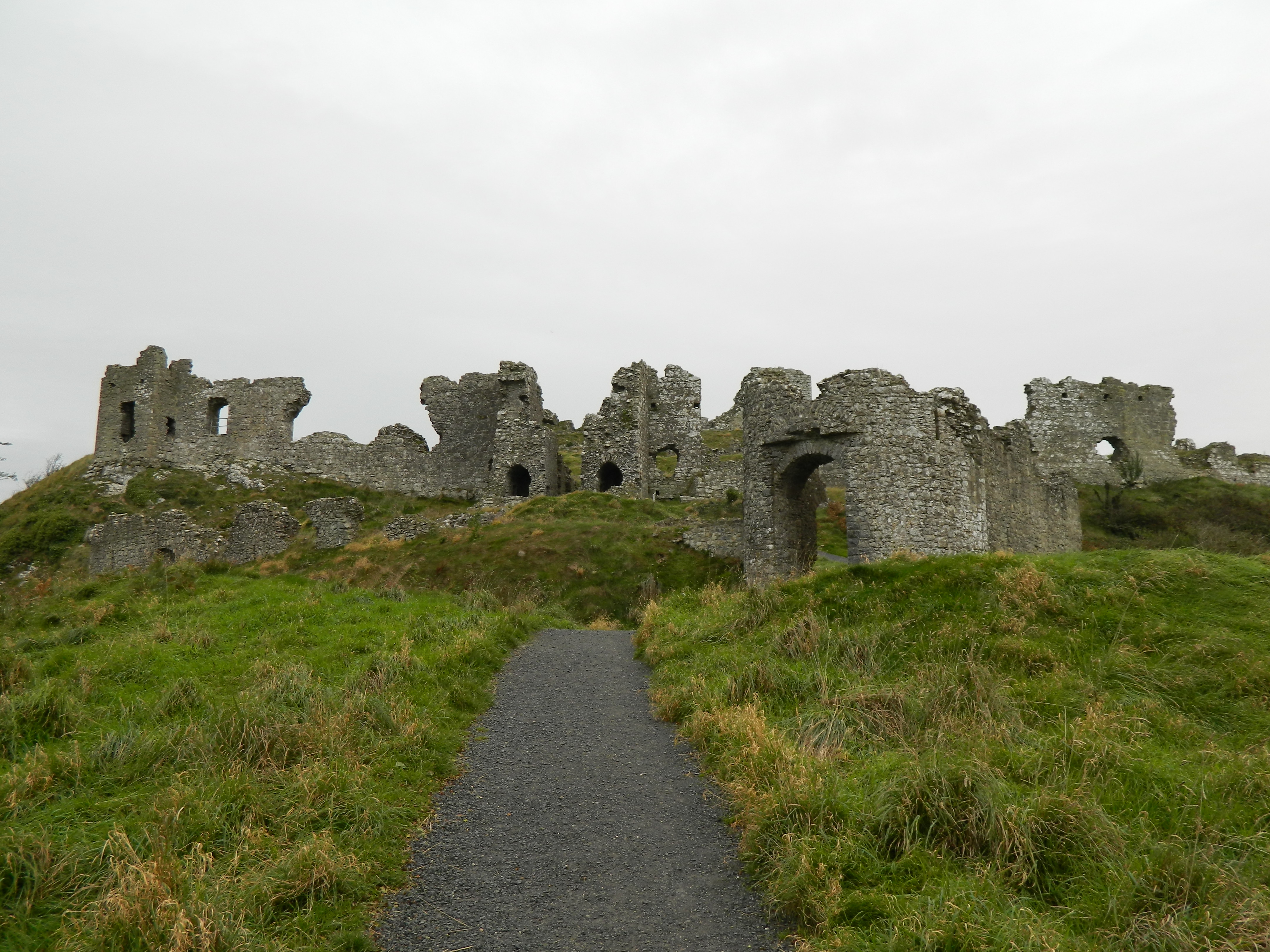
Rock of Dunamase, County Laois – 2011

and this…

Johnstown, County Kildare – 2009

are still here today. I doubt that the farmhouse ruins will have the staying power of the castles and abbeys of centuries gone by, but in the meantime they can remind us from where we came. Whether it is a farmhouse in Ireland or Tara Township, Minnesota.

Now, if I could only get Jimmy to fix up this old house…

Two Jimmy McCormacks at old family house in Ballyedmond – 2009