The Irish in America


7 Comments

Day Four of Irish American Favorites: Maryn

Newborn Maryn

Newborn Maryn

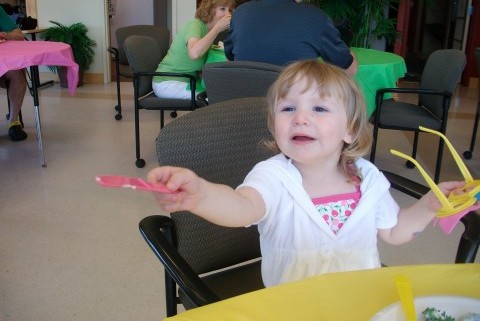
Today is a special day. My niece, and the first member of the fourth-generation of our branch of the Andy McCormacks in America, turns six-years-old today. The world came to a halt for us on June 4, 2007 when Maryn Eileen McCormack joined the family. We all had new roles – Father, Grandpa, Grandma, Great-Aunt, and Aunts, and immediately Maryn became the sun in our solar system.

Maryn at age one

Maryn at age one

Maryn has always been really cool. She’s never let all the attention and adoration go to her head. Before Maryn started talking, you could just tell she was taking it all in and figuring things out.

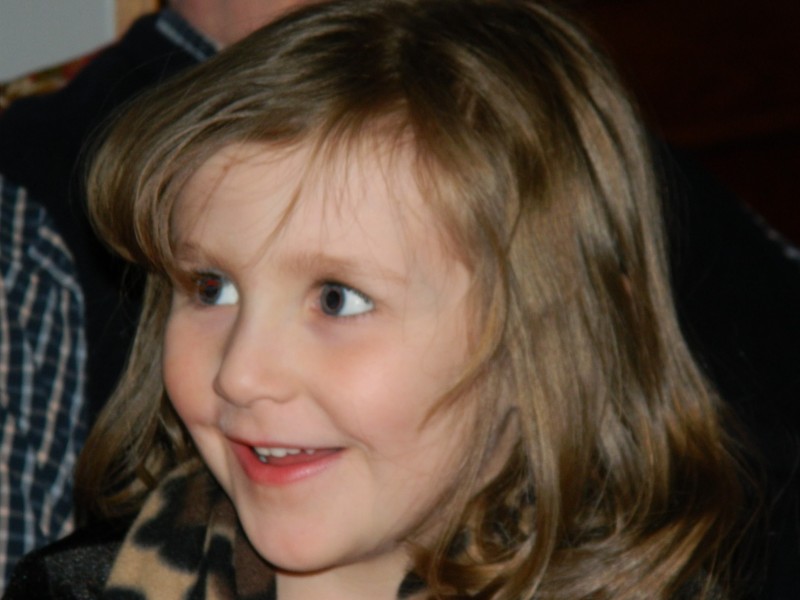
2011

2011

Maryn is smart, generous, loving, and inquisitive. She has a mind like a steel trap and an awesome imagination. The storylines of our games of Princess continue from week to week, as the plot develops and characters evolve. Sometimes her younger sister Ainsley and I try to freelance with events in our land of make-believe, but Maryn is always on us to get us back on track and keep to the story.

2009

2009

Maryn is one of my two favorite Irish Americans born in the twenty-first century. It has been a privilege to share the last six years with her and I love to experience her energy and enthusiasm for life. It is amazing to see her grow up, but in this Auntie’s opinion, I wouldn’t mind if she slowed down just a little bit!

Maryn_Christmas_2012

HAPPY BIRTHDAY MARYN!!!!!


5 Comments

Day Three of Irish American Favorites: My Grandma’s Boiled Dinner

“Go on, have another potato…they are good for you.”

Grandma with her brother Frank, llong before she perfected her boiled dinner.

Grandma with her brother Frank, long before she perfected her boiled dinner.

Without fail, my grandma uttered those words every time she served up a delicious boiled dinner. Actually, she said this when she was feeding you anything – just make a substitution for the word potato. Everything was good for you, including chocolate chip cookies and fudge. Grandma argued that she only used good ingredients, so a second helping wouldn’t hurt you.

Like most things my grandma cooked or baked, her boiled dinner was no-nonsense and consisted of meat, cabbage, potatoes, onions, and carrots. Occasionally, another root vegetable might sneak into the mix, and the meat was usually country-style pork ribs. Talk about comfort food!

The reason this is one of my favorites of Irish America is because my wonderful Grandma Agnes McMahon Regan was – you guessed it – Irish American. A boiled dinner is a meal found in some form in countries the world over. My grandma’s version is a take on the traditional New England Boiled Dinner. Grandma preferred the pork to the corned beef, and the precise cut changed over the years. By the 1980s, she settled on the country-style ribs.

When I was a child, I would sit at Grandma’s kitchen table while she peeled and cut the vegetables for boiled dinner. I always wanted to help, but Grandma didn’t trust me with the vegetable peeler and knife. I remember she would give me the heart of the cabbage to eat. I think that treat may have been just to shut me up. I (used to) talk a lot.

Gram_2001_Scan_June-2-2013-8-34-10-838-PM

Grandma in 2001

In America, we eat corned beef and cabbage on Saint Patrick’s Day. I suspect this tradition evolved as much from the traditional New England boiled dinner as from the Irish bacon and cabbage consumed in Ireland. The funny thing is, my grandma’s boiled dinner always tasted like the Irish bacon and cabbage to me.

I miss my grandma’s boiled dinner, but of course I miss my grandma more.


2 Comments

Day Two of Irish American Favorites: F.Scott Fitzgerald

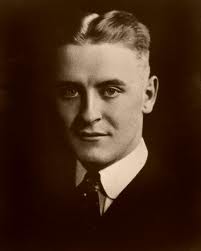
F_Scott_Fitzgerald

He may not have identified himself as Irish American, but that’s what F. Scott Fitzgerald was, and since he is one of my favorite writers, it stands to reason that he  would make my list of favorite things about Irish America.

So, did Fitzgerald have a problem with his Irish heritage? He was a complicated man. I may live up the street from Fitzgerald’s birthplace in Saint Paul, Minnesota, but that does not qualify me to analyze his personality and motivations. I will leave that to Fitzgerald experts who say his denial of his Irish ancestry rested in the fact he was embarrassed by his mother and her Famine-era immigrant Irish roots. His father’s genealogy was preferable – an established Maryland family and distant cousin to Francis Scott Key, Star Spangled Banner lyricist. Much less ethnic, much more American.

The climate in America was different in the early twentieth century. Americans didn’t often celebrate their heritage like we do today. They just wanted to be American. And if they had aspirations of joining the élite in American society, like Fitzgerald did, then it would be prudent to down-play your ethnicity – and your religion. Funny isn’t it, how things change? Just look at how Tom Cruise embraced his Irish heritage while doing press in Ireland a couple of months ago. Seemed like a bit of a stretch to me.

Fitzgerald wrote novels (The Great Gatsby, This Side of Paradise) and many short stories, but I think one of the best things he wrote was a letter to his eleven-year-old daughter in 1933, instructing her on what to worry about, what not to worry about, and what to think about. Click here to read the letter.

 Of all Fitzgerald’s witty observations, this is my favorite quote:  Nothing is as obnoxious as other people’s luck. 

Fitzgerald birthplace

Fitzgerald birthplace


3 Comments

June of Irish American Favorites: Day One

Since readers seemed to enjoy my April of Irish Favorites, I thought I would continue with the theme and highlight the things I love about Irish America this month. I see my list of favorite things about Irish America leaning heavily toward the people, places, and things associated with my own Irish American family, but I will also touch on my other favorite Irish American figures, festivals, traditions, arts, restaurants, and more! Sit back this month and enjoy what I love about Irish America!

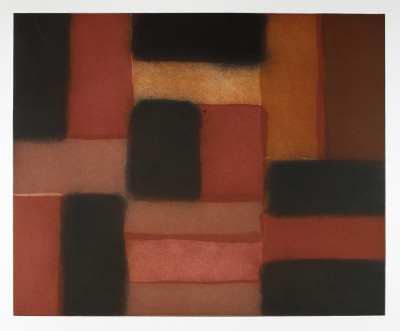
08_Scully09_WallofLightRed_2002

Sean Scully, Wall of Light Red, 2002, Aquatint, spitbite, sugarlift, Smithsonian American Art Museum, Gift of the artist (2003.39.2)

Back in 2008, I fell in love with the work of Dublin-born, American artist Sean Scully. In conjunction with an exhibition of his prints at the Minneapolis Institute of Arts, Mr. Scully presented a talk on the exhibit, his work, and method. It was the only time I have heard an artist speak about what he does and why he does it and it all made sense to me.

Click to buy on Amazon.com!

Click to buy on Amazon.com!

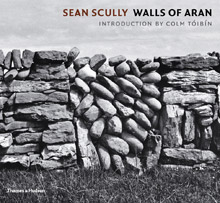
I can’t get enough of Mr. Scully’s prints, paintings, and photographs. He published Walls of Aran in 2007. It is a collection of photographs of the stone walls on the Aran Islands. Since reading the book, I have never looked at those walls the same.

Mr. Scully has studios in Barcelona, Berlin, and New York, but he is an American citizen, so I am claiming him as my favorite Irish-born American artist. His work simply takes my breath away. I always look forward to what he does next!


Leave a comment

Wexford – The American Connection

Readers of this blog may be aware of President John F. Kennedy’s Dunganstown, County Wexford roots. President Kennedy went home to Wexford for a visit in 1963. But Wexford’s connection to America does not begin and end with Kennedy. The Father of the American Navy, Commodore John Barry was a Wexford native. A new book exploring these connections, and more, was recently published by the Wexford Borough Council. Please read the following press release for more information. Click here for a sample of the great photography in the book and to read the forward by the Mayor of Wexford, Councillor Jim Allen.

Continue reading


5 Comments

Relatives Who Served in the United States Military

Jim takes some time out this Memorial Day weekend to honor his McCormack relatives who served in the United States military…

As I researched my family history I noted that the following served our country in military service and I wanted to remember them on Memorial Day.

WW I

Army, France

  •  John Lambert McCormack
  • Philip Columbus McCormick
  • Benjamin Patrick McCormick
  • Michael Burns
  • Pat Burns
  • William Flannery
  • Bernard Flannery

Navy

  •  John Patrick McCormick
  • Jack Nugent
  • Phil Nugent

WW II

  • William McCormack (Army)
  • James F. McCormack (Army, Aleutian Islands)
  • Philly McCormack (Army, Pacific)
  • Zach Kruger (Army, Pacific)
  • Phillip Eugene McCormick (Navy)
  • Phil McDonald (Navy)
  • Patrick Frances McCormick(Army Air Corps, 35 Missions over Europe)
  • Jimmy Flannery (Army, Europe)

Post WW II

  • Ed Burns (Army, Korea)
  • K.J. McDonald (Air Force, Korea)
  • Patrick Benjamin McCormick (Army)

Continue reading


1 Comment

Introducing…Connemara Language and Cultural Centre!

Connemara's Twelve Bens , courtesy of CLCC

Connemara’s Twelve Bens , courtesy of CLCC

I studied the Irish language for a few years and have family ties to the Gaeltacht of Connemara, so when I first saw Connemara Language and Cultural Center (CLCC) on Twitter, I assumed it was an organization promoting Irish language. I was only partially correct. CLCC is doing much more, and I can’t wait to share this innovative venture with you.

The folks at CLCC are energetic, positive, supportive people who are bringing something new and dynamic to education, tourism, culture, and leisure in Ireland. And it is all happening in the gorgeous Clifden, County Galway. I will let them explain it to you – keep reading for the latest CLCC press release, or click here to download the pdf version.

Connemara Language and Cultural Centre

Connemara Language and Cultural Centre (CLCC) is a newly formed educational tourism destination located in Clifden, County Galway. Clifden is the capital town of the geographical region of Connemara world renowned for its rugged and unspoilt beauty where the wild Atlantic Ocean has etched a landscape only Mother Nature could create.

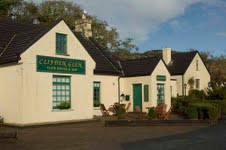
CLCC_PR_photoCLCC is a unique venue combining an existing holiday village, Clifden Glen, located within a safe and fully self-contained 80 hectare site 1.5 km from Clifden town with an English as a Foreign Language School catering for families, groups and individual students. The site contains a licensed clubhouse, restaurant, laundry, 85  detached 3 bedroom lodges, children’s playground, 3 tennis courts, mini-golf course and nature walks, all bounded by the Owenglin, a prolific wild Atlantic salmon spate river. The site is set off the main road with no through traffic and is a haven of tranquility and safety adjacent to Connemara National Park with the magnificent backdrop of the Twelve Bens Mountain range.

CLCC in its initial stages is providing English Language Tuition for non-native English speakers with classes in the morning and adventure activities in the afternoon and cultural events hosted in the clubhouse in the evenings. Our professional, friendly and experienced staff including our qualified native English speaking language teachers are here to meet all our clients’ needs, whether customizing an English language course or providing specific activities to suit individual clients or families.  Our educational ethos is centered on interesting, enjoyable and creative lessons delivered by thoughtful and caring professionals while embracing the latest educational and technological tools available.

It is the introduction of educational services within the pre-existing site that makes CLCC innovative and we aim to meet all our clients’ needs on the one site with no commuting required from accommodation to classes or for entertainment or meals.

CLCC is currently developing Gaelic language classes for those wishing to improve their Gaelic or indeed complete beginners and Connemara is home to Ireland’s largest Gaeltacht, a region where Gaelic is still commonly spoken. CLCC
Synergy is a major factor underpinning the development of CLCC with each element of the business enhancing the other. Integration between native speakers is vital for language learners and with Irish families using Clifden Glen and Connemara for their annual holidays as well as local native Gaelic and English speakers’ integration is assured. Our activities and cultural activities enhance the learning experience with a focus on experiential learning and we strive to create a unique and memorable Connemara experience for each of our client’s.

We are justifiably proud of our culture and heritage in Connemara and we showcase this at our cultural events hosted in our clubhouse at CLCC. Connemara is unique both in Ireland and Europe with its own identity, heritage and culture and untouched by the excess of the 20th and 21st centuries.  It has inspired countless artists and embraced royalty with its captivating raw beauty, ever changing light and the un-spoilt  landscape abundant with wildlife, epitomized by the magnificent wild Atlantic salmon to be seen leaping through its many rivers and lakes. Its essence is perhaps encapsulated best by its roads and fields bounded by stone walls, hand built without mortar and aged with  lichen and moss over centuries yet perfectly preserved and withstanding the forces of nature and time. These roads promise unrivaled vistas to the traveler who ventures throughout their length and evoke memories and emotions, even in those who have never visited previously, and truly represent the road less travelled both in terms of spiritual journey and travelers met along the way. These walls speak of an era when time meant something different than it does today and when, despite or perhaps because of hardship in everyday life, few were the people who could be referred to as poor because all they had was money. Neighbors, community and friendship are still the essence of Connemara and visitors always remark on this warmth and hospitality and it is this and the landscape that draws them back year after year.

So whether to learn English or Gaelic or have an activity holiday come and stay at CLCC and experience this for yourself whilst creating your own Connemara Experience.

CLCC_logo

     http://www.connemaralcc.com/en/

     Click here to follow CLCC on Twitter! I think they would love to meet you!

Some content on this page was disabled on August 6, 2019 as a result of a DMCA takedown notice from Dennis Flaherty. You can learn more about the DMCA here:

https://wordpress.com/support/copyright-and-the-dmca/


7 Comments

A Time to Remember Irish American War Heroes

MemorialDayNext Monday, May 27th, is Memorial Day in the United States. Memorial Day occurs on the last Monday in May each year, and while the long weekend has come to signal the kick-off to summer, traditionally it is a day set aside to remember those members of the Armed Forces whom have died in service to the United States.

For many Americans, the meaning of Memorial Day has broadened to include remembrance of all deceased loved ones – those who served in the military and not. In my book, Memorial Day is a perfect holiday – we get together with family and friends to celebrated the beginning of summer, while keeping in mind those who have gone before us.

When Irish people contact us for help learning more about their relatives who came to America, so often they mention the relatives military service. They say with a sense of pride that their grand-uncle served in World War II after emigration. One woman from Galway shared with me how her family would say an extra rosary at night for “the boys in the war” – American cousins she had never met – during the Korean War in the 1950s.

The Waterford County Museum in Dungarvan makes a special effort to remember the contributions of Irish emigrants to their adopted homelands, and they pay tribute to Ballinroad, County Waterford native John Mansfield. John Mansfield (1906-1965) emigrated to America in 1927 and served in World War II. An exhibit case at the museum contains Mansfield’s medals and honors, photographs, and a biography outlining his service. Read about John Mansfield on the museum’s blog here.

An account of Mansfield’s 4th Armored Division on CombatReels.com indicates that the division trained in England for six months before landing on Utah Beach in Normandy on July 11, 1944. I wonder what it felt like for John to be so close to home?

Since John Mansfield’s medals made their way to County Waterford, it’s probably safe to say he had no children or “next of kin” in the United States. There may be no one left today to remember his service and sacrifice, so I plan to keep him in my thoughts this weekend.

Click here to view a photo of John and Bridget (Power) Mansfield, John’s parents. Waterford County Museum Image Archive has a fully searchable database of all the fabulous photographs in the collection. Plus, if you see something you like, you can buy it for your own collection!


2 Comments

Immigrants and Airplanes

After reading my post, From Sheepshead to Casper, a reader told me a story about her brush with a soon-to-be Casper, Wyoming sheep rancher.

In 1949, Katie Tierney was one of a new breed of Irish immigrant. Unlike the millions of Irish who came to the United States before her, Katie traveled by air, not water. An airplane trip back in 1949 was exciting enough, but factor in that this was a 3,000-mile journey from home to a new life in a foreign country, and you can imagine how Katie felt.

From AmericasHeartland.com.

From AmericasHeartland.com.

Katie was anxious as she stepped on the plane, but was soon distracted by a handsome man seated next to her. Richard Thornton was on his way to Casper, Wyoming to work on his uncle’s sheep ranch. Katie and Richard got to talking and hit it off, sharing their life stories and dreams for the future. When the plane landed, Katie and Richard exchanged addresses and went their separate ways.

Quickly, Katie settled into her new American life, and after about a month she received a letter from Richard. It wasn’t just any letter, it was a proposal. Richard laid it all out for Katie, telling her they would live on the ranch, but she wouldn’t be too isolated since they would go to town once a month. Richard assured Katie that he could not be drafted since he was engaged in the vital service of food production.

Although Katie was flattered, she turned Richard down. She didn’t see herself as a rancher’s wife. Richard was disappointed, but he soon recovered, married, and had a family. Katie went to work in Boston, met and married an Irish American man, raised three children, and had a happy life. Katie never forgot Richard Thornton, and from time to time thought about how different her life would have turned out had she accepted his proposal. Katie had something else in mind for her American life, and she worked to achieve her dreams.

Katie may have arrived in 1949 America in an airplane, but she was part of the tradition of single Irish women who left home in search of a future, since Ireland had so little to offer them, economically or socially. I admire these women so much.

Diner_bookIf you are interested in learning more about the lives of Irish women immigrants, you must read Hasia Diner’s Erin’s Daughters in America. It focuses on the nineteenth century female immigrant experience, but is important to understanding the larger theme of Irish immigration. Excellent book.


3 Comments

Maureen’s Special May Day Post

The Presentation of the Rich Girl and the Poor Girl and the May Crowning

Continue reading