The Irish in America


7 Comments

Will the Real Annie Moore Please Stand Up?

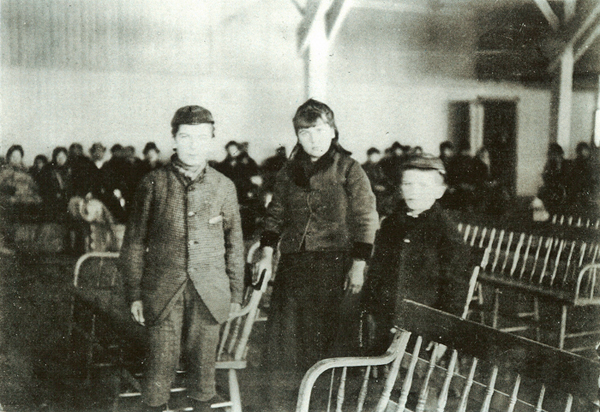
Annie Moore with brothers Anthony and Philip, Ellis Island, 1892

Annie Moore with brothers Anthony and Philip, Ellis Island, 1892

Megan Smolenyak is on a mission. She wants the world to know the real Annie Moore. You have probably heard of her – Annie Moore was the first immigrant to arrive at Ellis Island when it opened on January 1, 1892. Annie became an instant celebrity that day, but just as quickly as the gold and silver coins were distributed and attention enveloped this girl from County Cork, Annie melted into the masses and another Annie Moore took her place in history.
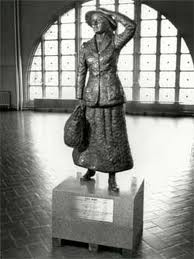
AnnieMoore_EllisIsland

Annie Moore sculpture at Ellis Island

We didn’t know of Annie’s identity crisis until 2005 when Megan Smolenyak decided to pitch a story idea to PBS for a documentary on American immigrants. Megan had always been fascinated with Ellis Island and the immigration story, and why not explore the genealogy of Ellis Island’s first immigrant, Annie Moore? 

Megan is a well-known and respected genealogist, author, blogger, lecturer, finder of President Obama’s Irish roots, contributor to TV programs (Who Do You Think You Are?) and documentaries. Megan didn’t set out to bust any myths, she simply saw that little was known about Annie Moore and she wanted to see what information she could find on this important figure in American history.

As she began to trace Annie Moore, Megan came across one inconsistency after another. It wasn’t long before Megan realized that the Annie Moore everyone accepted as THE Annie Moore was born in Illinois, not the first immigrant on Ellis Island. And there is more…click here to see the proof Megan has compiled showing that the wrong Annie Moore had become the heroine of the story. Megan was determined to set history straight.

Last month I had the pleasure of listening as Megan shared her Annie Moore research journey via her wonderful Legacy Family History webinar, Annie Moore of Ellis Island – A Case of Historical Identity Theft. Megan explained the process of making things right – finding evidence of the real Annie Moore, contacting Annie’s descendants, bringing them together for a reunion, and even helping to get a headstone for Annie’s previously unmarked grave.

The real Annie Moore didn’t go West. In fact, she never made it out of New York’s lower east side tenements. You can follow Megan’s research here. Megan has put together links, videos, audio clips, and photos to tell this fascinating story. It amazes me that so many people could be so wrong about Annie’s identity for so long. No one even thought to look into Annie’s story…until Megan. Thank you, Megan, for your persistence and dedication to learning the truth.
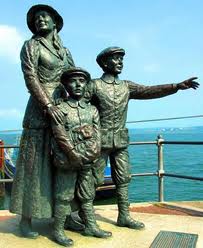
Annie Moore with brothers, Cobh, County Cork

Annie Moore with brothers at Cobh, County Cork

Megan’s discoveries have tremendous impact on how each of us views our genealogy research and the lives of our immigrant ancestors. It is important that we do not simply accept stories we hear as the truth because, “That’s what Grandma always said…” Family lore is priceless, but it can be useful to back those stories up with research. That’s how we turn the stories into history.

This case of mistaken identity reminds us to value all the experiences of our Irish immigrant ancestors. They didn’t all come to America and follow the path of dreams, adventure, and success that read like a Hollywood film script. But neither did all immigrants struggle in poverty-stricken urban slums. Many fell somewhere between; there is great diversity to the Irish immigrant experience and it is important to keep an open mind when researching your family’s history.

I can’t wait to see what Megan finds out about Annie’s life in Ireland, before she became the first immigrant at Ellis Island. Stay tuned…

You might know that Irish artist Jeanne Rynhart is responsible for the bronze sculpture of Annie and her brothers at Cobh, as well as Annie at Ellis Island. What other famous sculpture in Ireland is also the work of Ms. Rynhart? Another trivia question…who actually cast the bronze statues? Leave a comment if you have either answer!


4 Comments

Gathering Spotlight IV

TheGathering_logo_Blue_R

Each week we are blown away by the creativity and hard work being poured into the Gatherings throughout Ireland. This week we shine the spotlight on four special events:

  • Irish Redhead Convention – Crosshaven, County Cork – August 23rd-25th
  • The Feerick Family Reunion – Westport, County Mayo – September 27th-29th
  • Roscommon Military Conference 2013 – Roscommon – May 3rd 
  • Parkville United Reunion – Tullow, County Carlow – June 7th-9th

Continue reading


2 Comments

From Sheepshead to Casper

Unknown town sceneRecently, in an exchange of emails with Danny Tobin about a couple of family gatherings he has planned for this summer (click here to read more about the Tobin and Coughlan family gatherings) I learned of the connection between the Sheepshead Peninsula in West Cork and Casper, Wyoming in the United States.

Danny told me that many of the emigrants from Sheepshead had gone to Casper to, naturally, work on the sheep ranches. He suggested I check out History of Casper’s Irish Colony.

What a fantastic recommendation! The site is actually a complete version of the book Register: The Story of Casper’s Irish Colony, written by Harry Arundel Ward. The site includes the full second edition published in 2003, as well as later corrections and additional information compiled since publication.

Register provides a history of Casper, Wyoming and explores the role of Irish immigrants in the foundation and growth of the town. It also includes vast biographical information on each Irish immigrant who made Casper home and presents it all in an easy to search tables (I just used the “find” function to explore the tables.) The tables include over 500 names, many more than the author, Harry Ward, anticipated:

When I undertook the project, I expected to collect 50 or 60 names at the most.  Had I realized how large the project would be, I may never have started.

It is possible to SEARCH the entire site – click here,  The author provides detailed HOW TO  instructions for navigating the site – click here.

Whenever I read about immigrants who settled the American West – the farmers, the railroad workers, the ranchers, the miners – I marvel at how brave they were. They left their homes for new lives in a place so very different from where they came. In the case of Casper, the Irish who came may have had experience raising sheep, but imagine their thoughts upon first setting foot on a Wyoming ranch. Desolate, dusty, and twenty miles to town.

Click here to read Casper 1887-1987: An Irish Legacy, by Linda L. Doherty.

TheGathering_logo_Blue_RSo, if you are planning a Gathering this year and the old family stories tell you that a relative moved to Wyoming to in the late 19th to early 20th centuries, definitely check out History of Casper’s Irish Colony. The author also includes information on other Irish settlements throughout the Western United States – Nebraska, Montana, and Oregon – click here.

Psst…if you are a native of Casper and claim Irish heritage, drop us a line. Someone may just be looking for you!

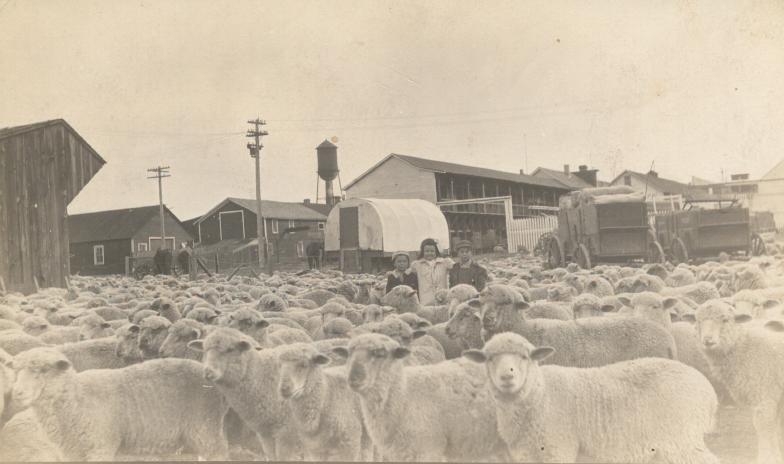
Lucille O'Brien and some sheep in Chinook, Montana (closest I could get to Casper!)

Lucille O’Brien and some sheep in Chinook, Montana (closest I could get to Casper!)


7 Comments

Happy Birthday Minnie!

Can’t believe an entire year has passed since I posted this in honor of my great-grandmother’s birthday last year. Hope your 2013 is off to a good start — thanks so much for reading. Now, better get to baking that spice cake… Continue reading


5 Comments

Cobh: The Queenstown Story

Cobh, County Cork (photo: Regan McCormack)

Cobh, County Cork (photo: Regan McCormack)

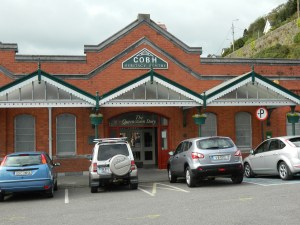
I once heard Cobh described as the saddest place in Ireland. I thought of this as my sister, Regan, and I walked into town one late September morning. With bright sun and fluffy white clouds in a beautiful blue sky overhead and a postcard-perfect harbor in front of us, I couldn’t imagine a more cheerful town. The usual quiet Irish morning bustle filled the streets as we made our way to the restored Victorian railway station and home of the Cobh Heritage Centre.

Cobh Heritage Centre (photo: Regan McCormack)

Cobh Heritage Centre (photo: Regan McCormack)

It wasn’t until we stepped in to the Heritage Centre’s multi-media Queenstown Story exhibit that Cobh’s sad reputation began to make sense. From 1848-1950, Cobh (or Queenstown) was the last of Ireland seen by over 2.5 million people whose ships departed Cobh Harbor \; emigrants leaving home for new lives in new worlds. These men, women, and children were fleeing famine and political unrest, leaving a country unable to give them even the most basic social and economic opportunities.

The exhibit does a nice job of bringing the Irish emigrant experience to life — the sound of waves crashing, dim lighting, and artifacts on display belonging to actual passengers combine to give visitors a glimpse into a nineteenth-century steerage compartment.  North America promised freedom, prosperity, and a future, but first the emigrants would have to say goodbye to their homeland and risk their lives on a treacherous ocean crossing.

In addition to the exhibit space, the Cobh Heritage Centre offers a genealogy consultation service, café, and shop. Regan and I were able to sit down with Christy Keating, the genealogist on duty. We were lucky that his 10:30 appointment did not show up because Christy is a very busy man, fielding genealogy queries from some of the 100,000 visitors to the centre every year.

Christy told us about the genealogy services they offer at the centre. We talked about the challenges in tracing Irish emigration – there are many online passenger list resources, but they usually are not useful without additional genealogical information. For example, a visitor from Connecticut in the United States walks through the exhibit and approaches Christy and says, “My great-great-grandmother Mary Sullivan came to America during the potato famine – can you tell me more about her?”

Christy politely asks a few follow-up questions, such as what year did she emigrate, what port did she enter, did she travel alone. where was she from, etc. These are often met with a blank stare. All this visitor knows is that their great-great-grandmother Mary Sullivan came from Ireland during the potato famine. Christy does his best to point people in the right direction for learning more about their ancestor, but a few basic details would help immensely.

A number of other family history professionals, genealogists, and archivists in Ireland echo this sentiment: if you are visiting Ireland and have an interest in learning more about your Irish roots, a little homework done before your trip (or visit to the National Library or Archives) can go a long way. Learn some basic information and they will better be able to help you find your ancestor in Ireland. Who knows? You may be able to connect to the county, parish, or townland your family member left all those years ago.

If you are planning a visit to Ireland and know you have some Irish heritage, but don’t have the time to research your roots, The Irish in America will do the work for you. Visit the Find Your Cousins tab at the top of this page to get started. We offer a free consultation and reasonable research rates.

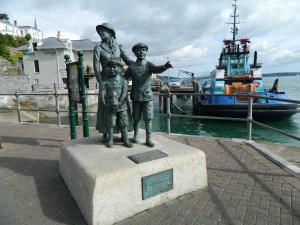
Annie Moore (Photo: Regan McCormack)

Annie Moore (Photo: Regan McCormack)

A statue of Annie Moore and her brothers stands near the Heritage Centre in Cobh. Annie was the first immigrant processed at the newly opened Ellis Island in New York harbor in 1892. Emigration can be a heart-breaking event, but this statue symbolizes the struggles and optimism of those who have left Ireland. Cobh is a sad place in the collective memory, but today it welcomes back the descendants of the emigrants who had to leave their home.

I think every American who is aware of their Irish heritage and visits Ireland should go to Cobh and take a moment to think about their ancestors.


Leave a comment

Ireland Reaching Out to Middle America

Enjoy the latest press release from the folks at Ireland XO. It’s great to see them reaching out to the Irish communities in Chicago and Milwaukee!

Ireland XO reaches out to Mid-West Irish-American Diaspora

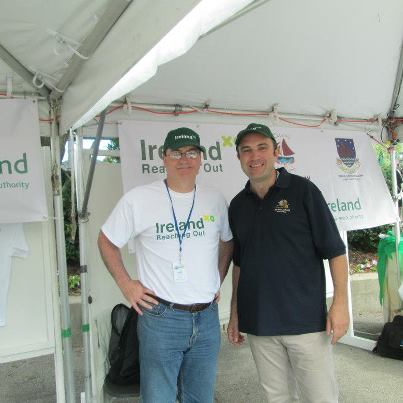
The Ireland XO Team in action at the Milwaukee Irish Fest: Mike Feerick, Dolores O’Shea, Rory O’Shaughnessy

Ireland Reaching Out began its first major outreach drive to the Irish-American diaspora with a busy and successful visit to Galway’s Sister City, Chicago and the Milwaukee Irish Fest 2012.

Loughrea, Co. Galway, August 27th 2012  The Mayor of Chicago, Rahm Emanuel has asked Ireland XO to trace the Irish roots of his wife who has Irish ancestry – this is just one of the many hundreds of requests that the team took home from their first major outreach to the Irish-American diaspora in the US Mid-West.

As part of a delegation which included both Galway City and County Councils as well as Fáilte Ireland, members of the Ireland Reaching Out Programme travelled last week to Chicago, en route to the 2012 Milwaukee Irish Fest. Supported by local volunteers from the Chicago area, the team “reached out” to the estimated 120,000 attendees at the Fest to sign up Irish-Americans interested in tracing their roots and one day returning to the parish of their ancestors. There was extraordinary interest shown by those engaged in linking to their Irish Heritage and the majority of them were planning a visit to Ireland for The Gathering 2013.

In Chicago, Ireland XO made presentations at the Irish American Heritage Centre and Gaelic Park in Chicago where Irish culture, language, music, dance and sport is celebrated by many thousands of members. In excess of 150 people attended both venues where Mike Feerick and Henry Healy of Ireland Reaching Out explained their work and  closer co-operation between the organisations is envisaged. In particular, the IAHC has an excellent library and archives as well as a monthly genealogy group which Ireland XO intends to leverage.

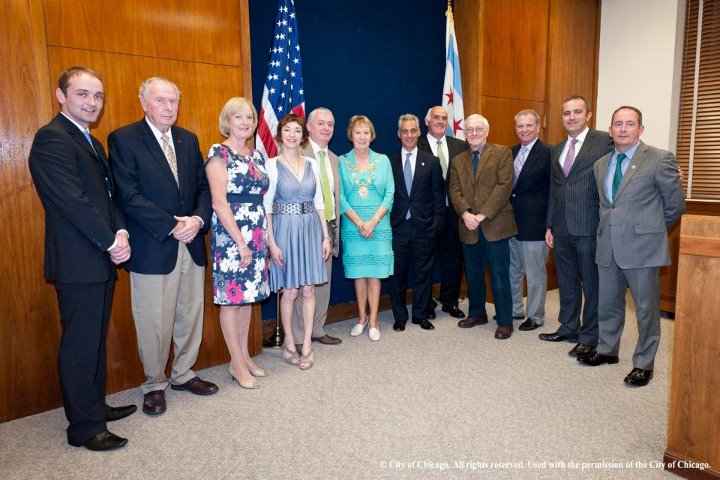
At the Chicago mayoral reception, John Mahoney, best known for his role in the TV hit comedy Frasier, and whose grandfather is from Co. Cork, praised the Ireland XO concept and encouraged both Diaspora and Irish parishes to sign up.  At Milwaukee, the ancestral details of over 600 Irish-Americans were signed up for the programme. These ranged from one Virginia State resident tracing his ancestor’s departure from the town of Ballina in Mayo in 1740 and now having 1,200 people on his family tree (all members of the Ballina, Co Mayo Diaspora!), to those who were finding out for the first time about the Irish origins of their grandfather.  Commenting on the feedback, Mike Feerick stated that “the immense opportunity for local communities in Ireland to connect with their Diaspora was starkly evident at the Milwaukee Irish Fest. We should not stop until all 70 million of the Irish Diaspora are reconnected!”

For further information on the Ireland Reaching Out Programme, or getting involved, please contactinfo@irelandxo.com  or telephone 091 842 013.

Bill Gaynor (Sister Cities), Henry Healy and Mike Feerick (Ireland Reaching Out), Austin Kelly (Sister Cities), Marian Ryan, general manager and John Devitt, President Gaelic Park Chicago.


Galway City delegation, members of the Chicago Sister Cities Committee, Ireland XO and Consul General Aidan Cronin with Mayor Rahm Emanuel

For further media information please contact:

Paula Kennedy, Press Officer,
Tel:               +353 (0)91 842013       / 086-069-5152

Email:               pkennedy@irelandxo.com


Mike Feerick, CEO of Ireland Reaching Out with Consul General Aidan Cronin

About the Ireland Reaching Out Programme
The Ireland Reaching Out (Ireland XO) project won the special award at the national “Pride of Place” Awards in Nov 2011 and in February 2012, was voted the “Best Community” initiative nationally by the Local Authorities Members Awards (LAMA).  The project was founded in South-East Galway by tech entrepreneur Mike Feerick in 2009 and has been funded by the Department of Foreign Affairs, the Heritage Council, the Atlantic Philanthropies, the Ireland Funds, Galway County Council, Galway Rural Development (GRD), and Irish-American sources. Sponsors include Google, Guinness, An Post, and the National Library. In Dec 2011, the project launched a global partnership with the GAA, agreeing to link newly identified members of the Irish Diaspora to the network of nearly 500 GAA clubs worldwide. Well-known broadcasters and economists David McWilliams and George Lee have been prominent supports of Ireland XO pointing out the extraordinary economic potential of the project, which rises well beyond the immediate and obvious tourism opportunity. The Ireland Reaching Out project aims to connect over million people through the project by the end of 2013. It believes it can achieve a database of 10 million members of the Irish Diaspora, including delivering one million additional visits to the island of Ireland by 2016.

Ireland XO in the Press 2011/2012
TV3 Morning Show – Ireland XO wins Arthur Guinness Fund Award

RTE George Lee – The Business – The Irish Diaspora
New Tech Post (David McWilliams): Ireland Reaching Out Launch 2012
New York Times: In tough times; the Irish call their Diaspora
RTE Nationwide: The Obama Visit – Linking to the Diaspora
Irish-American Magazine; Bring them all Back Home

Ireland XO Press Section 


2 Comments

The Gathering 2013

The Gathering 2013 initiative was launched earlier this year by the Irish government. The Gathering 2013 website introduces the project:

It’s about asking anyone who has Irish blood, a link to Ireland, or even just a love of our country – to join us for a series of amazing and diverse events throughout 2013.

Sounds good to me! Any excuse to go to Ireland is a good one. The Navy-Notre Dame Emerald Isle Football Classic on September 1, 2012 at Dublin’s Aviva Stadium is sponsored by The Gathering 2013 and will serve as an unofficial kick-off (no pun intended) to the 2013 festivities.

Sponsoring this event is a great move by The Gathering. The U.S. Naval Academy Director of Athletics had this to say:

We are delighted for The Gathering Ireland to be the Presenting Sponsor of the Emerald Isle Classic. This game represents exactly what The Gathering Ireland is all about, a unique coming together in Ireland of Navy and Notre Dame college football fans, some returning to their ancestral home and some travelling for the first time to Ireland. The Emerald Isle Classic presents a once in a lifetime opportunity to showcase Ireland to this group and also to the many millions of Americans watching the game through the broadcast.

Stay tuned to The Gathering 2013 for all the latest news.

People all over Ireland have begun planning for the 2013 Gathering. A number of local community meetings have already taken place in Roscommon, Mayo, Clare, Kerry, Cavan, Leitrim, Carlow, Meath, and Wicklow, with meetings in Monaghan and North Tipperary later this week. A meeting in Limerick is coming up in early September. Click on the county names for more information.

This is what is so exciting about The Gathering 2013 – get the counties involved on a local level. Residents of any given county or town will know best what their home community has to offer, as well as what visitors have enjoyed in the past. It is fantastic to see the enthusiasm throughout Ireland for The Gathering.

Of course The Gathering 2013 is about more than tourists visiting monastic ruins and tracing their roots, it is about business. The first Gathering event will take place in January 2013:

A two-day meeting of top executives, entrepreneurs and venture capital investors operating in Silicon Valley, Hollywood and the US east coast will travel to Cork…

Read the full article here.

For an Arts focus on The Gathering, look no further than Irish Gathering 2013 – “Ancestry Research, Stories from the Irish and The 2013 Festivities of the Gathering in Ireland!” Christine and Sabrina Joyce (great-grand-nieces of James Joyce) want to help visitors make the most of the time they spend in Ireland in 2013. They are working closely with a variety of artists to bring out the best of Ireland for The Gathering.

Waterford wants people with ties to the county to register on their website, while Galway has a plan for a Gathering of the Tribes. Don’t see your county anywhere in this post? Visit the County Council website for information on what the county has planned.

If you live in Ireland, what’s happening in your home county for The Gathering 2013? Leave a comment, I would love to share your plans.

Do you live outside of Ireland and are thinking about paying a visit next year? Anything special you would like to see or do while you are in Ireland?

Enjoy this Gathering video for Abbeyleix, County Laois. I wonder what my McCormack relatives have planned for us next year?


2 Comments

Interested in County Cork? Check out CCCA!

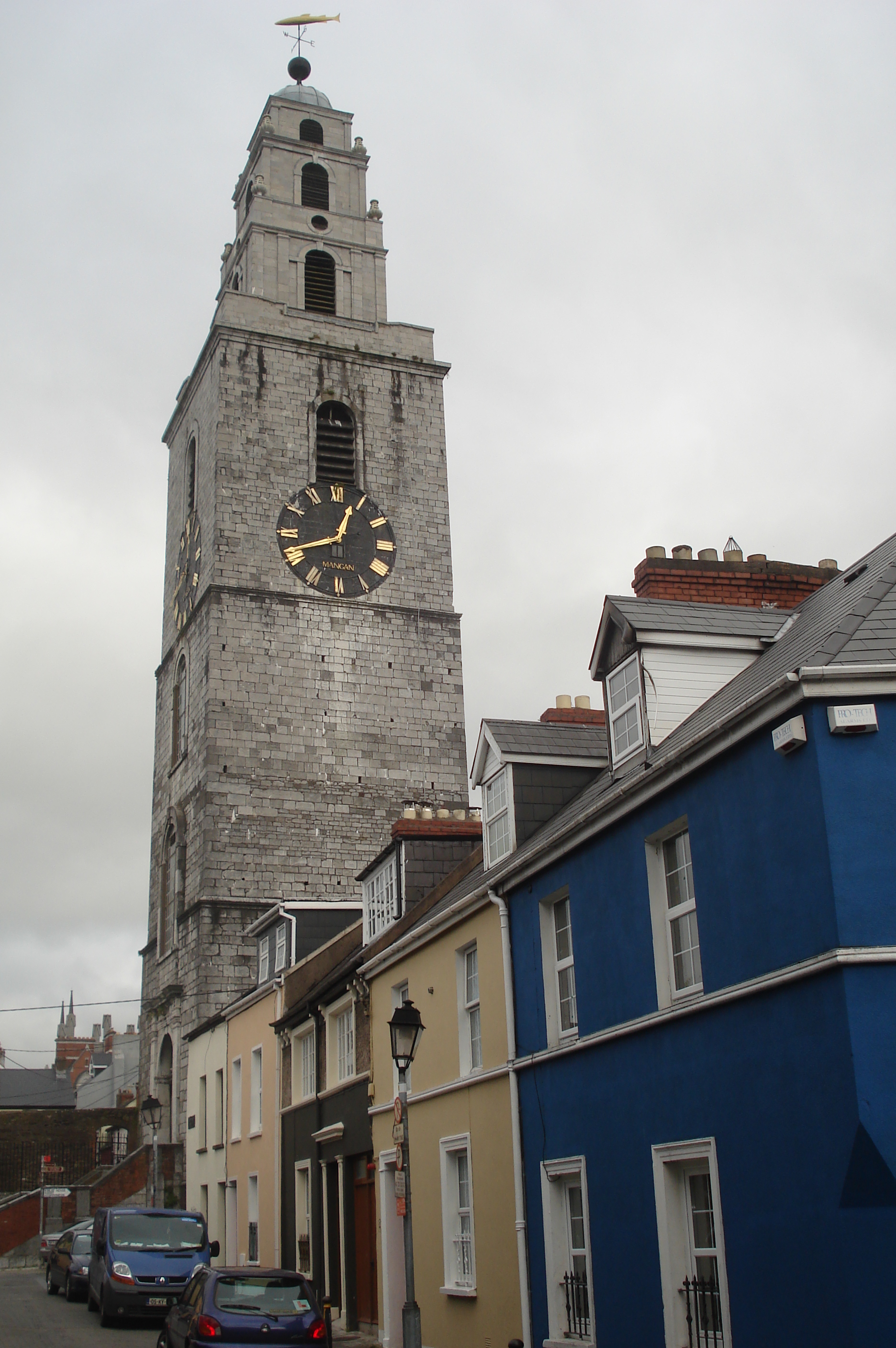
Bells of Shandon, Cork City (photo by R. McCormack)

The Cork City and County Archives (CCCA) is home to an impressive collection of manuscripts, government records, business archives, and family papers pertaining to Cork City and county. If you trace your Irish ancestry to County Cork and are interested in learning more about the place from which your family came, a visit to the CCCA website is definitely in order.

Warning: Once you begin browsing the collections you might not be able to stop!

The Online Exhibitions page is a great place to start your tour of the CCCA collections, with a sampling of images of documents spanning over four-hundred years. On the right side of the home page you will find a Document Spotlight section, click on it and a description of the document and its collection is provided.

The Collections page is well-organized, making it easy to search the collections either alphabetically or by archive category. I was interested in looking up the Hurley Family Emigrant Letters, a collection my sister had told me about. The letters were written by brothers Denis and Michael Hurley to their family in Tawnies, Cork. Michael and Denis emigrated in 1870, settling in Nevada.

I easily located a description of the letters through the alphabetical list. The descriptive list of the Hurley Letters provides all the information you would want to see – biographical history, scope and content of the collection, how it is arranged, and detailed descriptions of the 122 letters from the brothers, as well as a few other items included in the collection. (Note that the descriptive lists for each collection are PDFs which can be easily downloaded or printed by the researcher.)

Fascinating collection of letters, shedding light on the experiences of Irish immigrants in the Western United States. Too often when people think about the Irish in America, they focus only on New York City and Boston, forgetting that Irish immigrants were among the pioneer settlers of the American West during the nineteenth century.

More great items in the CCCA collections are the Poor Law Union, Board of Guardians records. You will find detailed descriptions of the records for fourteen Poor Law Unions in County Cork under the Local Government Archives section. A couple of my maternal great-great-grandfathers emigrated from Kilmichael Parish, Cork in the Dumanway Poor Law Union. A click of the mouse brings me to the descriptive list of the Board of Guardians minute books for Dumanway, allowing me a glimpse at life in my ancestor’s home place at the time they were born.

Kilmichael Parish, County Cork (photo by R. McCormack)

The Genealogy page presents guidance and resources for family historians and genealogists interested in using the archive, pointing to the Digital Archive for those unable to make the trip to Cork.

Take a look around the Cork City and County Archives – terrific website and fabulous collections. But don’t say I didn’t warn you…you might be there a while!

Cobh, County Cork (photo by R. McCormack)


Leave a comment

At Least He Made It

Major League Baseball has never been a stranger to foreign-born players. Throughout the nineteenth and early twentieth centuries, the names of Italian, Jewish, and Irish immigrants peppered the rosters of big league teams. Today you will find Venezuelan, Dominican, and even a few Japanese names on these rosters.

A few months ago I came across the story of Joe Cleary, the last Irish-born baseball player to appear in a Major League game. On August 4, 1945, Cleary was sent out to pitch the fourth inning against the Boston Red Sox. Cleary had been called up by the Washington Senators in preparation for a long string of double-headers, where pitching would be needed.

That day Joe Cleary made baseball history. Not because he was the last Irish-born player to make it to the big leagues, and not even because he was replaced in the game by the first (and only) major league pitcher to have just one leg (the other was amputated in World War II.) No, Joe Cleary is in the record books for allowing seven earned runs in one-third inning of work, resulting in a whopping 189.00 ERA (earned run average).

This inauspicious debut would be Cleary’s closing night as well. Years later, Cleary said he was used to the teasing about the 189.00 ERA from people in the neighborhood, “But I would tell them, I was there.”

Joseph Christopher Cleary was born on December 3, 1918 in County Cork, Ireland. His family came to the States in 1928, settling on the West Side of New York City. Cleary played baseball at New York’s High School of Commerce – the same high school attended by Lou Gehrig about fifteen years earlier.

After high school, Cleary turned down college scholarships to play semi-pro baseball. He needed to work and help support his family. What better way to do that than by playing baseball? There is a great biography of Joe “Fire” Cleary here by Charlie Bevis. It explores Cleary’s career in baseball leading up to that fateful August day in 1945 and beyond. Bevis details the drama that took place during the one-third inning of baseball and tells us why the seven runs may not have been the only reason Cleary never made it back to the Majors.

Cleary retired from baseball in 1950 to spend time with his wife Mary and family. Bevis sums up Cleary’s story very nicely:

Cleary worked on Wall Street for a few years before he purchased a bar on the West Side of New York City, which he operated for more than 20 years. Cleary sold the bar and worked as a bartender before retiring at age 62 in 1982. In retirement in his neighborhood dominated by baseball-loving Dominican immigrants, “[Cleary] is a minor celebrity, who is still ribbed about his baseball career and his bloated earned run average. But he can handle it,” Margolick wrote. “‘The only answer I give them is, ‘Hey I was there. Only 14,000 guys have made it.'”

This paragraph says a lot about baseball and America…maybe the more recent immigrants from the Dominican Republic looked to an old immigrant from Ireland and thought they could make it, too.

Or maybe they just love baseball…

Joe Cleary passed away June 3, 2004 in Yonkers, New York.

Better go so I don’t miss the first pitch of the Minnesota Twins season. I think this is their year.

Thanks to Charlie Bevis and his biography of Joe Cleary from the Society for American Baseball Research (SABR) website – read it here. Not only does Bevis provide us with the details of Cleary’s baseball career, he gives us a glimpse into why Cleary’s nickname was “Fire”.

Photo from www.baseball-reference.com


6 Comments

Happy Birthday Minnie!

Mary “Minnie” Foley, 1875-76

Minnie was my great-grandmother, and according to my grandma she absolutely hated the nickname “Minnie”. Please forgive me, Great Grandmother, but I think it is a cute name, and since your real name Mary is shared by at least 75% of the women in your family tree, I chose to call you Minnie.

Minnie Foley was born in Fisherville, New Hampshire on January 2, 1875. She was the fourth of five children born to Patrick Foley and Mary Crowley (their eldest son did not survive infancy.) Patrick emigrated to the United States from Kilmichael, County Cork in 1864. Mary came a year earlier in 1863, also from County Cork.

Minnie was baptized on January 24, 1875 at St. John the Evangelist Catholic Church in Concord, New Hampshire. John Foley and Mary Casey were her godparents.

Three years later, Minnie and her family moved west to Clontarf, Minnesota with several other Irish families from the Concord, New Hampshire area, including the Regan family. John Regan and Patrick Foley emigrated together in 1864 from Kilmichael. The families settled on farms in Tara township. Minnie and Nellie Regan were best friends from a very young age.

First-Generation American Girls: Minnie and Nellie in about 1886

My grandma told me that Minnie worked hard her entire life, and that included working on the family farm in Tara Township while she was growing up. Her sister Maggie worked inside, while Minnie and her younger brother Jackie worked outside. My grandma confessed, she wasn’t sure where Minnie’s older brother Tim worked!

The McMahons, an Irish family from County Fermanagh, lived about a mile from the Foleys in Tara. Minnie married Thomas McMahon at St. Malachy Catholic Church in Clontarf on June 28, 1904. Minnie’s sister Maggie and Tom’s brother Frank were their witnesses. I imagine Minnie and Hoosie (as Tom is referred to in Minnie’s autograph book) having secret meetings over hay bales and missing chickens during their courtship…

Minnie and Tom raised seven children and after giving farming all they had the McMahons moved to Minneapolis in 1925.

When she died in 1945, Minnie was living with my grandma, her husband John Regan, and their new baby (and my mother) Eileen. My grandma said that Minnie was smitten with Eileen. Minnie would say that she had never known a baby to sleep as much and as well as little Eileen. Minnie marvelled at how Eileen would even fall asleep with a bottle in her mouth.

In many ways things came full circle for Minnie. Also living with my grandma in 1945 was Neil Regan, Nellie’s older brother and my grandpa’s father. Eighty years earlier Patrick Foley and John Regan had journeyed to the United States. After Fisherville, New Hampshire and Clontarf, Minnesota, the families came together again in Minneapolis…a long way from Kilmichael.

In my grandma’s recipe book are a few recipes attributed to Minnie, her “Ma” – I think I will make “Ma’s Spice Cake” in Minnie’s honor today.

Nellie Regan Byrne and Minnie Foley McMahon, 1942