The Irish in America


2 Comments

The Angel of Alcoholics Anonymous

Sister Ignatia Gavin (1889-1966)

Sister Ignatia Gavin (1889-1966)

It’s New Year’s Day. Most of us have at least one resolution in mind to begin the new year on a better path than we ended the last year. I can think of no better person to profile on this New Year’s Day than a woman who helped thousands of people begin new lives.

Today is the 125th anniversary of the birth of The Angel of Alcoholics Anonymous, Sister Mary Ignatia Gavin. Sister Ignatia was born Bridget “Delia” Gavin on January 1,  1889 in Shanvally, Turlough Parish, County Mayo, Ireland. (Click here to learn how Fiona identified Sister Ignatia’s birthplace – photos included.) She emigrated to the United States, arriving in Philadelphia on April 14, 1896 with her parents, Patrick and Barbara, and her brother, Patrick.  According to this entry in the “Philadelphia, Pennsylvania Immigration Records, Special Boards of Inquiry, 1893-1909” found on Ancestry.com, a niece was expecting the Gavin family in Cleveland, Ohio.

PhiladelphiaPennsylvaniaImmigrationRecordsSpecialBoardsofInquiry1893-1909ForBridgetGavin

Click to enlarge. Immigration Special Boards of Inquiry, Philadelphia, PA. Courtesy of ancestry.com.

Above is a copy of an interesting record I came across on Ancestry.com. Immigration to the United States became more strictly regulated beginning in the early 1880s and the motives and situations of those entering the country were often scrutinized more closely than they had been in the past. I wonder why the Gavin family needed to stand before the immigration board? Perhaps they didn’t have proof of the relative in Cleveland they were joining? Was there something suspicious about the Gavins? Any ideas?

Delia joined the Sisters of Charity of Saint Augustine in 1914, became Sister Mary Ignatia, and worked as a music teacher for about ten years. By the late 1920s,  stress and overwork led to ulcers and Sister Ignatia suffered a nervous breakdown. Sister Ignatia’s treatment included removal from teaching and a new assignment at St. Thomas Hospital in Akron, Ohio.

While working in the admissions department at St. Thomas, Sister Ignatia met a doctor who was in the midst of founding Alcoholics Anonymous. Sister Ignatia shared Dr. Bob’s passion for the necessity to provide a medical treatment program for those suffering from alcoholism. She was determined that alcoholics be admitted to the hospital through the front door like other patients and alcoholism be treated as a disease rather than a moral weakness. For more on Sister Ignatia and her role in Alcoholics Anonymous click here.

Sister Ignatia was known for her practical attitude in treating alcoholism, as well as her “tough love”. She distributed Sacred Heart medals upon completion of the program, demanding their return if the recipient took a drink. She received a medal back less than 20% of the time. Father Mathew used medals of the Sacred Heart during the 1840s during his temperance crusade, as did the Irish Temperance League in the 1890s. The temperance movement was extremely important in the Irish American community throughout the nineteenth century.

A tidbit of AA trivia: Sister Ignatia is responsible for the popularity of the use of coffee in the treatment of alcoholism. She was adamant that coffee be available 24 hours a day to those in recovery, building coffee bars in her Ohio treatment facilities for this purpose.

The first day of 2014 is a good time to remember of something Sister Ignatia once said: “Be a better whatever you are today.” Inspirational words from an amazing Irish American. Happy New Year!

Leave a comment

Macy’s Thanksgiving Day Parade Welcomes Two Girls From Milltown

I wanted to take the opportunity to share my Thanksgiving post from last year with you again. This was the first time I introduced Maureen Teahan Murray (of Meet Maureen and Maureen’s Memories fame). Maureen’s daughter  Mary had emailed me a day or so before Thanksgiving and shared the story of Maureen’s arrival in America just in time for the iconic Macy’s Thanksgiving Parade. Enjoy and have a happy Thanksgiving!

Macy’s Thanksgiving Day Parade debuted in 1924. Macy’s began the parade in order to promote their department store for the Christmas season. Most of the participants in the parade were Macy’s employees who donned costumes, marched, and rode on floats pulled by horses, tracing the route from Harlem to Macy’s Herald Square store. Over 250.000 people watched the parade that first year and it became an annual event.

1940 Hippo balloon at Macy’s parade (photo from theweek.com)

The famous helium-filled balloons of animals first appeared in 1927, replacing the real animals that were sprung from the Central Park Zoo to march in the parade. By 1942, the rubber and helium from the balloons became necessary for the war effort and the parade was called off until 1945.

The November 28, 1947 s New York Times article describes the parade in great detail. The parade had clearly hit its pre-World War II stride with crowds, bands, floats, and the return of the giant balloons. The headline reads:

2,000,000 THRILLED BY MACY’S PARADE

Gas-Filled Giants Prance Again to Delight of Throngs Who Forget Cold

CLOWNS ADD TO THE FUN

Three Little Pigs, Peter Rabbit in the Line — Santa Bestows a Greeting.

What a line-up! The two million spectators lined the sidewalks of the parade route and “peered from open windows, crowded roof-tops, and marquees” to catch a glimpse of Humpty-Dumpty, the Pumpkin Float, and a gigantic panda balloon. Five-year-old Katharine had this to say about the parade: “I like the Jack O’ Lantern, I like the Funny Cop, I like loud music, I like the dancers, I like everything.”

Among the two million people gathered that Thanksgiving morning in 1947 were Maureen and Joan Teahan. Maureen and Joan were sisters who had just arrived in New York the previous day, November 26th. The sisters left their home in Milltown, County Kerry about a week earlier to begin new lives in the United States. Milltown’s population? About 100 people.

The girls experienced just a bit of culture shock upon arrival in New York City. Their Uncle Dan sponsored the sisters’ passage to the United States and made a point of telling them to lock the hotel room door. Maureen recalls that this was something she and Joan had not even considered.

So, what did Maureen think of the two million people plus a rocket ship from Mars full of blue invaders who were “mocked” by Peter Rabbit and the Mad Hatter while the Three Little Pigs “sang the praises of Thanksgiving” and the steady pounding of drums filled the air? Maureen admits she was overwhelmed.

What an introduction to the United States for Maureen and Joan. They walked right into one of the most cherished Thanksgiving traditions for families all over the United States – the Macy’s Thanksgiving Day parade, on a day that is uniquely American. That is a lot to process within the first forty-eight hours in a country.

Maureen and Joan stayed in New York for a week – shopping and seeing the sights – before settling in Lawrence, Massachusetts.

In a couple of weeks, I will publish a lovely story written by Maureen. It’s a Christmas story. But for now, a Happy Thanksgiving to all and enjoy the parade!

Special thanks to Mary Power for sharing the New York Times article, as well as her mother Maureen’s memories of the 1947 Macy’s Thanksgiving parade.

Click on the following links to learn more about Maureen and read her delightful stories:


1 Comment

One of Our Own

Detroit Tigers v Washington Senators

I received an email yesterday from Mary – Maureen Teahan Murray’s (Meet Maureen and Maureen’s Memories) daughter and collaborator – sharing their memories of the day President John F. Kennedy was assassinated. In recent days people all over the world are remembering that fateful day, November 22, 1963.

Nearly everyone (at least in this country, but elsewhere as well) remembers where they were when they learned that someone shot President Kennedy. I have heard many people say there have been two days like that in their lives: November 22, 1963 and September 11, 2001. Mary writes:

I had just turned eight when JFK was assassinated and like many people I remember the day vividly. That Friday I was in Miss Murphy’s second grade class at the Francis Parkman School, Jamaica Plain (Boston) . Although very young Miss Murphy was an extremely strict teacher so I was surprised that afternoon when she abruptly announced she was leaving us alone in the classroom. She told us to do our vocabulary homework which we usually would have done over the weekend.  It was so out of character for her I knew something was very wrong but I had no idea what it was and could never imagine the awful truth. When she finally returned she dismissed us without saying a word about the tragedy. I suppose they thought we were too young to be told and left that difficult task  to our parents.


2 Comments

Meet Maureen (Part III)

I had a few more questions for our favorite Irish American, Maureen Teahan Murray. Maureen immigrated to Lawrence Massachusetts just about sixty-six years ago this month. She and her sister Joan left Milltown, County Kerry, Ireland in November 1947 and arrived in the United States just in time for Thanksgiving. Read the story of her auspicious arrival – click here. A full list of links to earlier Meet Maureen entries, as well as her delightful stories of growing up in Milltown follows this article.

And now we will get to know a little bit more about Maureen and her adjustment to life in America…


Merrimack River in Lawrence, Massachusetts

Merrimack River in Lawrence, Massachusetts

What was the biggest adjustment you had to make to life in the US?

Our biggest adjustment to life in the U.S. was waking up at 4:30 AM to eat breakfast and make our  lunch for work. We crossed the bridge in S. Lawrence, MA over the Merrimack River on bitter winter mornings. Finding it more comfortable to keep moving the 20 minutes it took to walk rather than stand waiting for the bus that would take us to the Wood Mill Factory.

Maureen worked in the “English Drawing Room” at the Wood Mill for a year-and-a-half. Here’s how she describes her job:

The men placed large wool bobbins on a frame and we pulled the wool fibre down onto smaller bobbins and secured them then started the machine. That filled even smaller bobbins of wool. Then the men removed them and we repeated the process. Someone else worked with the wool after we were finished preparing it.
Toohig Girls 1950

(photo courtesy of Fran Valcourt, Mary’s daughter)

Did you make friends with mostly other Irish/Irish Americans? Was that important to you?

Most of our new friends were Irish American-many first generation American born, but we didn’t seek them out. A few months after we settled in Lawrence I had to have an appendectomy. Dr. Frank McCarthy had a private clinic there and his receptionist was Mary Toohig. When I was in the hospital before the operation he told me he would send someone to see me. While recuperating, I was surprised to meet Mary and her sister, Ann. I expected medical professionals were coming to check on me. Still medicated at first I thought I was dreaming when I met the Toohig sisters. They were from a family of eight and their parents were both born in Skibereen, Cork. Almost sixty-five years later Mary is still one of my best friends.

Toohig Family

Toohig Family (photo courtesy of Fran Valcourt)

Early on, what/who did you miss most from Ireland?

 Family we left behind were sorely missed when we first came here. My father, and brothers and sisters, Kitty, Dolly, Helen, John and Donal. Also, our grandfather Teahan who lived on the farm in Lyre, Milltown. Eventually, Kitty, Dolly and Helen joined us in the states. Donal tried living here for a year but then went back to Limerick.

Although new friends made in America couldn’t take the place of family left behind in Ireland, friends like the Toohigs helped make Lawrence, Massachusetts feel a little bit more like home. Do you have any questions for Maureen about her immigration experience in America? Leave a comment!
Click on the following titles to read more about Maureen and her memories:


Leave a comment

Pride & Place Pictures of Ireland + A Special Offer Just For You!

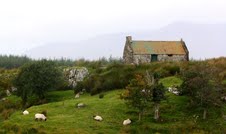
Old House in Mayo Mountains - photo courtesy of Pride&Place Pictures of Ireland

Old House in Mayo Mountains – photo courtesy of Pride & Place Pictures of Ireland

It is my pleasure to introduce you to an exciting new venture – Pride & Place Pictures of Ireland. Now, this is a fantastic idea!

Paul Mulligan is an Irish photographer who believes there is something very special about Ireland – its landscapes and seascapes, its villages and people. Paul knows that many people all over the world share this passion for Ireland. Some have emigrated and miss home, while others have memories of an amazing holiday spent in Ireland. There are also those who have never even visited Ireland, but feel an affinity to the place of their ancestor’s birth.

Whatever the case, Paul can bring that special piece of Ireland home to you. From the Pride & Place website:

All over the world there are many Irish exploring their roots or working abroad

It might be very important to you to have a photo of home where you live or work.

What better than a photograph of Ireland that is dear to you and reminds you of home.

Dundalk Bay - courtesy of Pride&Place Pictures of Ireland

Dundalk Bay – courtesy of Pride & Place Pictures of Ireland

There are many photos of Ireland online that you can choose from ,however they tend to be much of the same.

The service we offer is simple and the end product can be amazing for you.We Take the picture you want us to take. You Pick. We Click.

It could be the tree you climbed when you were young, maybe you carved your name on it. It could be the church where you, your parents or grandparents got married. Anything or anywhere specific to you, your memories and roots in Ireland.

Pride & Place Pictures of Ireland is offering The Irish in America readers a special discount – when you contact them, mention the code “irishamerica” to receive 20% off your order! Don’t hesitate to get in touch – Paul would love to hear from you and as he says, “It’s free to talk!”

Don’t know where your ancestor’s came from in Ireland? The Irish in America can help you sort that out – take a look at our Services page for information on hiring us to do some genealogical digging. For a special rate of $35 The Irish in America will complete a general search on the origin of your surname in Ireland. Then, you will have something to go on when you contact Pride & Place. If you wish to go a little deeper, one of our other research packages may be of interest. Click here to send us an email!

House in the Connemara Hills - courtesy of Pride&Place Pictures of Ireland

House in the Connemara Hills – courtesy of Pride & Place Pictures of Ireland

Pride & Place…a great way to remember home, dream of a favorite vacation spot, or honor your ancestors who left Ireland all those years ago. Visit Pride & Place Pictures of Ireland to see more gorgeous photos and for more information.


10 Comments

Remembering Donald

They say that one of the first steps to learning about your family history is to talk to your oldest living relatives. They actually knew the people behind the names in your family tree print-out. These relatives have stories to tell, memories to share.

Nearly ten years ago my mom and I set out to learn more about our family and arranged to meet two of my grandpa’s cousins – Donald and Gerald Regan. The brothers taught us much more than we thought possible about my grandpa, the entire Regan family, and growing up in Clontarf, Minnesota .

Donald passed away last month, one day shy of his 96th birthday. He was a loving husband, father, and grandfather, a proud Navy veteran of World War II, a successful businessman, and a former mayor of DeGraff, Minnesota. Donald was friendly, outgoing, and charming. He loved to be in the mix and hear the latest news. Donald’s brother Gerald said he inherited these traits from the “Regan side” of the family. I will miss Donald’s delightful gift for storytelling and am grateful I had the chance to listen.

Donald and his sister, Kathryn.

Donald and his sister, Kathryn.

The first time I met Donald in early 2004*, he brought my mom and me on a driving tour of Tara Township. As we drove out from Clontarf, with what seemed to me to be an endless expanse of land on either side of the road, Donald began telling us who lived and farmed each section, beginning with the original nineteenth century settlers through the present-day owners. From the front seat, his brother Gerald filled in the gaps. I was in awe – I didn’t even know the names of the forty other residents of my condominium!

As we slowly rounded a corner, Donald pointed out a grove of trees set off from the road, and he stopped the car.

“Can you see a house in there? That’s where John was born. Let’s see if we can’t get closer.”

John was my grandpa and Donald’s first cousin. Donald and Gerald grew up across the railroad tracks from my grandpa in Clontarf. Donald took a sharp turn into the “driveway” – a muddy springtime mess of rocks and decaying twigs. I was certain we would get stuck, but Donald knew what he was doing. We got out of the car and walked up to the house. Donald made sure we didn’t get too close, it wasn’t safe. There was my grandpa’s birthplace, glass gone from the windows and walls gently caving in, but still standing thanks to that grove of trees.

Several years later, when Donald had moved into the Manor in Benson, he navigated his scooter down to the Whistle Stop Cafe to meet us for lunch, with the same purpose and confidence with which he drove up to Grandpa’s house that Spring day. I liked how Donald maintained his independence – with a touch of determination. Mom and I came to town a couple of times a year, meeting Donald and Gerald for lunch and a chat about “old times”. Without fail, Donald and Gerald dazzled us with entertaining tales of life in Clontarf.

At each meeting with the brothers, I waited patiently for Donald to break out his “Annie voice”. In a high-pitched tone he would say, “Oh, Sonny!” mimicking my great-grandmother Annie Hill Regan’s chastising her son for some transgression or another. I simply loved how Donald scrunched up his nose and exclaimed this phrase with a twinkle in his eye. This meant the world to me, and I think Donald got a kick out of it as well.

Donald helped fill in the gaps in our family history left by my grandpa’s early passing. My mom and I were a captive audience as Donald and Gerald reminisced about old times. As Donald helped me get to know my grandpa through his memories, he gave me a special glimpse into his own life. The Donald who was a protective older brother to Kathryn, a boy earning a little extra money sweeping out the furnace at McDermott’s in Clontarf with his brother Gerald, and Julia’s youngest son. We were lucky that Donald was so generous with his memories, his time, and his friendship. Rest in peace, Donald.

*I am sure I met Donald in the 1980s at a Regan Family picnic, but I didn’t get to know him until Spring of 2004 when my mom and I first visited Clontarf together.

Donald W. Regan

Benson
September 14, 1917 – September 13, 2013

Donald W. Regan, 95 of Benson died Friday, September 13, 2013 at Meadow Lane Nursing Home in Benson.  Mass of Christian burial will be 10:30 a.m. Saturday, October 5, 2013 at St. Bridget’s Catholic Church in DeGraff.  Burial will be in the church cemetery.  Visitation will be held from 4:00 to 7:00 p.m. Friday at the church with a rosary at 4:30 p.m.  Visitation will continue on Saturday for one hour prior to the service.  Funeral arrangements are with the Harvey Anderson Funeral Home in Willmar.

Don_0Donald William Regan was born on September 14, 1917 in Clontarf, the son of Patrick and Julia (Duggan) Regan.  He attended Clontarf Elementary and Benson High School, graduating in 1936. After his schooling he entered the U.S. Navy where he served his country during WWII.   On December 27, 1945, Don was united in marriage to Margaret Helen Coy at the Catholic Church of Visitation in Danvers. They made their home in DeGraff where Don managed the DeGraff Lumber Company. They were able to share in 57 years of marriage before Margaret’s death on July 27,2002. Don enjoyed traveling, dancing, watching sports, especially Notre Dame football, Vikings and Twins.  He was the Commander of the Hughes-McCormack Post of the American Legion until his death, was a member of Knights of Columbus and had served on the school board, city council and was mayor of DeGraff.

Donald W. Regan died Friday, September 13, 2013 at Meadow Lane Nursing Home in Benson at the age of 95. He is survived by his children, William Regan of Benson, Julia (Everett) Richardson of Surprise, AZ, Dr.Timothy (Michelle) Regan of Santa Rosa, CA, Patrick Regan of Mpls, Duggan (Cindy) Regan of DeGraff and Daniel Regan of Blaine;  7 grandchildren; 3 step-grandchildren and 6 step-great-grandchildren.  Don was preceded in death by his wife, Margaret; son, Bruce; siblings, Clarence, Howard, Catherine, Agnes and Marjorie.

– from Harvey, Anderson & Johnson Funeral Home


2 Comments

Meet Maureen (Part II)

Commodore Hotel

Commodore Hotel

After a week at sea, Maureen and Joan Teahan arrived in New York City on November 26, 1947. Uncle Dan O’Meara met the girls and helped ease their transition to American life. Uncle Dan, once an immigrant himself, knew it was important that his nieces look like Americans. Their first stop was Fifth Avenue for some new outfits – click here to read Part I of Meet Maureen. Uncle Dan also wanted them to be safe, and knowing they never would have even thought of it he instructed: “Be sure to lock your hotel room door.” That room was a the Commodore Hotel in Midtown Manhattan, right next to Grand Central Station.

I asked Maureen if the decision to emigrate was a difficult one. She had this to say:

Yes, at the beginning it was for me but I recall my sister, Joan, was excited about immigrating. She was bragging to her friends and one of them told her that she would be immigrating to London, England in time for the wedding of Princess Elizabeth II to Prince Phillip of Greece and Denmark – which she thought was the “next best thing”. Since we were still grieving the loss of my mother (February 1947) I didn’t think I could pull myself together to take such a big step but I didn’t want Joan to go alone, so I quickly changed my mind.

Remember Joan from Maureen’s story, The Infant’s Class Uprising? I can understand Maureen wanting to keep an eye on her younger sister in America! I imagine Joan not being too impressed by her friend’s emigration to England – royal wedding or not. Joan was ready for something bigger in America. Click here to read The Infant’s Class Uprising.

I wondered if Maureen expected to stay in the United States, or if she considered the move a temporary arrangement. Maureen said:

I realized immediately I’d be leaving for good. Being so young I was living in the day. Once I arrived I adjusted right away and found it very exciting living here. Uncle Dan and Jack were very good to us and we made good friends (still to this day) which was immensely helpful.

Maureen stayed in New York for a couple of days before making her way to Lawrence, Massachusetts – the home of her Uncles Jack and Dan and where Maureen would begin her new life in America.


4 Comments

Meet Maureen (Part I)

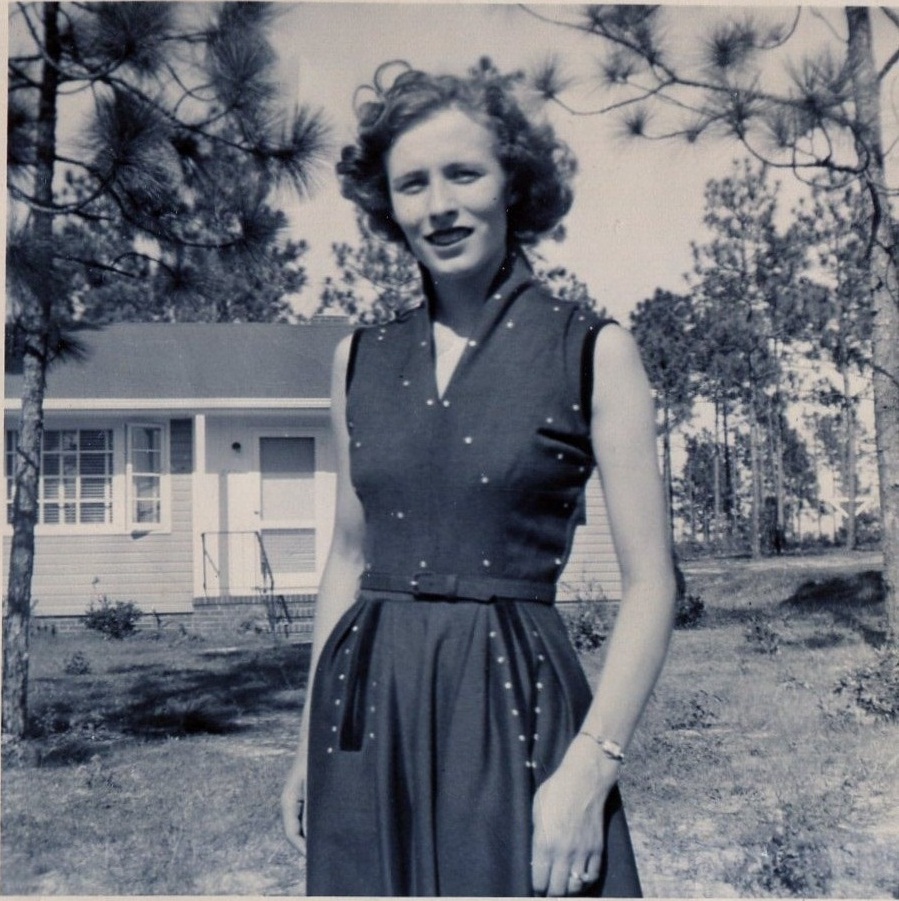
Maureen in 1953

Maureen in 1953

I think we have all enjoyed Maureen’s stories on the blog over the past several months. Her memories of growing up in Miltown, County Kerry in the 1930s and 1940s speak to an Ireland still remembered by many, but which – for good and bad – has all but disappeared. Click here, herehere, here, here, and here to read Maureen’s stories.  Based on her delightful stories and insightful recollections, I knew I had to learn more about Maureen.

So I asked Maureen and her daughter, Mary, if I could interview Maureen about her immigration and her transition to life in the United States, for the blog. What does it mean to Maureen to be Irish American? They agreed, and Mary suggested I call the post Meet Maureen. Perfect!

When I received Maureen’s responses to my initial questions, I realized that Meet Maureen required not just a single post but a series. So here goes…presenting Part I of Meet Maureen! Maureen’s responses appear in italics. My first question: “Why did you decide to come to the United States?”

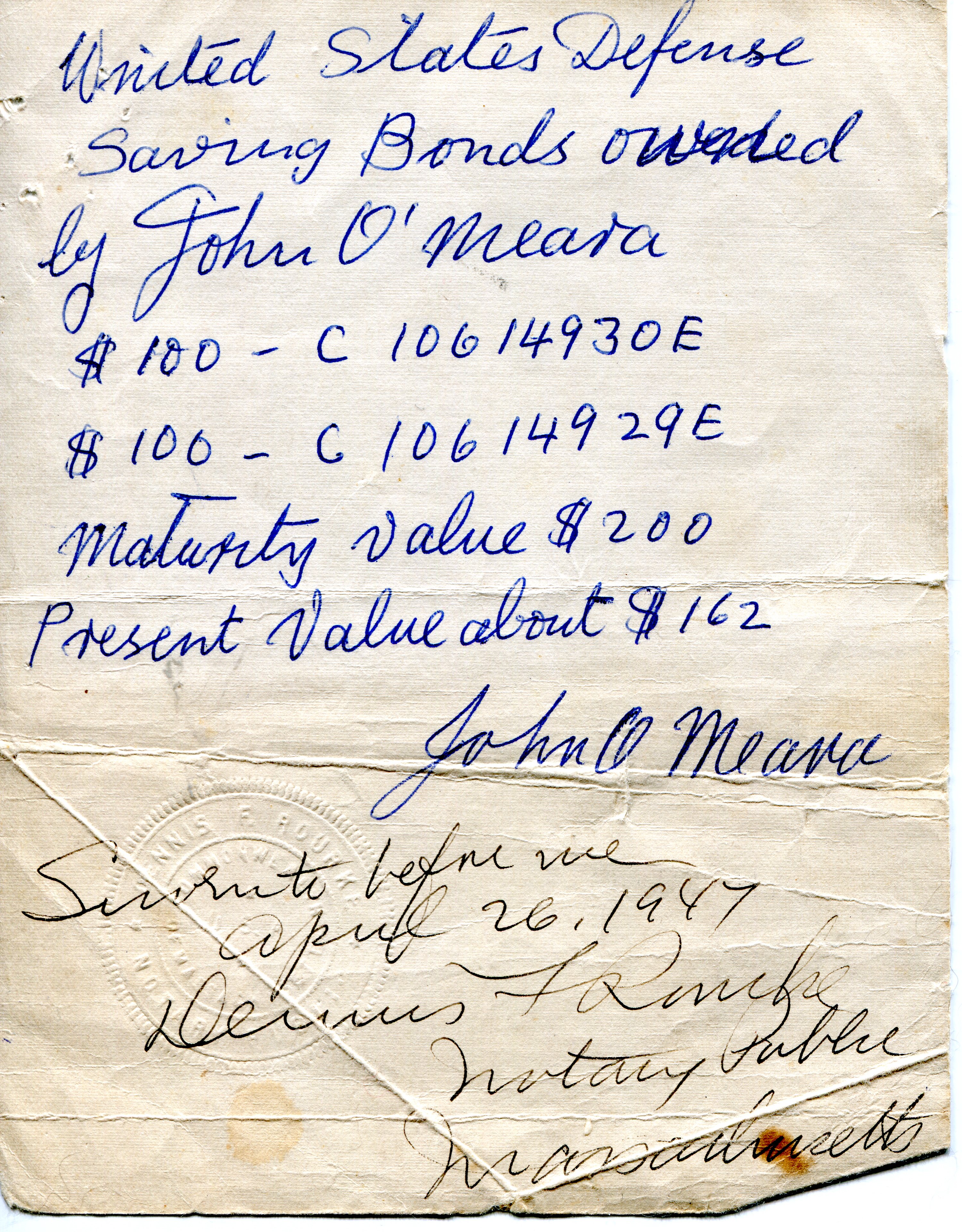
We were invited to immigrate to the States by our uncles, Jack and Dan O’Meara. Both sponsored my sister Joan and me. They had to prove they had employment and assets and they said they would be able to get us employment once here. Uncle Jack had victory Bonds – it’s notarized in the attached document. (see below)

John_O'Meara_Bonds_26_Apr_1947_1

Notarized letter from Uncle John O’Meara regarding bonds he owned. (Maureen Teahan Murray Collection)

If we hadn’t come here we might have gone to England. Our friends Maura,Therese, Christine and her sister Margaret, emigrated there for nurses training in hospitals during World War II. London was constantly being bombed but the hospital never took a direct hit. Training was free but times were tough with food and other rationing. They were paid a little and they did live at the hospitals. But I never considered becoming a LPN.

Not sure how Mary ever found this list - both girls' names are altered!

Not sure how Mary ever found this on Ancestry.com with the misspelling. Maureen and Joan are on lines 14 &15.

We were the first to leave Milltown after the “Emergency”. Coming over on a converted troop ship, “The Marine Jumper”. We were “the talk of the town”. We had been booked for a February passage but suddenly there were two cancellations in November. Our passport visas were already issued by the American Embassy the month before when we took a train trip to Dublin. Our new clothes were also purchased in Tralee a month earlier since uncle Dan sent us money for expenses. We had to be re-vaccinated by Dr. Sheahan in Glen Ellen, Kerry and Counihand Travel Agency , Killarney made our arrangements. We packed quickly and said our good-byes. This happened over a two-day period so we had little time to be nervous.

Just like millions of Irish who emigrated before them, Maureen and Joan left from Cobh. In a few short years, immigrants would begin to come to the United States by airplane. The method of transportation was changing but some things remain constant, like the waves of Irish immigration to America with Uncles and Aunts sponsoring Nieces and Nephews in their new lives. Of course, I had a few follow-up questions for Maureen. I was curious about what sort of new clothes they purchased to pack:

We didn’t bring much because we would be buying the latest fashions in New York. Uncle Dan took us shopping on 5th Avenue when we arrived and he thought it was important we looked like Americans. We dressed almost alike with beautiful blue, long-sleeved dresses and grey military-style coats with brass buttons and stylish hats and leather gloves with new shoes. I remember those were the outfits we wore to view Macy’s Parade. Despite all that we were still freezing! We have no idea what uncle Dan paid for all the clothes but he was a bachelor and said not to worry about the cost.

Every girl should have an Uncle Dan! Click here to read about Maureen’s first days in New York City. Maureen and Joan had an auspicious welcome to America!

We will continue with Maureen’s story next time. And by the way, Maureen has a special birthday coming up on Wednesday. Feel free to leave birthday wishes in the comments…I will be sure she sees them!


Leave a comment

Happy Birthday, Annie!

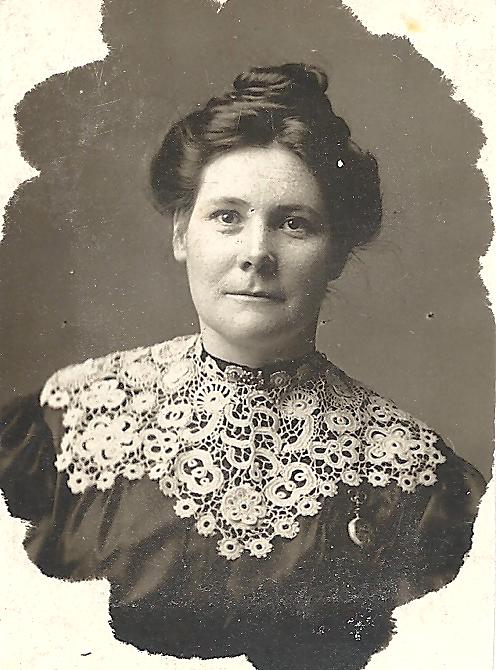
Annie born August 30, 1876 in Kill, County Kildare, Ireland

Annie born August 30, 1876 in Kill, County Kildare, Ireland

Today is my great-grandmother’s birthday. I never knew Annie HIll Regan, but I’ve spent a great deal of time over the years thinking about her, wondering what she was like. For a long time, all I had to go on were a few sketchy stories (like the one where Annie was a mail-order bride), a stack of old photographs, and a cupboard full of fancy dishes and teapots that once belonged to Annie.

Several years of research and many hours of chats with two of her nephews who grew up across the railroad tracks from Annie in Clontarf, Minnesota, have given me tremendous insight into Annie’s life and personality. I have written several articles about my journey to get to know my great-grandmother – please click here, here, and here to read more.

The one thing I heard over and over was how Annie liked nice things. When this characterization came from the no-nonsense residents of Clontarf, I got the overwhelming sense that this was not an admirable trait in their eyes. But for me, it is one of the things that attracts me so strongly to Annie. I like nice things, too.

Annie and her geese

Annie and her geese

I just spotted the set of twelve delicate crystal champagne glasses in my dining room buffet. They belonged to Annie. I wonder about those glasses. They are so pretty, so elegant. Where did Annie get them? When did she use them? I can’t imagine she had many opportunities, living in the tiny town of Clontarf on the prairie of Western Minnesota, to serve champagne to her guests.

The glasses have sat on a shelf in my buffet since I put them there sixteen years ago when I moved into my place. In all of my sophisticated, urban entertaining (ahem!) I have yet to use the glasses. This is not to say I haven’t daydreamed about situations when they will come in handy. Just in case someone drops by with a bottle of Dom Perignon, I am ready, I bet that’s what Annie thought, too.

Annie with husband (Neil) and son (John)

Annie with husband (Neil) and son (John)


Happy Birthday, Annie!


1 Comment

Up Close and Personal with Philadelphia’s Irish Memorial

Philadelphia is full of things which photographs (and words) do not do justice – the Liberty Bell, the seventeenth-century residential street Elfreth’s Alley, and the steps scaled by the iconic film character Rocky Balboa are just a few of the sights one really needs to experience in person to fully appreciate.

But, until you all can get to Philly, I will share some of the photos from our trip last week. Let’s begin with a few of Regan’s snaps at the Irish Memorial.

The story of the Irish Memorial.

photo credit: Regan McCormack

photo credit: Regan McCormack

Memorial with Benjamin Franklin Bridge in background.

photo credit: Regan McCormack

photo credit: Regan McCormack

Another view.

photo credit: Regan McCormack

photo credit: Regan McCormack

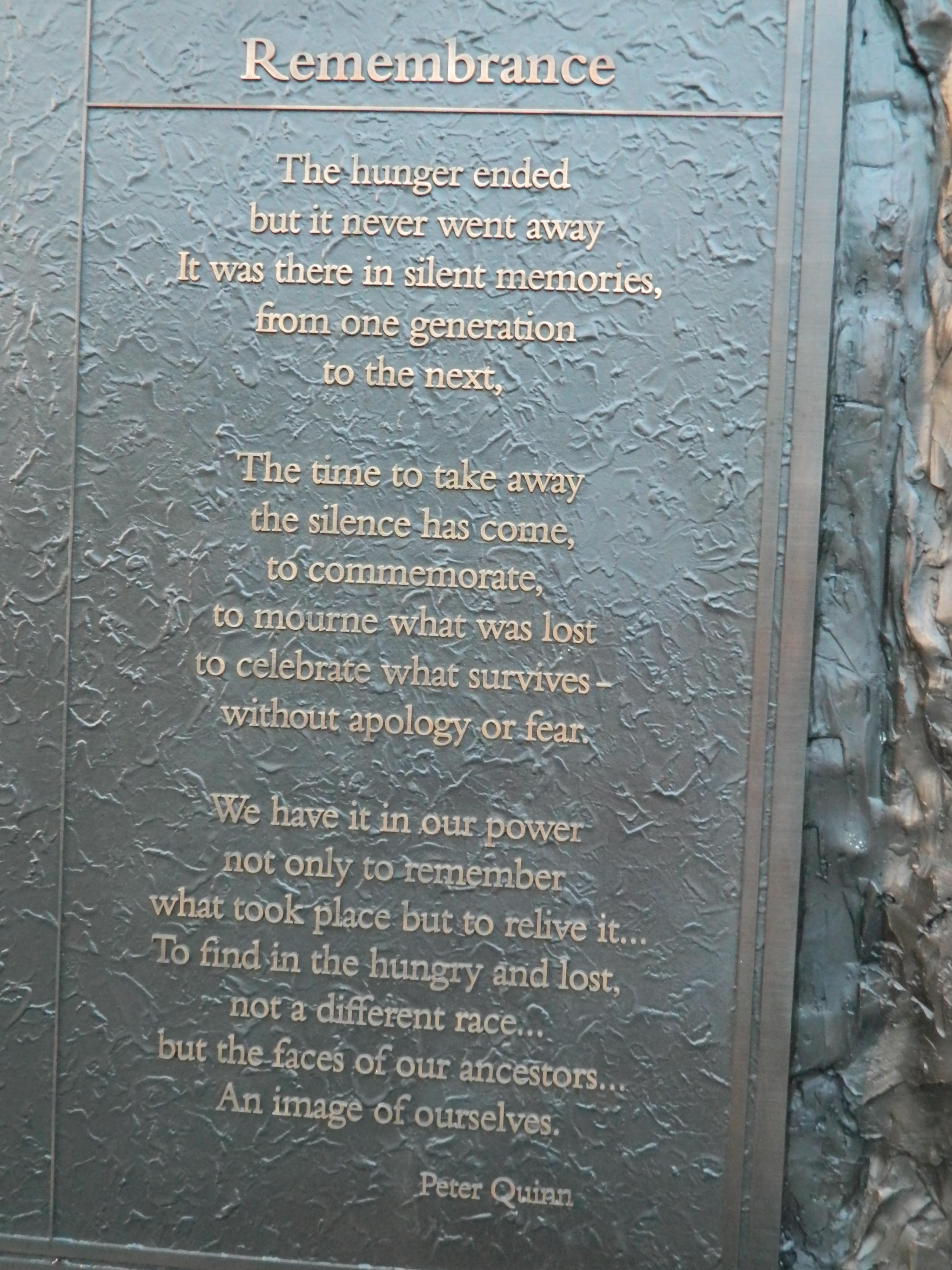
I love this poem by Peter Quinn, located at the memorial.

photo credit: Regan McCormack

photo credit: Regan McCormack

The Irish Memorial is a beautiful tribute to our Irish ancestors and a poignant reminder of their struggles, tragedies, and triumphs.

Click here for more details on the memorial.

Next time I will share some more about the wonderful city of Philadelphia – a city it only took me a few days to fall in love with!