Have you traced your Irish roots to Belfast, Northern Ireland and are now planning a visit to the old homestead? Aidan McCormack and Belfast City Toursare at your service!
Belfast City Tours is much more than a sight-seeing bus, circulating through Belfast, providing entertaining commentary, and pointing out historic buildings. Of course they do those things very well, but Aidan and his team also create personal genealogy-based itineraries. Aidan says:
We have an intimate knowledge of our local areas and already work closely with local genealogists and PRONI to deliver bespoke tours to families and small groups.
Simply go to www.BelfastCitySightSeeing.comand take a look at what they offer. An impressive range of tours are listed on the website, in addition to some unique options which will make planning a trip to Northern Ireland a breeze:
Day trips to Derry, Giant’s Causeway, and more
Airport pick-ups
Hotel reservations
Boat cruises
Walking tours
Group activities
Belfast City Tours is a great option for all of your travel needs in Belfast and beyond. Their comprehensive services are unique and their attention to detail is fantastic. They would love to hear from you and get started making your visit to Northern Ireland one you will never forget.
Vincent Carmody shares the life of Listowel native, Kathy Buckley with the readers of The Irish in America. Kathy Buckley made her way all the way to Washington, D.C. and the White House. I love Kathy’s spirit – she definitely made Listowel proud. Vincent’s account is full of great details about the people and history of Listowel, as well as entertaining anecdotes about the life and career of Kathy Buckley.
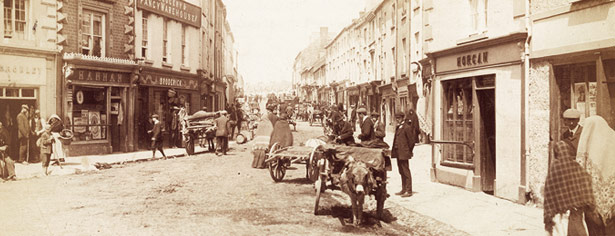
Listowel Scene (courtesy of Vincent Carmody)
From Upper William Street to the White House: Kathy Buckley’s story
by Vincent Carmody
Kathy Buckley was born on the tenth of March 1885 at 26 Upper William Street, Listowel. She was the eldest of a family of seven, born to Lawrence and Ellen Buckley Her father worked as a cooper in his workshop at the rear of the house. Her mother’s family Kearney’s, were a long-established Church Street family of grocers and shoemakers.
Some time after Kathy had finished her formal education at the Convent Primary School in Listowel she secured employment from the Huggard family at the renowned Butler Arms Hotel in Waterville. It did not take her long to find her feet as a trainee cook and in a short time was held in high regard by both management and senior kitchen staff.
In the early years of the 1900s the hotel played host to an entourage of wealthy Americans led by the famous banker and financier J.P. Morgan, not only were they impressed by the natural beauty of the area but they were equally impressed with the quality of the cuisine prepared in the kitchen. Morgan at this time was seeking an assistant to his own chef at his mansion in Hartford, Connecticut and shortly before leaving he offered Kathy this position. She however told him that he would first have to speak to her father. Shortly after he returned to America he was in touch with Lawrence Buckley and permission was secured, however with conditions, one of which was a guarantee to send Kathy home if she was unhappy or unable to settle.
Arriving in Hartford she soon settled in as she had done previously in Waterville and busily engrossed herself in learning new culinary skills. During her time there, the head chef, a Frenchman succumbed to severe alcoholism and Kathy was his ready-made replacement. She thrived in her new position and the lavish banquets which herself and her staff prepared and served for J.P Morgan and his influential friends and guests were legendary.
One man who did not forget Kathy was an incoming President, Calvin Coolidge, a personal friend of J.P. Morgan and a frequent visitor to Hartford. He invited her to become head of the White House kitchens, an offer which she gladly accepted. She retained this position during his and the subsequent terms of Presidents Hoover and Roosevelt. After leaving the White House she worked in the Seaport City of Providence, Rhode Island with an American family for some years. She finally returned in retirement to Listowel in the early fifties.
Because of family connection and as we lived quite close I got to know Kathy quite well during these years, however when one is younger as I was at the time one does not always appreciate a sense of history or indeed the historical significance of what someone so close and from our own street had achieved.
I can recall been with my cousins in their father Paddy’s cooperage when Kathy would come to the back door and call out, ‘Come in while the meat pies are warm’, these particular pies are a local delicacy in the area and would have been widely baked and eaten especially during the Listowel Races. The recipe she used, at one time she recalled, came from publican’s two doors up the street, appropriately called Mike (the Pie) O’Connor. She first got this recipe in 1907 when the O’Connor’s bought the public house from the departing McElligott family who had decided to seek fortune in California in the aftermath of the earthquake. Kate O Connor would have baked these pies especially for fair and market days. Over one hundred years on, this public house is still known as Mike the Pies.
As in Washington, Kathy dominated Buckley’s small kitchen, her two sisters Nora and Tessie relegated to the role of, as it were domestiques, albeit happy ones. When one entered her domain the smell of cooking was ever prevailing and one never left hungry.
During a radio review of the Vincent Carmodys book, North Kerry Camera, well-known Listowel short story writer Bryan McMahon was asked by the presenter if he had a memory of Kathy. He replied as follows:
‘When I was young, my Mother, who would have grown up in the same street as Kathy, would send me up to see had Kathy White House come on her holidays, asking my Mother how she got that name, she replied, Bryan , because she works in the White House in Washington, the home of the President of America. There after I would listen, one day my Mother asked Kathy had she seen any world crises during her time in the White House, Kathy’s immediate was ,’ Joanne, if my sandwiches came back from the Oval Office uneaten, I knew then there was a world crises’
Bryan told the presenter that Kathy Buckley saw world politics with eyes glazed by gastronomy.
In the same interview Bryan recalled that Kathy had told his mother that once the White House staff had lined up to greet the new incumbent, when Kathy was introduced as head of the kitchen, she stepped forward and said, “Mr President, I have something to tell you”, and he said “yes Madame, what is it”, and she said,” Sir, I have never voted for your party and I never will”, to which the President replied, “Madame, that is your right as an American citizen”.
In a further recollection, my first cousins husband Brian recalled been told the following, Once when Kathy was about to enter the lift to take her to the dining room floor level, a senior member of the executive who already was in the lift and who had a disdain for members of the household staff advised Kathy to wait for the lift on its return, like a flash she replied, that’s fine I will share it with the President who was coming upthe corridor to use the lift as well. She was a strong woman, never afraid to speak her mind.
In 1969, Kathy fell and broke her hip, having spent some time in St. Catherine’s Hospital in Tralee she was transferred to a nursing home in Listowel. Her condition deteriorated and on many an evening, as I sat by her bedside in a darkened room, her mind used travel back to earlier days as she used bid me light a fire in the Oval Office or collect a tray from the Rose Garden.
Kathy Buckley, cook extraordinaire, to three American Presidents died on July 19th 1969. From various anecdotes she appeared to have a good personal relationship with the Presidents, the very fact that Coolidge invited her to head the kitchen staff during his time when he took over on the sudden death of Harding in 1923 and again on his election in November 1924.
On a personal note I have in my possession the key which President Coolidge got when he was given the freedom of Fort Worth Texas, this he gave as a gift to Kathy on his return from that city. I received the key as a gift from the family of Kathy’s niece, my first cousin after her death in 2007. I also have correspondence to Kathy from Lou Henry Hoover, wife of Herbert Hoover; there is a clear depth of warmth shown to her in this letter, It is also my belief that Herbert Hoover was the incoming President mentioned in the previous story of the interaction when the staff had lined up to meet the incoming President. As a lifetime Democratic supporter one would imagine that the advent of Franklin Roosevelt to the White House would have pleased Kathy, no evidence survives as such, however a conversation with her niece some years ago on her recollections on this period has given me some insight, while her relationship with the President himself was more formal than with the previous incumbents it seems she had a less than warm relationship with Eleanor, the Presidents wife. This may have stemmed from Kathy’s Irish ethnic background. Early Irish emigrants to America congregated and lived in the same neighbourhoods, as time moved on coloured families started to come into these same neighbourhoods. This resulted in the Irish having to move to new areas, because of this an inbuilt snobbery or elitism developed among the Irish emigrant population. Kathy Buckley though a very devout Catholic and a great benefactor of the poor throughout her long life possibly was an unintentional victim of this syndrome. Eleanor Roosevelt was a committed civil rights advocate all her life and during her time in the White House, 1933/1945 she was very much in favour of the employment of a greater number of non-whites especially in the area of household staff. This is where I think that Kathy Buckley had her difference with Mrs Roosevelt. Sadly we will never know the real story.
A bit about the author…
Vincent Carmody of Listowel, County Kerry, Ireland is passionate for local history. In 1985, hee helped publish a history of the local G.A.A. club, the Listowel Emmets, and in 1989, Vincent self published a historical photographic history of the town titled, North KerryCamera (this book has become a collector’s item). Most recently, Vincent published, Listowel – Snapshots of an Irish Market Town, 1850-1950. (I just received a copy this week – it’s a gorgeous book!)
Vincent was born and raised in Listowel. He spent three years in England, 1963-1966. Returning home, Vincent spent nearly thirty-eight happy years working as a postman around and about the general North Kerry area. Vincent loved every minute of his work until his retirement in 2007.
Click hereto read about Elmer Walsh – the Chicago man with roots in Listowel who defeated Richard Daley.
And there’s more from Vincent…
Tune your radio (or your internet) to RADIO Kerry tomorrow morning, Saturday February 22nd @ 9am (Ireland, 3am where I am in Minnesota, USA). If that time doesn’t work for you, check out Radio Kerry for podcasts. Some very kind words for our Listowel Emigrant Tales contributor, Vincent Carmody…
On Saturday morning next, Feb 22 2014 Radio Kerry will broadcast Frank Lewis’ Saturday Supplement at 9.00 a.m. This programme is !by Vincent Carmody’s book, Listowel: Snapshots of an Irish Market Town 1850 to 1950. Vincent’s walking tour of the town is something every Listowel person should experience at least once. If you haven’t done it, put it on your Bucket List. Now, Thanks to Frank Lewis and Radio Kerry, you can experience this tour at one remove, by listening to it on the radio.
I am honoured to be part of the tour. I was invited by Vincent to read from Listowel greats like D.C Hennessey, John B. Keane, Joseph O’Connor and Seán Ashe.
Stay tuned to The Irish in America for your chance to win a signed copy of Listowel – Snapshots of an Irish Market Town 1850-1950 in our special St. Patrick’s Day competition. Details coming soon!
Just in time for the Savannah Irish Festivalthis weekend, Arcadia Publishing released it’s newest pictorial history, Irish Savannah, by Sheila Counihan Winders earlier this week. Irish Savannah is for sale online at arcadiapublishing.com and folks in Savannah can pick it up at local retailers.
Take a look at what the publisher has to say about this exciting new book and its author…
Irish Savannahjoins more than twenty volumes in Arcadia’s series highlighting the contribution and impact of the Irish on communities throughout the United States. And you know what’s really great about these books? The pictures! If you are like me and you can’t get enough of old photographs and the history of Irish America, then you have hit the jackpot with Arcadia’s Irish series. Click here to get started building your collection. (Psst…it looks like you can get 20% off when you sign up for their newsletter.)
Congratulations to Sheila Counihan Winders and the lovely city of Savannah!
Seamus Hora shares another great poem with the readers of The Irish in America. We’ll let Seamus tell you what it’s about…
“It is difficult to believe that the following poem describes an Ireland of 40 years ago. I am delighted to have been a part of that era and feel I owe so much to those people. It is only as you grow older you appreciate the value of their advise and remember each individual sense of humour. Thumbing was the word used to describe a signal from people who waited on the road for a car to take them to their destination. Even in today’s modern times there is still no public transportation this route. The journey describes the 5 miles between Gorthaganny and Ballyhaunis.”
The practice of thumbing in the seventies was rife
Cars they were scarce it was part of our life.
Friday is one of the day’s I recall
People seeking a lift; for post office to call.
First on the road, Summer Light. –Winter Dark.
Problem with hearing, this was Mrs Clarke.
The ball alley stood out on the hill up ahead
In winter this part of the road I did dread
A picturesque cottage my next port of call –
Where colourful roses adorned the wall.
Doors painted brightly, lime on each stone
Mod’ lady called Sally stood waiting alone
At this time the car was beginning to fill
A couple of regulars awaited me still.
Pat Hoban was next-with a strange point of view.
To let air circulate cut vent holes in his shoe
The three in the back were not very pleased –
Let in Mrs Ganley crush became squeeze
Sadly, the last one mobility did lack.
Surname was Kenny either Jimmy or Jack
Each day of the week things were much the same.
So many thumbers! Too numerous to name.
Some are still with us. Some laid to rest.
Relaxed eyes closed tightly – I can picture them best.
Seamus Hora
A bit about the poet…
Seamus Hora was born in Gorthaganny, County Roscommon. He has been employed by same company, Delaneys Ltd in Ballyhaunis, County Mayo, for 44 years. He has lived in Ballyhaunis for the past 20 years. Seamus is married to Rosaleen and the couple has one daughter, Sandra. Seamus only recently started to write poetry. and he bases his poems on his life experience. He values feedback and would like to hear what people think of his poem. Please leave a comment!
For more poetry from Seamus, click here and here. Enjoy!
As promised, here is the first of Vincent Carmody’s series, Listowel Emigrant Tales. Vincent tells us about “The Man Who Defeated Richard J. Daley”. With respect to Chicago politics, this was no mean feat! Elmer Walsh, the son of Irish immigrants from near Listowel, defeated Richard Daley, descendant of Famine-era immigrants from near Dungarvan, County Waterford, in the 1946 race for Cook County, Illinois sheriff.
Vincent Carmody of Listowel, County Kerry left the following as a comment here on the blog. I thought it deserved to be seen by all followers of The Irish in America, not just the dedicated comment-readers!
Piccadilly Circus, 1963 (via Vintage Everyday, click on image)
I was a young man just over in London from Ireland in 1963. I went over in October, the following 22nd of November a work colleague and myself attended a showing of the film, Tom Jones, at the Odeon in Leicester Square. During the showing some people who had come in and sat nearby mentioned that they had heard rumours of President Kennedy been shot.
After the film we were in a pub, Wards of Piccadilly. At this time news of the shooting was both on Television and in everyone’s conversation. Leaving the pub, the news vendors were selling their first edition with the news of the shooting.
As we rode down the second escalator to the Piccadilly tube platform, we came across a woman who had fainted, her boyfriend who was with her asked us to help. Together we moved her to a bench on the platform, by this time she had recovered, her boyfriend (Jack Shaefer?) told us that he was a marine working at the US. Embassy and that she had been overcome and upset when she heard of the shooting.
We traveled home together and they spoke of Jack’s tour of duty ending and of their return to Pittsburgh. The next I heard of them was nearly a year later when I received a small packet from them which contained 4 Kennedy Dollar coins. After that we corresponded for some time, however when I returned to Ireland a couple of years later we lost touch. All of that was over 50 years ago but the memories remain.
Impressive memory, Vincent! I wonder what ever happened to Jack Shaefer and his girl? Maybe someone from Pittsburgh knows????
Vincent also had this to say:
Some of your readers might be interested in looking up the website of a book which I had published last year, it is a social history of my hometown of Listowel. It has got some great reviews. The book’s name is, Listowel, Snapshots of an Irish Market Town, 1850-1950, the books website address is, www.listoweloriginals.com.
This is not the last we will hear from Vincent. In the coming weeks, he will share a couple of excellent articles with The Irish in America. Vincent has written about relatives and Listowel natives, and their experiences in America – Chicago politics, US Presidents, and more. Great stuff!
And stay tuned for another great giveaway in March, just in time for St. Patrick’s Day!
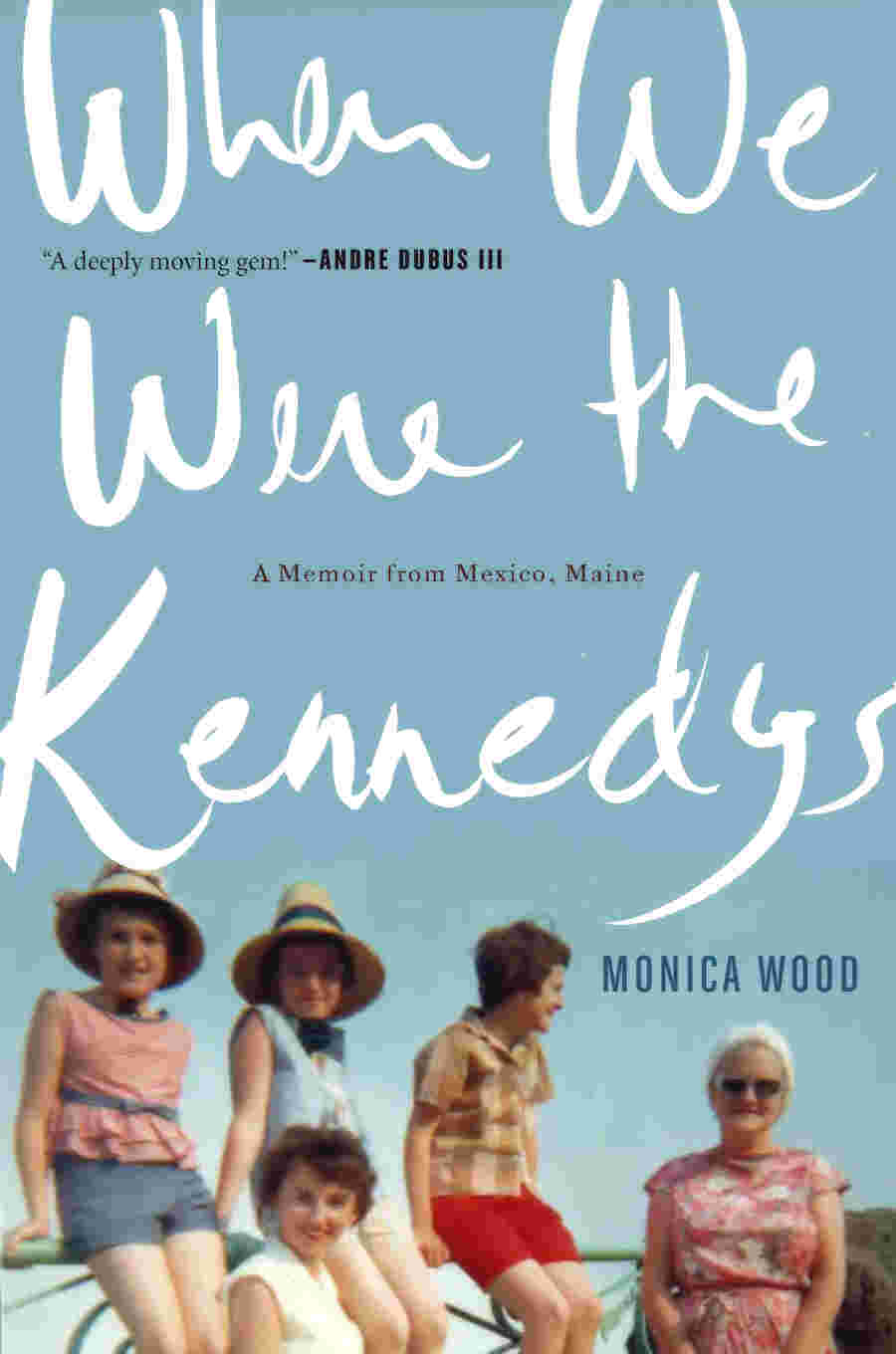
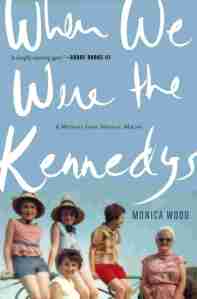
Well, actually, we have TWO winners! It didn’t seem right to stop at giving away just one signed copy of Monica Wood’s memoir When We Were the Kennedys. It is such a fantastic book, we needed to spread the wealth. Thanks to all who entered. We had great response over at Twitter for this giveaway.
Books go to both sides of the Atlantic: Mary from Massachusetts and Melanie from Ashbrook House, County Derry! We can’t wait for them to read Monica’s memoir. We notified the lucky winners, we’re collecting their addresses, and signed copies of When We Were the Kennedys will be in their hands shortly.
Thanks to Monica Wood for writing such an amazing book. Can’t wait to hear what Mary and Melanie think of it!
This weekend we will hear another account of “Where Were You?’ the day of President Kennedy’s assassination when Vincent Carmody of Listowel, County Kerry shares his memories.
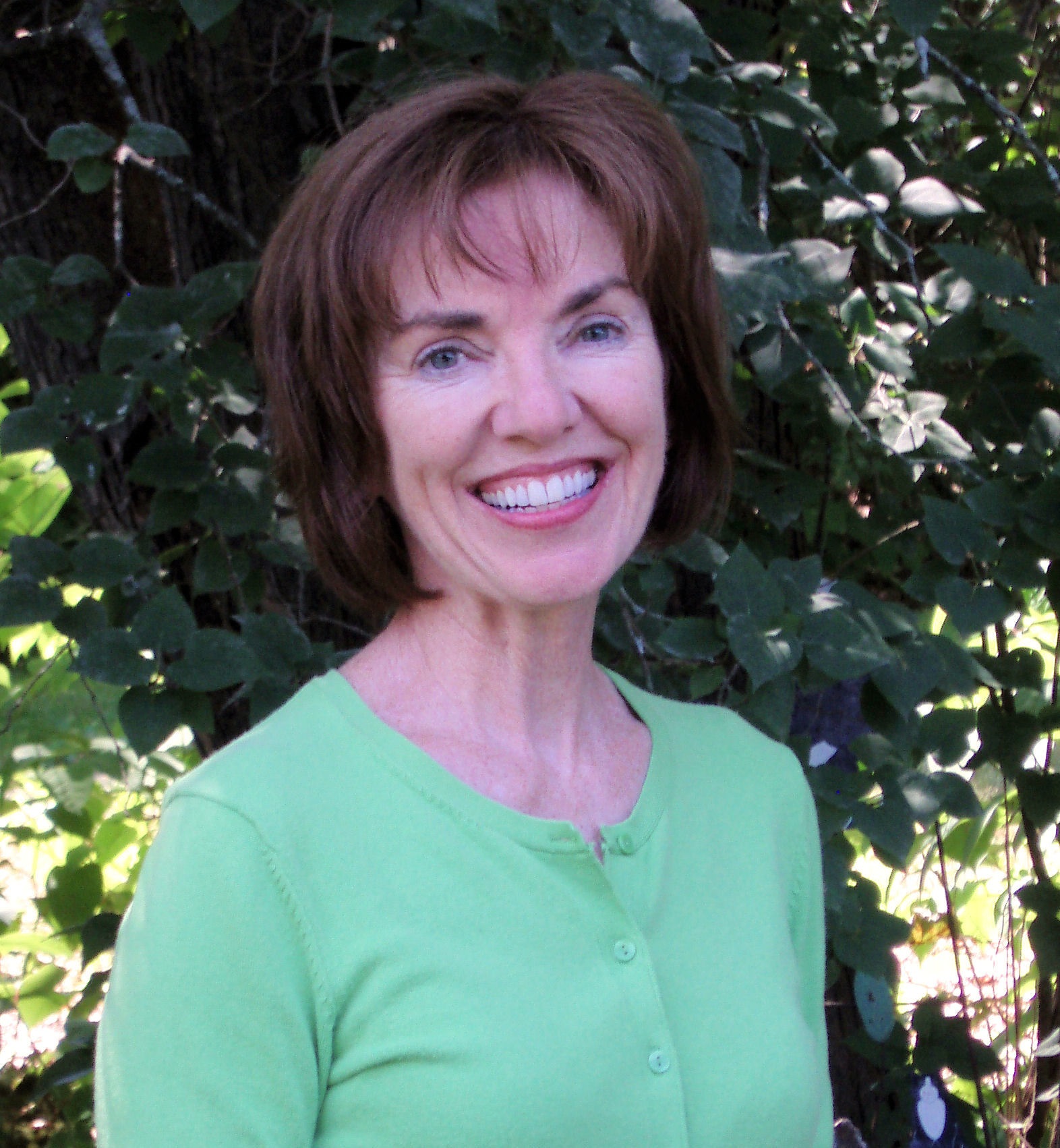
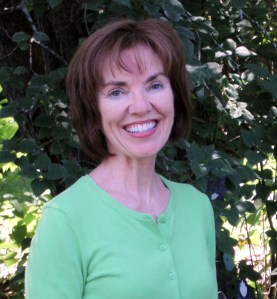
Monica Wood
Click here for more information on author Monica Wood and When We Were the Kennedys.
From the moment she began reading When We Were the Kennedys, my sister, Regan, could not stop talking about the book. Regan reads a lot, but we don’t usually share what we read. I think it’s because our literary tastes differ quite a bit. But that all changed when Regan read, When We Were the Kennedys. As she finished the book and handed it off to me, she said, “Hurry up now and finish it so we can talk all about it!” (Please keep reading to learn about your chance to win a copy for yourself!)
The Kennedy name surely caught Regan’s eye initially – the iconic Irish American family has always intrigued her – but the blurb on the back sold her. The story begins in 1963 with the close-knit Wood family living in Mexico, Maine. Mexico is a town physically, psychologically, and fiscally dominated by the Oxford Paper Company. The author’s father dies suddenly on his way to work at the Mill one day and life for the Wood family changes forever. We see how the family mourns (at one point with the entire country) and how they begin to make their way back.
Poignant, but never sappy, it is a truly a beautiful memoir. One reviewer said he had never pulled as hard for a family. That is exactly how I felt, and I wanted to learn more about its author, Monica Wood. She mentioned in an interview that both her parents’ families came from an Irish enclave on Prince Edward Island, Canada and that her father was a natural storyteller with a gift for language, but I wondered how else she felt her heritage as an Irish American.
Monica Wood
Monica was gracious enough to chat a bit and answer a few questions. I began by asking Monica if growing up she was aware of her Irish roots. Monica said very much so and went on to describe the lilting accents of her grandparents and the “many, many Irish expressions that were built into our family lexicon. Lots of colorful expressions.”
I asked if she remembered any and Monica came up with: “Arriving with one arm as long as the other.” Meaning? “You brought nothing to the table.” That’s one I can definitely hear my Irish American relatives saying!
Monica also remembered songs such as “Whiskey You’re the Devil” and “Danny Boy” filling the air of her childhood.
I was interested if Monica ever felt she was treated differently as an American of Irish descent. Mexico, Maine was a town of immigrants and the children of immigrants, so she never felt out-of-place because of her heritage. Monica was proud of it: “…I remember as a child in my town, we still identified by our families’ roots. When a kid asked, ‘What are you?’, my answer was ‘Irish.'”
Monica recently visited Ireland for the first time, spending part of her visit on a houseboat on the Shannon. She was amazed at how, although many generations removed from Ireland, she felt at home in Ireland. The Irish embrace their history and their folklore in such a way that a common ground emerges when descendants of those who left, return. This is why it can feel like coming home for many Irish Americans.
I’d like to share what Monica told me about her visit to Ireland:
My sister Cathe had been there just last year and told me it would feel like coming home. I didn’t think that would be true. But it was. For one thing, so many people reminded me of aunts and uncles and cousins! And they are so very warm, and they LOVE to talk, and sing, and lift a glass to almost anything. The night before we left (I was there with my husband) we ended up singing for 100 people in a pub in Ennis. By the time I got to the final chorus, everyone had learned the song (“Hard Times” by Stephen Foster) and was singing with me. I got the chills, literally, and realized: This is my tribe.
I can imagine that Monica was a big hit with the people of Ennis that night – they do love when you bring a song!
I am so happy to have read When We Were the Kennedys, and if you don’t win the Author-Signed Copy in our little competition here at The Irish in America, you will just have to go out and buy one for yourself, but it probably won’t be signed. Monica even agreed to personalize the inscription (actually it was her idea!)
So, how do you win? It’s easy! Just “like” this post – either click the button below on the blog or like it on Facebook (click here) – and your name will be entered in a drawing to win. Only one entry per person, please. You only have until 11:59pm (EST) Sunday, January 26th. We will announce the winner here on the blog early next week. For more information on the contest, please visit our CONTESTpage.
Good luck!
Take a look at this short video and hear Monica talk about When We Were the Kennedys:
Click here to read reviews of When We Were the Kennedys by Monica Wood.
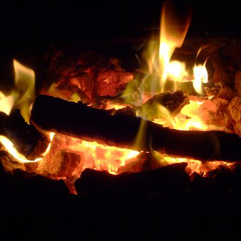
Seamus Hora is so kind as to share another lovely poem with The Irish in America. This time he remembers winter evenings of days gone by, the 1950s when all you needed was a radio for company and a turf fire for warmth. Seamus thought there might be a few TIIA readers out there who also remember the “old days” in rural Ireland and might care to reminisce along with him…
Photo courtesy of the fantastic blog – That Curious Love of Green – check it out by clicking on the image.
REMINISCING
Tonight I am reminiscing
I have turned back the years
Removed the locks from both the doors
And forgot about my fears.
Removed the TV from the shelf
And put it out of sight
Replaced it with a radio
Commentating on a fight.
Put the mobile phone on silent
Took the handset off the wall
Tonight-The only interruption
Neighbours foot steps in the hall.
Reached up to the fuse board
Reversed the on off handle
Got an empty bottle from the press
And placed in it a candle.
Replaced the coal and briquettes
With a seasoned wooden log
And a couple sods of well dried turf
Harvest from the local bog.
The lid from off the oven
I will heat until just right
Wrap in a woollen sweater
Place in the bed tonight.
Stare out through the window
Watch the snowflakes as they fall
Pretend its Christmas Eve again
And Santa’s sure to call.
Will I read a passage from the book
Or the rosary instead?
Then go outside – melt a little snow
Before I go to bed.
Seamus Hora
Click here to learn more about poet, Seamus Hora, and to read his poem on the day John F. Kennedy was assassinated.
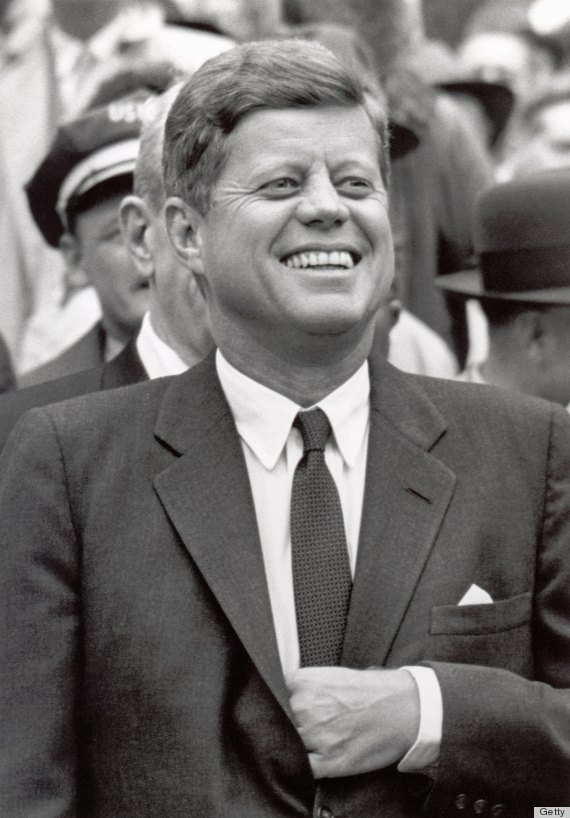
Last November 24th was the 50th anniversary of the assassination of President of the United States John F. Kennedy. Many people took a moment on this anniversary to remember where they were when they heard the news.
We recently received an email from Seamus Hora from County Mayo in response to our blog post. He sent along a wonderful poem he wrote describing “where I was when I learned of the sad news of the tragic passing of President J F Kennedy.”
Where Were You
In my mind I see him clearly
As he stood inside the door
We sat and gazed in silence
At the sad news that he bore.
We all were fascinated
By this man from USA
Honoured by a visit.
From charismatic JFK
The worlds greatest speaker
Simple words-But oh so true.
For a country to be proud of
You must make an effort too.
He promised as he left us,
He would return again someday
But a sniper from a window
Sadly had the final say.
We had no television
But felt that we were there
For coverage was provided
By the great Michael O Hehir
I was playing bingo
The clock had just struck ten
The gambling house Mulrennans
The bearer; Our late friend Eamon Quinn
by: Seamus Hora
Seamus Hora was born in Gorthaganny, County Roscommon. He has been employed by same company, Delaneys Ltd in Ballyhaunis, County Mayo, for 44 years. He has lived in Ballyhaunis for the past 20 years. Seamus is married to Rosaleen and the couple has one daughter, Sandra. Seamus only recently started to write poetry. and he bases his poems on his life experience. He values feedback and would like to hear what people think of his poem. Please leave a comment!
Thank you, Seamus, for sharing your poem! Stay tuned to the blog for my profile of Monica Wood, the author of the beautiful memoir, When We Were the Kennedys, later this month. You will also have the chance to win a copy of the book!