The Irish in America


1 Comment

The Next Best Thing

I know I am not the only family historian with dreams of discovering a cache of old letters, hidden away in a dusty attic. These letters would answer all my questions and lead me to finally solve the mysteries I have pondered about my ancestors’ lives.

Well, this has not happened. In fact, my research seems to lead to all sorts of letters from and to everyone but my family! Reading these letters is fascinating, and they provide a ton of contextual information, but can they really be as good as the real thing?

For example, I came across several letters from Stephen Owens , a nineteenth-century Irish immigrant to Clontarf, Minnesota, to a niece back home in Skerries, County Dublin, Ireland.  The letters are in a file at the Swift County Historical Society. The letters were shared by Kerby Miller, professor of History at the University of Missouri and the preeminent authority on Irish emigration (see his book Emigrants and Exiles.)

The first letter in the collection is dated December 4, 1899. Mr. Owens is about seventy-years-old, has been in the United States for over fifty years and is very happy to have received a letter from his niece back home in Skerries. He writes, “I Thought I would never hear from my friends in Skerries again…”

Mr. Owens goes on to describe his family and his community. Here’s an excerpt:

I am pretty smart on the foot yet thanks be to God. Your Aunt don’t hear so well as I do, She is Pretty Old Looking. She is Able yet to do our Cooking and washing. We had to give up farming we were to old to work the farm any Longer So I sold it and moved to the Little Town of Clontarf near the Church…

Main Street of Clontarf, Minnesota - 1920

More than fifty years have passed since Mr. Owens left Ireland, but he still asks about old school friends, neighbors, and family:

When you write again Let me know iff your Uncle Michael Owens wife is living in Skerries or Daughter. Remember me to John Baulf and to James Russel the Shoemaker and his Brother Mathew and their sister Margret iff Living. All my Old School Mates I suppose are nearly all Dead, iff I landed in Skerries now i would hardly no one Person in the Town the would all be new People to me  my Generation are all Passed away Well Dear Niece Ceila I wont forget you night & morning in my Poor Prayers and I hope you wont forget your Old Uncle…

On March 19, 1900 Mr. Owens writes to his niece and thanks her for the shamrock she sent him. He goes on to describe the large St. Patrick’s Day celebration in Clontarf, and wagers that, “yous did not celebrate like this in Skerries.”

Mr. Owens has this to say about the Boer War taking place in South Africa:

We are all Irish to the Back bone out here and all Boer sympathizers out here. We are sorrow to hear of so many of our countrymen being slain in the war…the English will give them the Post of honor on the Battle field, but won’t give Home Rule.

In the letters Mr. Owens shares much with his niece about his American hometown of Clontarf, Minnesota. He talks about Church activities, the priest, and building projects in the town. When Mr. Owens says “We are all Irish to the Back bone out here and all Boer sympathizers…” I realize he is speaking of my ancestors – his neighbors in Clontarf and all fellow Irishmen who helped establish the community twenty-five years earlier.

So maybe my great-great-grandfathers Patrick Foley, John Regan, and Francis McMahon were Boer supporters, too? Clontarf was a small town, I imagine they all ran in the same circle – St. Malachy Catholic Church, the Hibernian Hall, McDermott General Store…actually there probably was just the one circle!

So, these letters were not found in a relative’s dusty old attic, nor do they even directly reference my ancestors. But they are the next best thing to finding my own family’s letters. It is often the small discoveries that keep family historians and genealogists going.

I will feature a few more excerpts from the Owens Letters in a future post. There are plenty more insights to the Irish experience in America that this nineteenth century Irish immigrant has to share!


Leave a comment

At Least He Made It

Major League Baseball has never been a stranger to foreign-born players. Throughout the nineteenth and early twentieth centuries, the names of Italian, Jewish, and Irish immigrants peppered the rosters of big league teams. Today you will find Venezuelan, Dominican, and even a few Japanese names on these rosters.

A few months ago I came across the story of Joe Cleary, the last Irish-born baseball player to appear in a Major League game. On August 4, 1945, Cleary was sent out to pitch the fourth inning against the Boston Red Sox. Cleary had been called up by the Washington Senators in preparation for a long string of double-headers, where pitching would be needed.

That day Joe Cleary made baseball history. Not because he was the last Irish-born player to make it to the big leagues, and not even because he was replaced in the game by the first (and only) major league pitcher to have just one leg (the other was amputated in World War II.) No, Joe Cleary is in the record books for allowing seven earned runs in one-third inning of work, resulting in a whopping 189.00 ERA (earned run average).

This inauspicious debut would be Cleary’s closing night as well. Years later, Cleary said he was used to the teasing about the 189.00 ERA from people in the neighborhood, “But I would tell them, I was there.”

Joseph Christopher Cleary was born on December 3, 1918 in County Cork, Ireland. His family came to the States in 1928, settling on the West Side of New York City. Cleary played baseball at New York’s High School of Commerce – the same high school attended by Lou Gehrig about fifteen years earlier.

After high school, Cleary turned down college scholarships to play semi-pro baseball. He needed to work and help support his family. What better way to do that than by playing baseball? There is a great biography of Joe “Fire” Cleary here by Charlie Bevis. It explores Cleary’s career in baseball leading up to that fateful August day in 1945 and beyond. Bevis details the drama that took place during the one-third inning of baseball and tells us why the seven runs may not have been the only reason Cleary never made it back to the Majors.

Cleary retired from baseball in 1950 to spend time with his wife Mary and family. Bevis sums up Cleary’s story very nicely:

Cleary worked on Wall Street for a few years before he purchased a bar on the West Side of New York City, which he operated for more than 20 years. Cleary sold the bar and worked as a bartender before retiring at age 62 in 1982. In retirement in his neighborhood dominated by baseball-loving Dominican immigrants, “[Cleary] is a minor celebrity, who is still ribbed about his baseball career and his bloated earned run average. But he can handle it,” Margolick wrote. “‘The only answer I give them is, ‘Hey I was there. Only 14,000 guys have made it.'”

This paragraph says a lot about baseball and America…maybe the more recent immigrants from the Dominican Republic looked to an old immigrant from Ireland and thought they could make it, too.

Or maybe they just love baseball…

Joe Cleary passed away June 3, 2004 in Yonkers, New York.

Better go so I don’t miss the first pitch of the Minnesota Twins season. I think this is their year.

Thanks to Charlie Bevis and his biography of Joe Cleary from the Society for American Baseball Research (SABR) website – read it here. Not only does Bevis provide us with the details of Cleary’s baseball career, he gives us a glimpse into why Cleary’s nickname was “Fire”.

Photo from www.baseball-reference.com


Leave a comment

Heritage Pie Chart

Several years ago, the following essay won second prize in the Kansas City Irish Fest writing competition. I think there were three entries…

With Saint Patrick’s Day fast approaching, I know I think about my Irish heritage a bit more than usual. How about you? How do you define your Irish-ness? Complete the form at the end of the post or add a comment. I would love to hear from you!

It was usually around Thanksgiving when the teacher would tell us to sit down in a circle and we would take turns sharing our ethnic background with the class. The goal was to show how America had welcomed people from all over the world to form the great melting pot.  As my classmates struggled to piece together their intricate heritage pie charts (“I’m one-eighth French, one-eighth German, one-half Swedish, one-fourth Norwegian…”), I waited patiently for my turn.  I had it easy.

“I am 100% Irish.”

Although I was proud to be Irish-American and liked the ease of being 100% something, I had never given it much thought.

I was not cognizant of it, but early in my life, my dad defined Irish for me.  He was passionate about Ireland– from the history and the music to the legends and the poetry.  He would sing along to the Clancy Brothers and Tommy Makem as he worked at his desk.  I can remember his favorites like “Roddy McCorley” blaring from the stereo speakers in his den.

My dad is a bit of a romantic with a flair for the dramatic.  He gets misty-eyed when reciting a poem by Yeats or when recounting the struggles the Irish have faced throughout history.  Sometimes the music was a little loud and my dad a little sappy, but this is what I knew of being Irish.

One Spring day in 1981, I came home to find an Irish flag draped across our front porch.  I could only imagine what my dad was up to, but when I went inside, he was not home. I found my mom and asked her why Dad put up the flag.  She told me it was to show support for Bobby Sands and his hunger strike in Northern Ireland.  My mom explained the situation to me – the IRA, Sands, and the unjust treatment of the prisoners.  Sands just wanted to be recognized and treated as a political prisoner.

Well, that certainly sounded like something my dad would get behind.

“But, Aine, your dad didn’t put up the flag.  I did.”

Now this was a surprise.  I had not even considered that my mom would do something so bold, so dramatic.  She barely hummed “Too-Ra-Loo-Ra”.  It seemed my mom was just as Irish as my dad, just in a different way.  I began to pay attention to what it meant to be Irish-American, and I realized there is not one neat definition.  I have embraced the complexities of my heritage and thankful for such a rich and diverse background.

Looking back, it was the other kids who had it easy.  I doubt many of them spent time wondering what it meant to be Franco-German-Swedish-Norwegian-American.  They could quantify their heritage. They had a pie chart.

← Back

Thank you for your response. ✨


2 Comments

The Killarney Workhouse: Through the Eyes of the Guardians

I am always on the look-out for interesting resources for researching the Irish in America. This week I learned of a fantastic collection of art and literature devoted to Ireland’s Great Hunger – An Gorta Mór.

The Quinnipiac University collection contains over 700 rare volumes (both Famine-era accounts and present-day scholarship) as well as archival records and visual arts. Check out the this introductory video to learn more about the collection.

The most interesting feature of the collection is available to view online: the minute books of the Killarney Union Workhouse have been scanned and transcribed, providing a glimpse into the operation of an Irish workhouse during the Famine. Included are four years (1845-48) of the weekly meetings of the Board of Guardians.

A scanned image of the meeting minutes (PDF) is accompanied by an abstract of the business conducted. In some ways, the minutes read like those of any other organization. The abstracts typically contain:

  • How many individuals applied for entrance and how many were rejected in the previous week.
  • Estimated rations required for upcoming week.
  • Open positions, offers, salaries, etc.
  • Building projects, financing, and budget issues.

But then you read the discussion of setting a boundary to the workhouse land nine feet beyond the “dead house” and about the “violent and disruptive conduct of a pauper named Ellen Connell, who tore the clothing issued to her, and who, it was feared, would corrupt the female paupers with whom she would have contact” (July 9, 1845) and you are reminded of the grim realities of life in the workhouse. Ellen’s fate is contemplated by the Board in subsequent weeks and at one point she is placed in the Idiot Ward.

There is much information to be found in these minutes. You can see how the British government addressed the Famine through the letters from the Commissioners which are read at the meetings. These letters give instructions to the Guardians on how to operate their Workhouse in accordance with the Relief Laws of the time.

These minutes are valuable to the genealogist or family historian since many names are mentioned in the minutes – inmates, Guardians, local craftsmen, and Workhouse employees. If your ancestors came from the Killarney Union, perhaps you will come across a familiar name? Some examples:

  • November 4, 1847: Workhouse apothecary is Mr. David O’Sullivan
  • December 6, 1847: Storekeeper Michael Hogan and pauper Thomas Howard are involved in an escape
  • 1848 Board of Guardians include: N.A. Herbert, N. Leahy, F. Bland, D.S. Lawlor, M. Brennan, D.J. Moynihan, J.S. Lawlor
  • And let’s not forget the violent inmate Ellen Connell (plus many more names appear throughout the minutes)

When the Killarney workhouse opened in the Autumn of 1845, it was months before the first inmate was admitted. By April 19, 1847 there were 900 paupers at the workhouse and the Board held a special meeting to proclaim that no more would be admitted that day. By April 15, 1848, there were 1243 inmates at the Killarney workhouse, occupying the dormitories, makeshift infirmaries, and converted sheds and outbuildings.

Please visit Peter Higginbotham’s Workhouse website for more information on the Killarney workhouse. Included are several photographs of the present-day (2002) Workhouse buildings.

Interested in a workhouse in your ancestor’s part of the Ireland? Click here to find a comprehensive list of workhouses located in Ireland during the 19th and early 20th centuries.

Special thanks to Regan for telling me about the An Gorta Mór collection at Quinnipiac University!


2 Comments

Ireland Continues to Reach Out to Diaspora

Henry Ford, Jr. and Bill Clinton have theirs. So does Notre Dame football coach Brian Kelly. Do you want one, too?

The Irish Government launched the Certificate of Irish Heritage program this past Autumn. All you need to do is submit your application with proof you have an Irish ancestor and $75 and you will receive your choice of three certificate designs. The certificate is also available in Spanish, English, or Irish.

The Certificate of Irish Heritage website describes the key element of the application as the ancestor document – “a document which identifies the recipient’s ancestor as Irish or as being born in Ireland.”

The documentation should be relatively simple for most people seeking a certificate to obtain (many most likely already have it.) The Irish government will accept birth, marriage, and death certificates or census records, from any country as proof of Irish ancestry.

If you have trouble pinning down an ancestor of Irish origin, the website offers links to professional genealogists who are ready to help you locate the necessary documentation.

Tip: You can save $ if you purchase multiple certificates at the same time. Get your entire family on board and organized and order your certificates together. You will save time by only compiling the appropriate documents and research once. Obtaining the Certificate of Irish Heritage could be part of your next family reunion or holiday get-together.

What do you think of this certificate? Will you apply for one? Please leave a comment…I would love to hear your thoughts!

Are your Irish roots in North Kerry? Yes? Then you are in luck!

I recently became aware of another Reaching Out initiative in Ireland. This time it is North Kerry looking to connect with members of the diaspora back to their region.

They have a great website offering assistance to those tracing their roots to North Kerry and providing local historical and current events information.

The following parishes of North Kerry are participating in the NKRO effort: Listowel, Ballyduff, Lisselton/Ballydonoghue, Ballybunion, Asdee, Ballylongford, Tarbert, Duagh, Lyreacrompane, Lixnaw, Moyvane/ Newtownsandes, Knockanure, Finuge, and Kilflynn.

Any of these places sound familiar? I bet the folks at NKRO would love to hear from you!


7 Comments

This Old Farmhouse

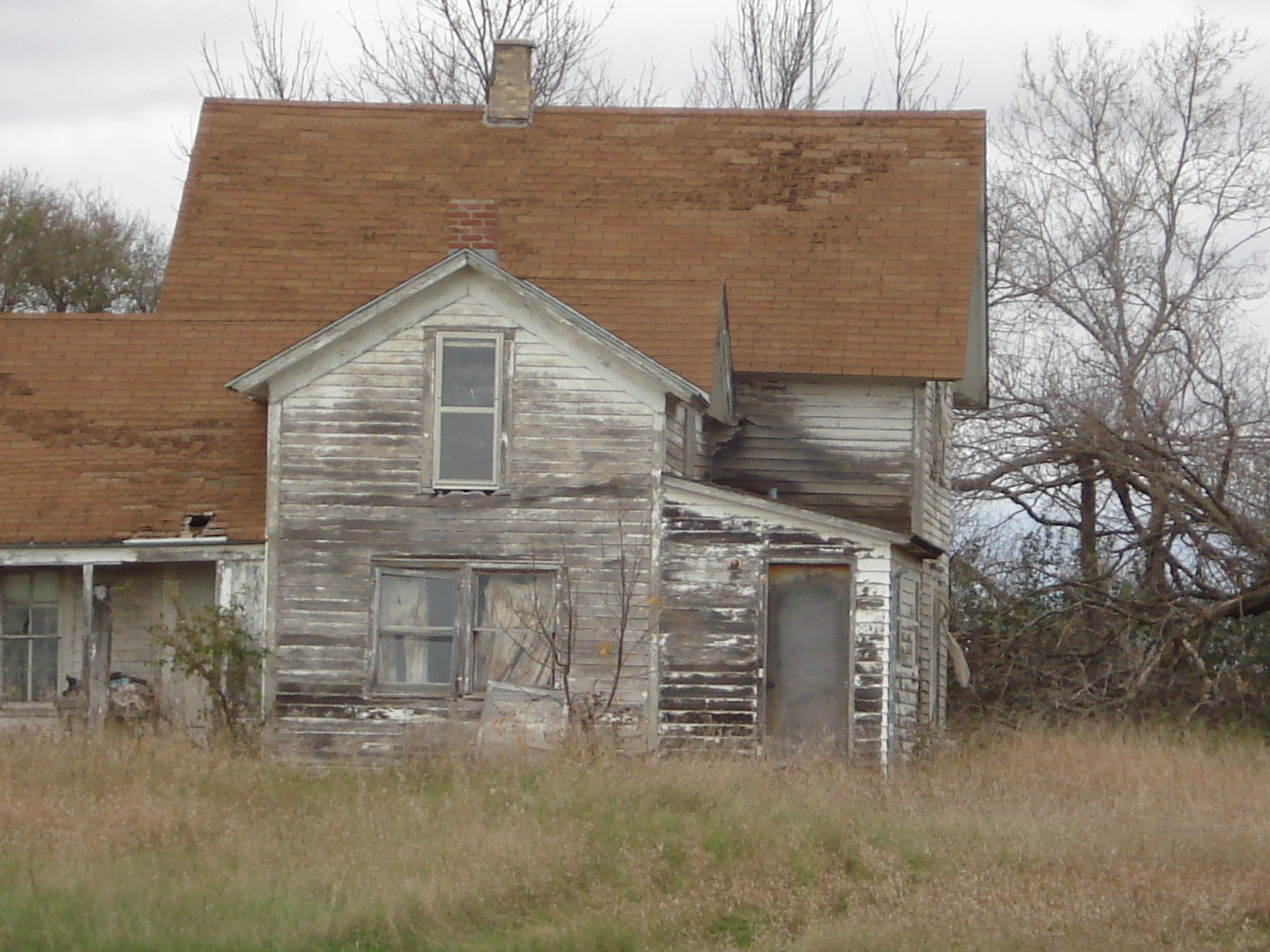
The first time I visited Ireland in 1988, I was struck by the number of derelict farmhouses dotting the countryside. “Why doesn’t someone just tear those old houses down?” I wondered. “That’s what we do in the good ol’ USA…we don’t leave houses to fall down on themselves. If we don’t want or need them, we get rid of them and build something new and better…”

Abandoned house near Ballyedmond, County Laois (all photos by Regan McCormack)

This sentiment came from a teenage girl from the city who spent more time in the countryside during six weeks in Ireland than she had in sixteen years back home – in the “good ol’ USA”. I thought I was so smart…

Fast-forward twenty years and I am closer to home, driving the country roads of Tara Township, crisscrossing its thirty-six square miles in Swift County, Minnesota. My maternal great-great-grandparents were among the pioneer 1870s settlers of this township on the vast prairie of Western Minnesota. This was my first visit to Tara. I had traveled three thousand miles from home on a number of occasions to visit Ireland, my “ancestral homeland”, yet I had never bothered to drive a few hours west to see where my people settled when they came to Minnesota.

Granted, as far as vacation destinations are concerned, Ireland is a bit more attractive than Western Minnesota, but it turns out, the two places have some things in common.

There are the obvious similarities in place names in this part of Minnesota. Bishop John Ireland established several colonies of Irish Catholic settlers with names like Avoca, Kildare, Tara, and Clontarf. Hundreds of Irish families from cities and communities in the Eastern United States seized the opportunity to own land and live in a community with its own church and priest, surrounded by fellow Irish Catholics.

The Depression came early to rural communities and persistent crop failures and changing farming practices combined to make farming unviable for most small farmers. My relatives moved to Minneapolis, as did several other Tara families. Some of the original Irish settlers had left Tara even earlier, moving further West, always in search of better land.

So, I wonder why I was surprised to find this in Tara Township?

Section 22 of Tara Township – the McMahon place

On nearly every section of land in the township stands an abandoned farmhouse, or at least a grove of trees planted by the original settlers to protect a house. And this in the “good ol’ USA” where we tear things down!

Folks in Ireland and Tara Township have the same reaction when I ask them why they don’t simply tear down the abandoned houses. They shrug and say that they are no bother and they can be used for storage. That is the practical response, but I wonder if there is something a bit more sentimental lurking beneath?

The abandoned houses got me thinking…A similar hopelessness that drove millions of Irish to America during the 19th and 20th centuries could be seen in rural Americans who fled the farm for the city in the 1920s. Major difference, of course, is there was not a famine like Ireland experienced, however there was tremendous poverty, crops failed miserably, families were split up, and life changed permanently and dramatically.

I am rather ashamed of my sixteen-year-old self for not being as smart as she thought she was. She should have realized that the same reason this stands today in Ireland…

Near Ballyedmond, County Laois – 2011

might be why this…

Cahir Castle, Tipperary – 2011

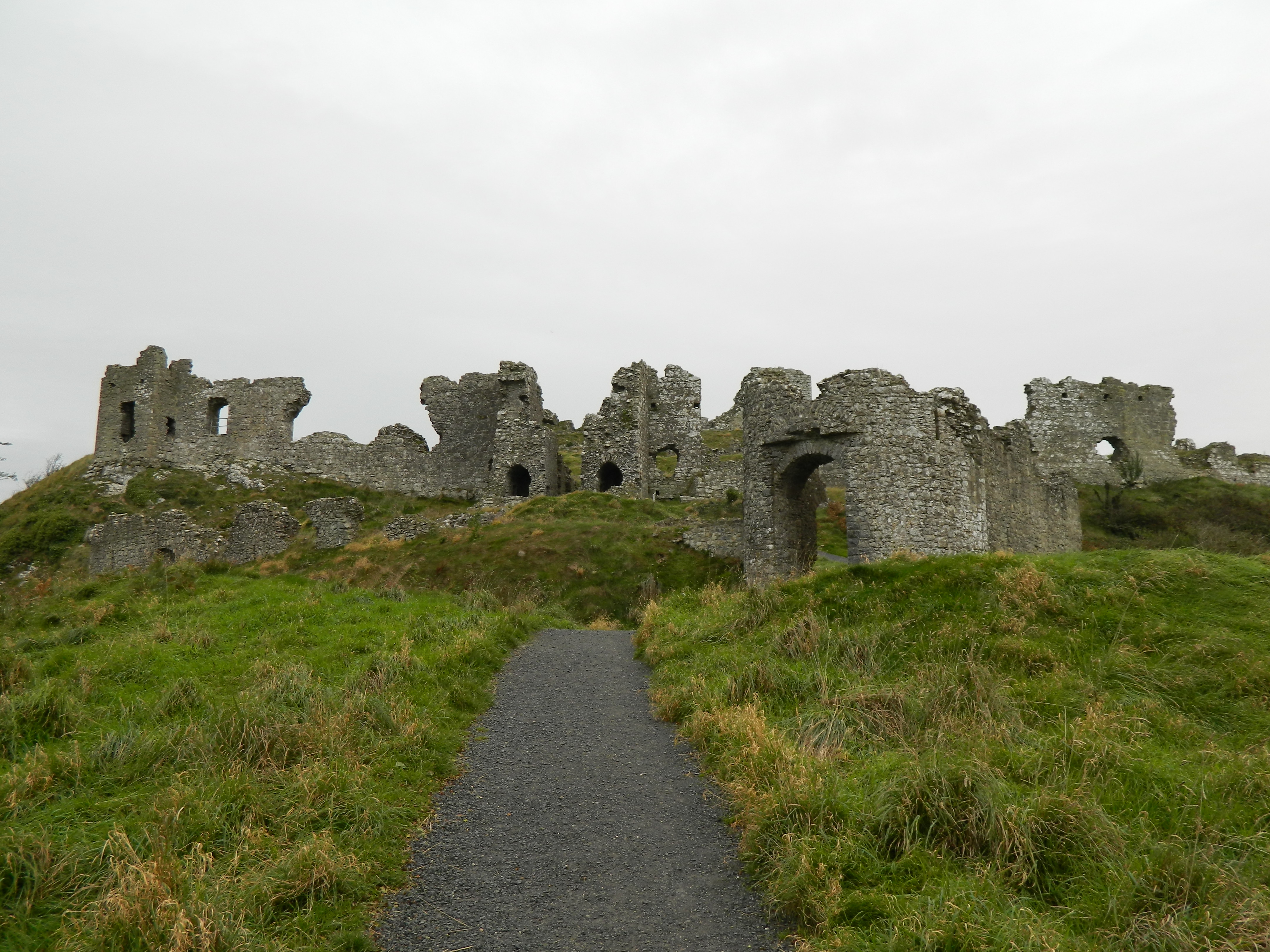
and this…

Rock of Dunamase, County Laois – 2011

and this…

Johnstown, County Kildare – 2009

are still here today. I doubt that the farmhouse ruins will have the staying power of the castles and abbeys of centuries gone by, but in the meantime they can remind us from where we came. Whether it is a farmhouse in Ireland or Tara Township, Minnesota.

Now, if I could only get Jimmy to fix up this old house…

Two Jimmy McCormacks at old family house in Ballyedmond – 2009


2 Comments

Donaghmore Workhouse Museum

Donaghmore Famine Workhouse Museum Donaghmore, County Laois

The Donaghmore Famine Workhouse Museum provides a fascinating “two-in-one”  museum experience. It seems odd at first – agricultural artifacts displayed in a nineteenth century workhouse?

Names etched into walls by Black&Tan soldiers at Donaghmore Workhouse

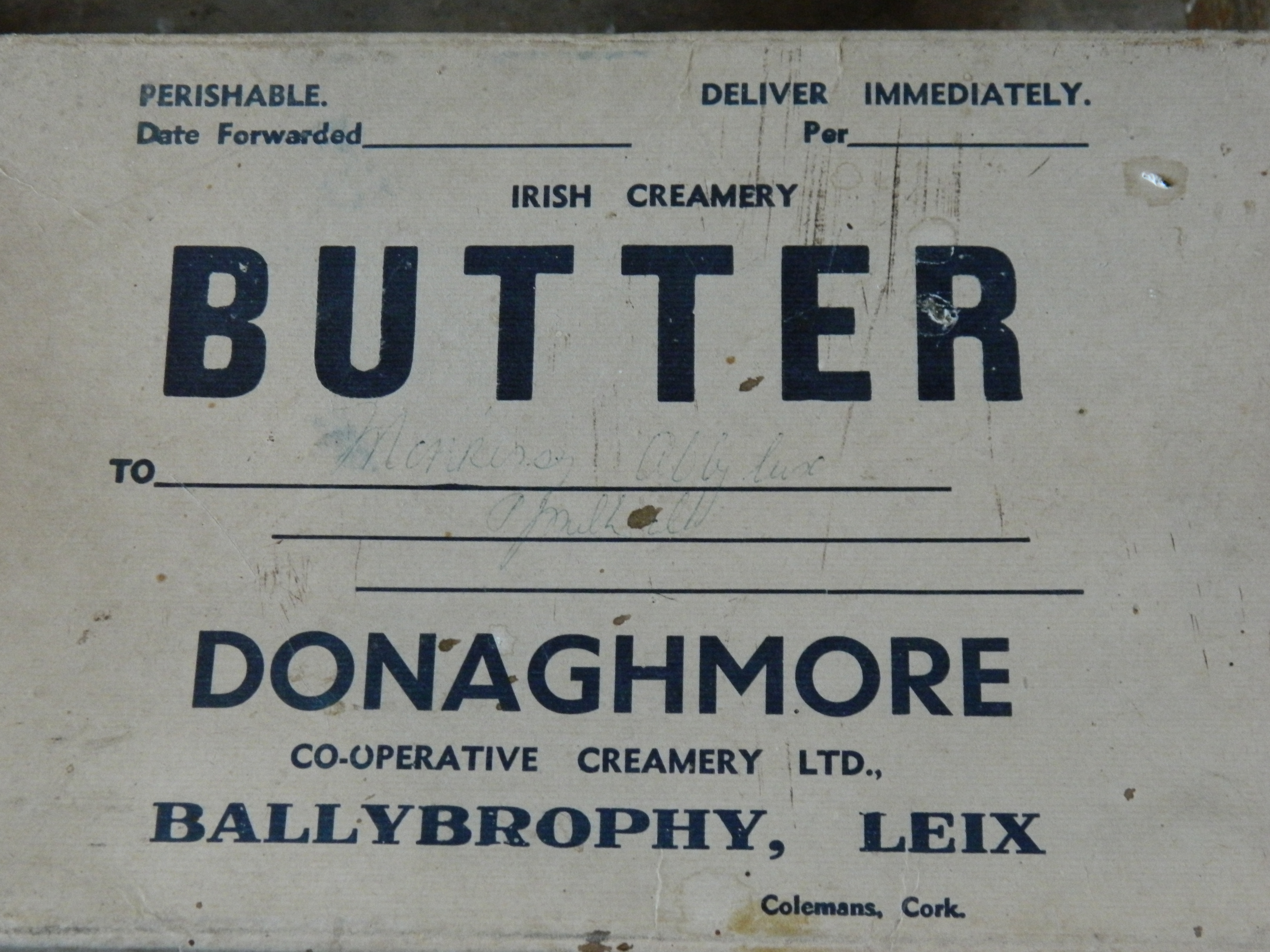
But in the case of Donaghmore, it makes perfect sense. The workhouse opened in 1853. By that time many of the Irish who suffered the effects of the Great Famine (1845-59) had already died or emigrated. The workhouse remained open until 1886. The Black and Tans (British soldiers in Ireland) used the workhouse as a barracks in the early 1920s before the Donaghmore Co-operative Society established the Donaghmore Creamery in the workhouse buildings in 1927.

Butter label

The Co-operative donated two workhouse buildings to the community, and in 1988 a committee of volunteers was formed to renovate, interpret, and manage the buildings.

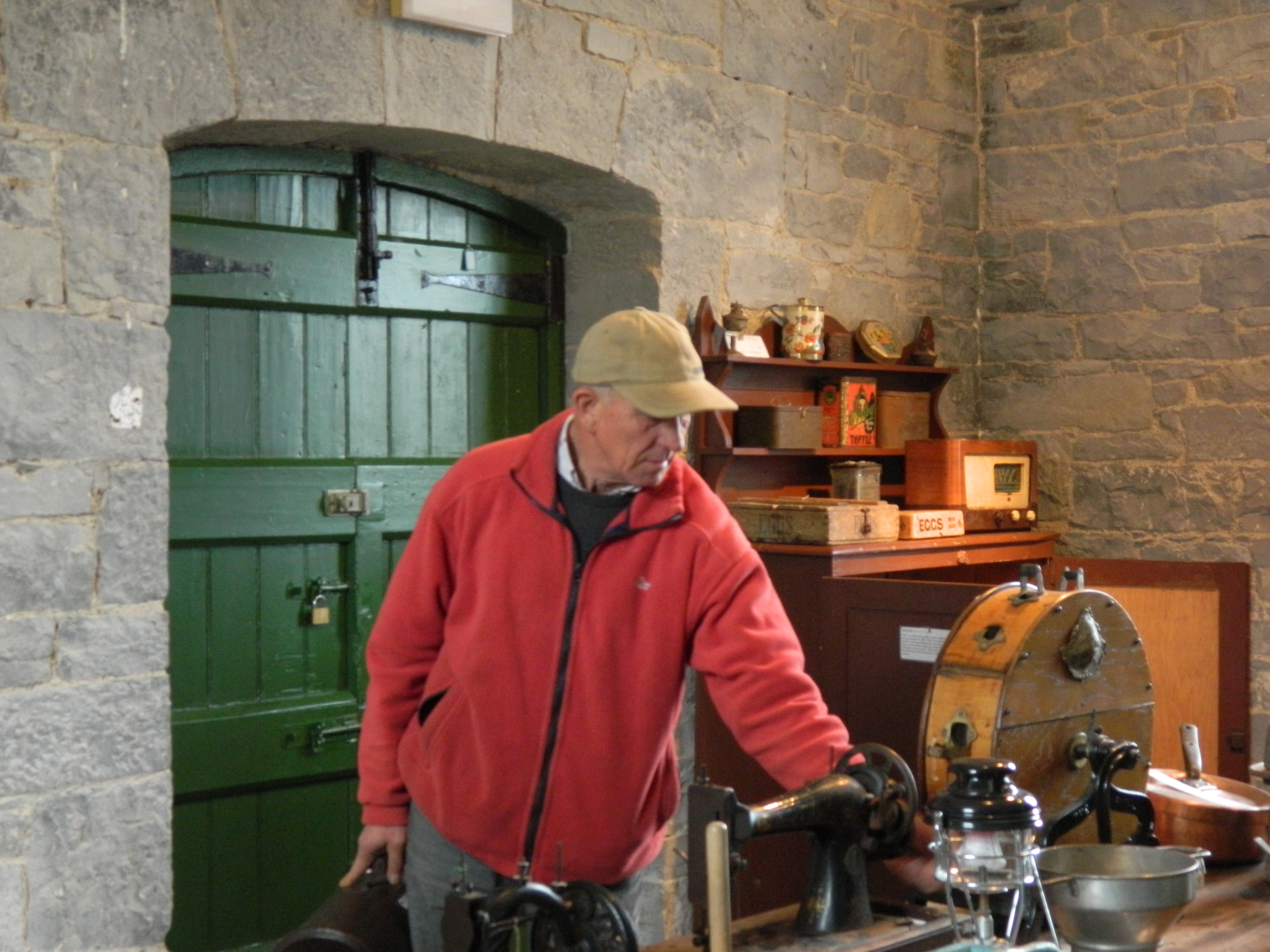
Liam Phelan

Our tour guide in October was Liam Phelan who explained that the workhouse buildings were so well-preserved because they were used, but not altered, for so long by the creamery and the Co-operative Society. This also explains why the displays of farm machinery and implements fit right in at the workhouse.

Original door to the girls' dormitory

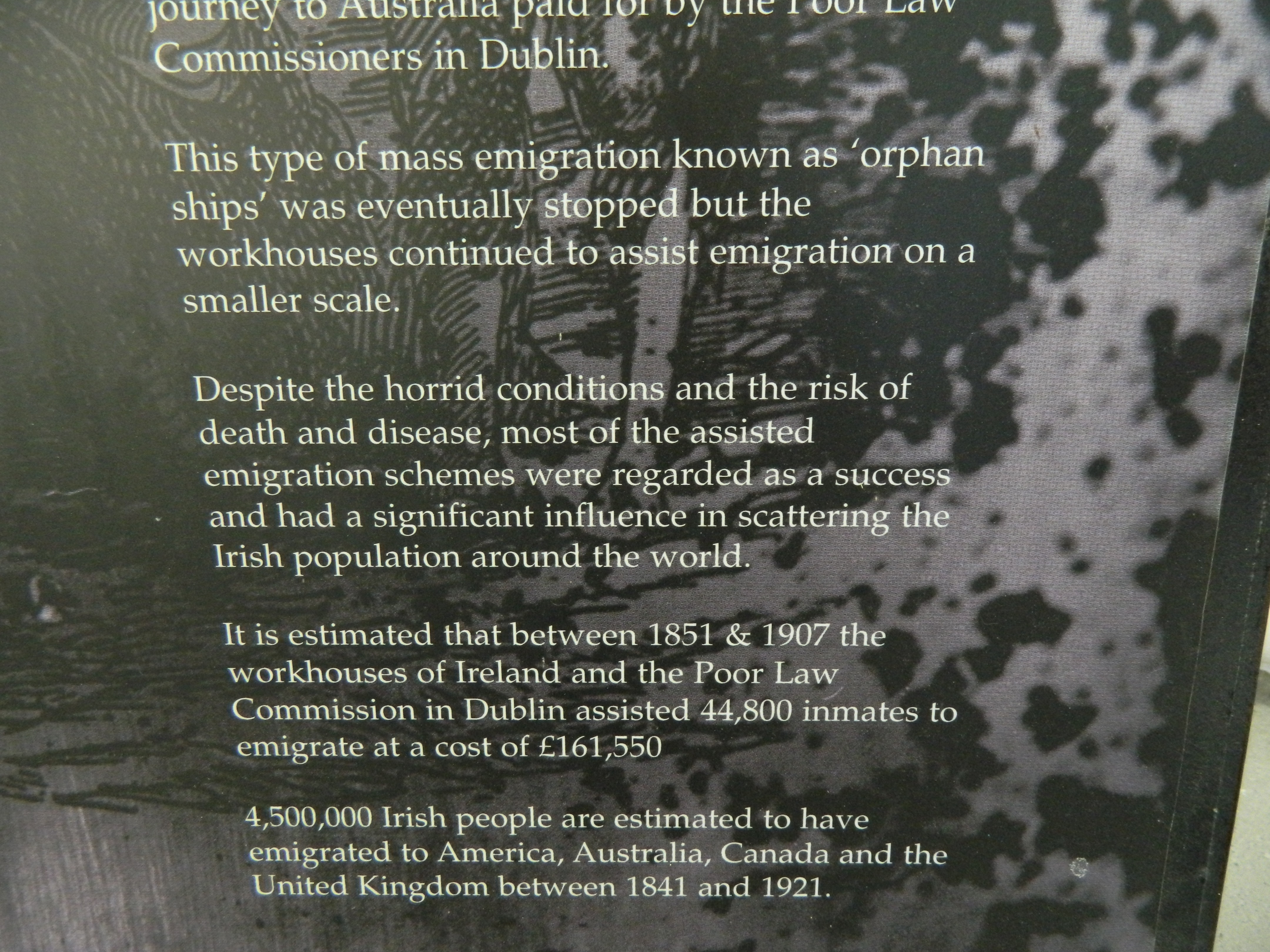
There are several panels throughout the museum that address specific topics related to the workhouse. The one below discusses emigration.

click image to enlarge

Trivia Question

What longtime Donaghmore Creamery employee and current Rathdowney resident was also a member of the 1949 All-Ireland Leinster Hurling Championship and All-Ireland runner-up teams?

The first person to leave a comment with the correct answer will win a special prize!

For more information on workhouses:

All photographs taken by Regan McCormack, October 2011.


6 Comments

Happy Birthday Minnie!

Mary “Minnie” Foley, 1875-76

Minnie was my great-grandmother, and according to my grandma she absolutely hated the nickname “Minnie”. Please forgive me, Great Grandmother, but I think it is a cute name, and since your real name Mary is shared by at least 75% of the women in your family tree, I chose to call you Minnie.

Minnie Foley was born in Fisherville, New Hampshire on January 2, 1875. She was the fourth of five children born to Patrick Foley and Mary Crowley (their eldest son did not survive infancy.) Patrick emigrated to the United States from Kilmichael, County Cork in 1864. Mary came a year earlier in 1863, also from County Cork.

Minnie was baptized on January 24, 1875 at St. John the Evangelist Catholic Church in Concord, New Hampshire. John Foley and Mary Casey were her godparents.

Three years later, Minnie and her family moved west to Clontarf, Minnesota with several other Irish families from the Concord, New Hampshire area, including the Regan family. John Regan and Patrick Foley emigrated together in 1864 from Kilmichael. The families settled on farms in Tara township. Minnie and Nellie Regan were best friends from a very young age.

First-Generation American Girls: Minnie and Nellie in about 1886

My grandma told me that Minnie worked hard her entire life, and that included working on the family farm in Tara Township while she was growing up. Her sister Maggie worked inside, while Minnie and her younger brother Jackie worked outside. My grandma confessed, she wasn’t sure where Minnie’s older brother Tim worked!

The McMahons, an Irish family from County Fermanagh, lived about a mile from the Foleys in Tara. Minnie married Thomas McMahon at St. Malachy Catholic Church in Clontarf on June 28, 1904. Minnie’s sister Maggie and Tom’s brother Frank were their witnesses. I imagine Minnie and Hoosie (as Tom is referred to in Minnie’s autograph book) having secret meetings over hay bales and missing chickens during their courtship…

Minnie and Tom raised seven children and after giving farming all they had the McMahons moved to Minneapolis in 1925.

When she died in 1945, Minnie was living with my grandma, her husband John Regan, and their new baby (and my mother) Eileen. My grandma said that Minnie was smitten with Eileen. Minnie would say that she had never known a baby to sleep as much and as well as little Eileen. Minnie marvelled at how Eileen would even fall asleep with a bottle in her mouth.

In many ways things came full circle for Minnie. Also living with my grandma in 1945 was Neil Regan, Nellie’s older brother and my grandpa’s father. Eighty years earlier Patrick Foley and John Regan had journeyed to the United States. After Fisherville, New Hampshire and Clontarf, Minnesota, the families came together again in Minneapolis…a long way from Kilmichael.

In my grandma’s recipe book are a few recipes attributed to Minnie, her “Ma” – I think I will make “Ma’s Spice Cake” in Minnie’s honor today.

Nellie Regan Byrne and Minnie Foley McMahon, 1942


2 Comments

Check this out…

I was recently introduced to a great genealogy blog via Twitter…

Kevin’s Irish Research  is a blog by Kevin McCormack (same name, no relation) from County Cork, Ireland. He is tracing his roots and bringing readers along on the journey. The blog highlights his own research, as well as tips for conducting research in Ireland. His latest post shows how Irish newspapers can provide clues on the origins of the Irish in America.

I appreciate Kevin’s perspective as he is an Irish person in Ireland researching his Irish roots. I particularly enjoyed Kevin’s post on his trip back to his great-grandfather’s birthplace – click here to link directly to the post.

Check this blog out…it is worth a visit!


1 Comment

Arrivals

This may be old news to many of you, but I wanted to share the new RTÉ documentary Arrivals. It aired a couple of weeks ago, but I just caught it today. RTÉ describes Arrivals:

Catching up with Irish emigrants one year after they left to start new lives abroad. All participants featured in the ‘Departure Day’ documentary screened in January.

Click here to view the program.  It will be available on RTÉ’s website until December 12th.

The original documentary Departure Day told the story of the most recent wave of Irish emigration. Small business owners, carpenters, electricians, lawyers, and recent university graduates are faced with the grim reality of a stagnant Irish economy and prepare to leave Ireland in search of jobs and a future.

Arrivals picks up with the Irish subjects settled in their new homes in Canada and Australia. If we take away the mobile phones and computers, the story of Irish emigration in 2011 appears basically unchanged from that of previous generations. While I watched the documentary, I found myself drawing parallels between the subjects and my own emigrant relatives who came to America more than one-hundred years ago.

When Larry, an electrician Ireland, mentions the loneliness of working on an 18,000 acre ranch in Australia, I am reminded of my ancestors who moved to the virgin prairie of Western Minnesota in the 1870s. I have often wondered what they thought of the flat, vast expanse of land before them, with their nearest neighbor at least a mile away, and town up to ten miles.

One thing that is different for the present-day emigrants featured in Arrivals when compared to earlier generations is that these Irish seem to be moving to a city or country where they have no ties – no family or friends to welcome them and help them adjust to their new lives. I have mentioned on this blog many times how networks helped generations of Irish in the New World during the nineteenth and twentieth centuries. New communities were created around these networks in cities and settlements throughout North America with churches, schools, pubs, sporting groups, and other institutions.

The young man from Cahir, County Tipperary seems to follow the traditional model of a single male emigrant. He works hard, but he finds time to socialize and have fun with a community of other Irish in Sydney. He’s the frequent passenger on the “party bus”. I have the feeling that a couple of my ancestors would have definitely joined him on that bus!

What will happen next to the emigrants featured in Arrivals? I hope another follow-up is in the works.